













The Ministry of Finance has issued strict instructions to accounting officers across government, emphasizing timely salary payments, proper contract execution, and strict adherence to budget limits.
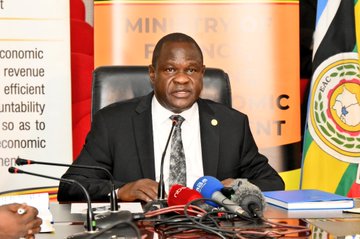
Acting Permanent Secretary and Secretary to the Treasury, Patrick Ocailap, issued the directives Tuesday following the release of funds for the second quarter of the 2025/26 financial year. The Treasury warned that these allocations must be managed carefully to curb mismanagement and fiscal leakages.
“Comply with commitment to pay salaries, pensions, and gratuities by the 28th of every month as per approved scales,” Ocailap said pointing to the fact that delays in the past have sparked unrest among public servants.
Ocailap also noted that all government contracts and payments must be executed strictly in Ugandan shillings, a move aimed at protecting public funds from foreign exchange losses.
Economists note that pricing government contracts in foreign currencies exposes budgets to exchange rate fluctuations. A $1 million contract signed at UGX 3,400 per dollar in 2025 would cost UGX 3.4 billion. If the rate rises to UGX 3,700 per dollar, the same contract jumps to UGX 3.7 billion, adding Shs.300 million in unplanned costs. By requiring contracts to be executed in Ugandan shillings, MoFPED removes this source of budgetary uncertainty.
“Prioritise payment of service providers on time in order to eliminate accumulation of domestic arrears. No committing government without sufficient budget,” Ocailap warned, addressing the accumulation of domestic arrears. By June 2024, arrears had accumulated to 13.8 trillion.
In the second quarter, the government released Shs.187 billion to clear government-to-government domestic arrears, covering utilities, rent, and contributions to international organizations.
“The balance will be released after concluding the ongoing validation exercise by the Auditor General,” the statement issued added.
Other instructions issued included, holding finance committee meetings quarterly to align spending with available resources, and freezing recruitment unless approved by the Ministry of Public Service and backed by confirmed wage availability from the Treasury.
The directives come amid rising scrutiny of government spending ahead of the 2026 elections. Past audits have flagged delays in salary payments, unpaid supplier invoices, and mismanagement in ministries and districts.
Of the Shs.72.38 trillion budget for FY 2025/26, Shs.20.18 trillion was disbursed in the first quarter. The second quarter saw Shs.18.43 trillion released, bringing total disbursements to Shs.38.61 trillion, equivalent to 53.4% of the approved budget.
During the release of the second-quarter funds, Ocailap said Uganda’s economy has continued to expand despite global challenges, including tighter financial conditions and geopolitical tensions that have disrupted supply chains in recent years.
He noted that the economy grew by 6.3% in FY 2024/25, up from 6.1% in FY 2023/24, with nominal GDP rising to Shs.227.88 trillion from Shs.203.71 trillion over the same period.
“Growth was largely driven by a sustained recovery in aggregate demand, supported by government initiatives such as the Parish Development Model (PDM),” he added.
Ocailap projected real GDP growth at 7% in FY 2025/26 and said it is expected to exceed 7% in the medium term.