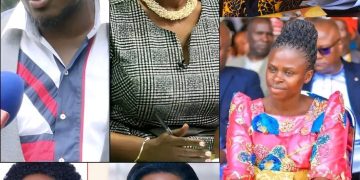

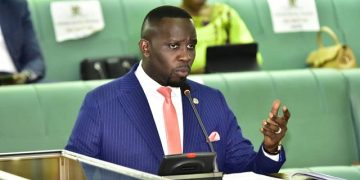



As Uganda emerges from a fiercely contested presidential election that has reshaped the opposition landscape and reignited debate over the credibility of the electoral process, Democratic Front (DF) president Mathias Mpuuga Nsamba has dismissed suggestions that his defeat in the Nyendo–Mukungwe parliamentary race signals the end of his political career.
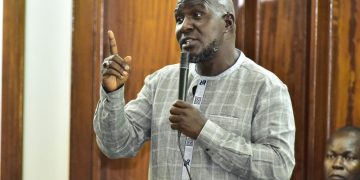
Speaking on Monday at the DF headquarters in Namirembe, Mpuuga said he remains firmly embedded in national politics, arguing that his influence and activism long predate his election to Parliament in 2011.
“I’m still around; you rule me out at your own peril,” Mpuuga told journalists. “I was not born in Parliament. I have been on national issues way before I went there, and I will continue to be part of shaping this country’s political direction.”
Mpuuga said he will now focus on strengthening the Democratic Front and working with like-minded political actors to advance political change in Uganda, insisting that parliamentary defeat does not equate to political irrelevance.
His remarks come in the aftermath of the presidential election in which President Yoweri Museveni and the National Resistance Movement (NRM) retained power, while opposition parties, particularly the National Unity Platform (NUP), protested alleged electoral irregularities, especially in opposition strongholds.
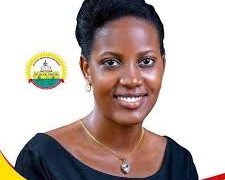
In Nyendo–Mukungwe, Mpuuga lost to NUP’s Gyaviira Ssebina Lubowa, who secured 21,447 votes against Mpuuga’s 10,548. Reacting to the outcome, Mpuuga alleged that DF candidates across the country were victims of a coordinated scheme of electoral fraud involving both the ruling NRM and sections of the opposition.
“The DF has taken note of syndicated and deliberate acts by a cabal of actors who exploited the failure of biometric voter verification kits to carry out multiple voting and ballot stuffing,” Mpuuga said. He claimed the alleged irregularities disadvantaged DF candidates in parts of Masaka, Dokolo, Amuru, Ngora, Gulu, Wakiso and Kampala, areas where the party says internal assessments and exit polls suggested DF victories.
Mpuuga said the party has constituted a legal team and is consulting stakeholders before deciding whether to challenge the election results in court. “We are listening to all stakeholders and shall communicate our decision once consultations are complete,” he said.
Beyond electoral disputes, Mpuuga also addressed his strained relationship with long-time ally Muhammad Muwanga Kivumbi, insisting he harbours no bitterness despite their political fallout ahead of the elections. The two have been close since their university days in the mid-1990s.
Their relationship deteriorated after Kivumbi declared the Nyendo–Mukungwe seat vacant and later openly campaigned for Mpuuga’s opponent. Kivumbi also replaced Mpuuga as NUP vice president for Buganda following disagreements linked to the controversial Shs500 million service award that led to Mpuuga’s ouster from the party’s leadership.
Speaking at the same briefing, Mpuuga said he still considers Kivumbi a brother, despite their differences.
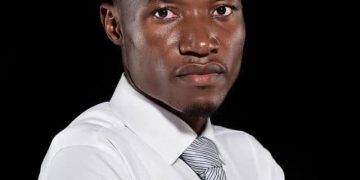
Kivumbi himself suffered defeat in the Butambala County parliamentary race, losing to journalist Eriasa Mukiibi Sserunjogi. He was among at least 23 NUP candidates who failed to retain or win seats in last week’s elections, results that have fuelled introspection and internal debate within the opposition following the presidential vote.
As opposition parties reassess their strategies in the post-election period, Mpuuga’s defiant tone underscores a broader struggle for relevance, leadership and direction in Uganda’s fragmented opposition politics.