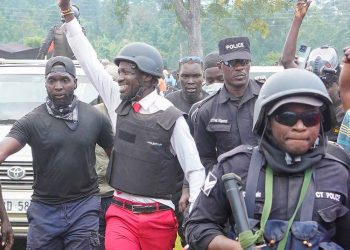

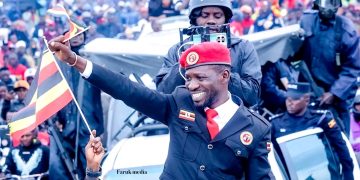
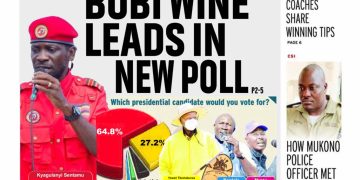




Opposition leader Robert Kyagulanyi Ssentamu, popularly known as Bobi Wine, has announced that he has left Uganda temporarily to embark on an international campaign aimed at rallying global support for democratic reforms in the country.
In a message addressed to supporters and the international community, Kyagulanyi said he had been in hiding for about two months following the declaration of President Yoweri Kaguta Museveni as the winner of the recent election.
He claimed that shortly after the results were announced, security forces surrounded his residence in an attempt to arrest or harm him.
According to the opposition figure, the military allegedly raided homes of several of his political allies, mounted roadblocks across different parts of the country, and placed his home under surveillance while searching for him.
Kyagulanyi said he managed to evade arrest with the help of ordinary citizens who sheltered him during the period he remained underground.
“The people of Uganda protected me,” he said in the statement, adding that he would now spend the coming weeks engaging Uganda’s international partners and democratic allies before returning to continue what he described as the struggle for freedom and democratic governance.
International Lobbying Strategy
Political analysts say Kyagulanyi’s decision to travel abroad reflects a strategy aimed at increasing international attention on Uganda’s political situation.
Opposition leaders in several countries have historically sought international support by engaging foreign governments, global human rights organisations, and diaspora communities.
Such efforts often aim to raise awareness about alleged electoral irregularities, governance concerns, and human rights issues.
Several opposition parties in Uganda have consistently called for reforms in electoral management, greater respect for civil liberties, and a level political playing field.
However, government officials and supporters of the ruling establishment have previously maintained that Uganda’s political system operates within constitutional frameworks and that elections are conducted under the supervision of independent institutions.
Uganda’s Long-Standing Political Debate
The political contest between Kyagulanyi and the ruling establishment has become one of the most prominent features of Uganda’s contemporary politics.
President Museveni has been in power since 1986 and argues that his leadership has delivered stability, economic growth, and regional security after years of political turmoil that preceded his government.
At the same time, opposition groups say the country needs generational leadership change and stronger democratic institutions to reflect the aspirations of Uganda’s young population.
The question of whether Uganda could experience a change of political leadership remains a topic of intense debate among analysts.
Uganda’s ruling party continues to maintain strong organisational structures across the country, particularly in rural areas where the majority of voters reside.
The government also maintains firm control over state institutions and security structures, factors that analysts say often shape the country’s electoral dynamics.
On the other hand, the opposition has been gaining traction among urban voters and younger citizens who are increasingly vocal about governance issues, unemployment, and political reforms.
Experts say that for a significant political shift to occur, opposition groups would likely need stronger unity, broader national mobilisation, and sustained institutional reforms that ensure confidence in electoral processes.
Uncertain Political Path Ahead
While Kyagulanyi’s global campaign may help amplify international attention toward Uganda’s political environment, analysts say meaningful political change ultimately depends on domestic political engagement, institutional reforms, and voter participation.
As the opposition leader begins his engagements abroad, many Ugandans will be watching closely to see how his international campaign shapes the next chapter of the country’s evolving political landscape.
Kyagulanyi has said he intends to return to Uganda after the engagements to continue mobilising supporters in what he describes as a long struggle for democratic change.
ENDS.