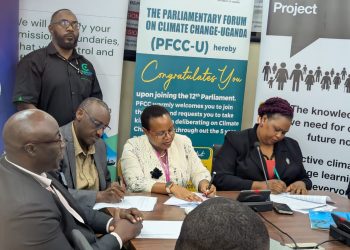



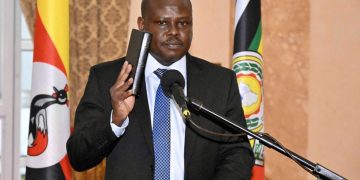





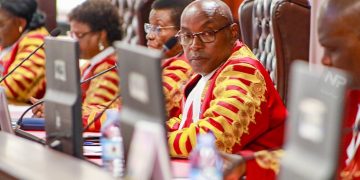


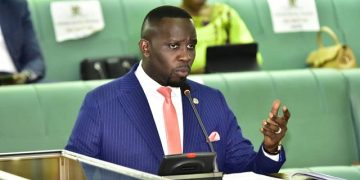










The Parliamentary Forum on Climate Change has signed a series of Memoranda of Understanding (MoUs) with key partners to strengthen coordination and accelerate Uganda’s response to climate change.
The agreements, signed at Parliament in Kampala, bring together actors from government, the private sector, and civil society to foster closer collaboration in tackling climate challenges across critical sectors, including energy, agriculture, health, and youth development.
Kiboga District Woman MP, Christine Nakimweero Kaaya, said the partnerships are intended to align the efforts of various institutions with Parliament’s climate agenda, ensuring that sector-specific interventions are better coordinated and deliver tangible results.
“We have signed Memoranda of Understanding with partners who are willing to work with the forum on climate change issues in line with their institutional mandates,” she said.
Kaaya added that the initiative is also aimed at laying a strong foundation for the 12th Parliament, urging legislators to prioritize climate change in policymaking and oversight.
Dr. Rebecca Isabella Kichoncho, Chairperson of Climate Hub International, said the partnership seeks to harness the strengths of different players within the climate ecosystem to advance a shared national agenda.
“The purpose is to collaborate and ensure we move towards a low-carbon development pathway,” she said, noting that fragmented efforts have previously limited the country’s ability to effectively address climate risks.
She added that stronger coordination will help tackle pressing challenges such as food insecurity, environmental degradation, and rising emissions, while ensuring climate considerations are embedded in laws and policies.
Private Sector Foundation Uganda Chief Executive Officer, Stephen Asiimwe, said the partnership will create an enabling environment for businesses to actively engage in climate action.
He noted that the private sector will play a key role in promoting green industrialization, improving efficiency, and tapping into emerging opportunities such as carbon markets.
“This partnership is about building a foundation for a low-carbon economy and ensuring that climate-smart practices reach all levels, including local communities,” he said.
Asiimwe added that the collaboration will also strengthen compliance with environmental standards and support the development of frameworks such as carbon credit systems.
Civil Society Budget Advocacy Group Executive Director, Julius Mukunda, said the MoUs are critical in enhancing accountability and ensuring that climate financing delivers meaningful impact.
He explained that the partnership will strengthen oversight of climate-related funding, improve transparency, and support Uganda in accessing global climate finance through the development of credible, investment-ready projects.
Mukunda added that coordinated efforts will help ensure resources are effectively tracked and directed toward priority climate interventions.
The partnerships are expected to deepen collaboration among stakeholders, strengthen policy implementation, and position Uganda to respond more effectively to climate change while advancing sustainable development goals.