






















In Mukono Municipality, the demolition has not yet begun. But for hundreds of roadside vendors, the loss is already unfolding.
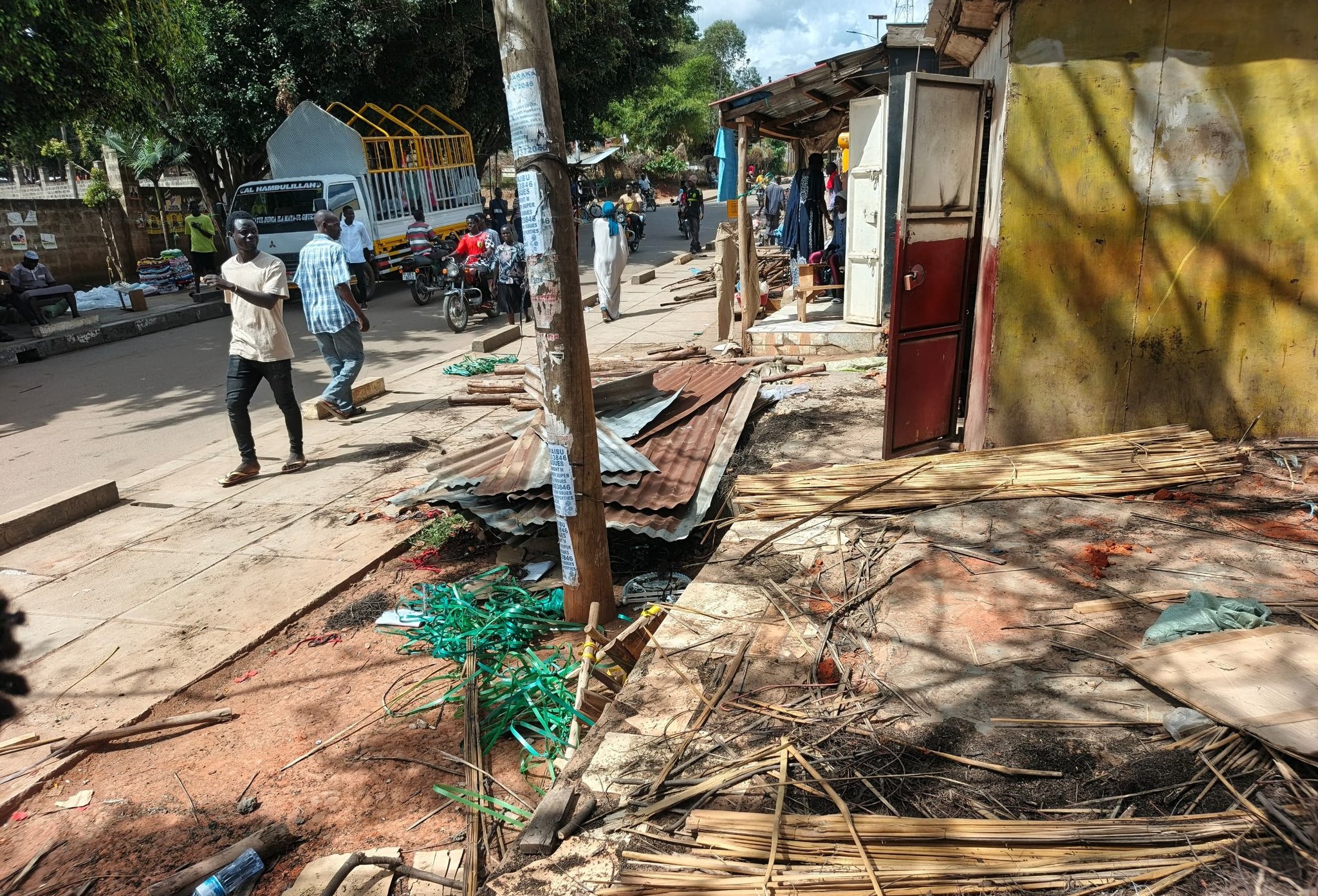
Armed with hammers, ropes and sheer desperation, traders along the Kampala–Jinja Highway and its connecting roads are dismantling their own kiosks and stalls. Not because enforcement officers have arrived, but because they know they will.
Municipal authorities have spent the past week marking structures and issuing firm warnings. The message is unmistakable. Vacate now or face forceful eviction when enforcement begins on Wednesday.
For many, this has triggered a painful race against time.
“I would rather remove my things myself than see them destroyed,” says Veronica Nalwadda, a vendor at Nabuti, carefully pulling apart a wooden fruit stall she has relied on for years.
Around her, others are doing the same, loading timber, iron sheets and merchandise onto boda bodas and pickup trucks, unsure where they will go next.
The operation, still in its warning phase, has already disrupted lives.
Across nearby residential areas, small kiosks and signposts are reappearing in front of homes as displaced traders attempt to rebuild in safer spaces.
Others are preparing to leave Mukono altogether, retreating to rural districts like Buikwe and Kayunga where they hope to start over, despite limited opportunities.
At the centre of the crisis is a troubling gap. Mukono Municipality has not provided a gazetted relocation site for the affected vendors.
This absence has left many stranded between compliance and survival.
“I have removed my stall, but where do I take it?” Juma Kaggwa, another trader at Nasuti asks. “They told us to leave, but they did not tell us where to go.”
The emotional strain is mounting, particularly among vulnerable groups. Single mothers, widows and unemployed youth who depend on daily sales now face an uncertain future.
Reports of people breaking down under stress, and in some cases collapsing and seeking medical attention, are beginning to emerge.
Yet even as the human cost becomes clearer, the policy intention remains widely acknowledged.
Authorities argue that restoring trade order is necessary to decongest roads, improve sanitation and create a safer urban environment.
Few disagree with that goal. What many are questioning, however, is the approach.
Several vendors say they have been operating legally, holding licences issued by the same municipality that is now pushing them out.
For years, they have paid daily dues and complied with local regulations. Now, they feel abandoned. “Were we wrong to follow the law?” one trader asks quietly.
The situation has also ignited political divisions within the ruling National Resistance Movement in Mukono.
District chairperson Haji Haruna Ssemakula has called for a halt to the planned enforcement, warning that it could undermine government programmes like the Parish Development Model and Emyooga, which are designed to lift citizens out of poverty.
He maintains that many of the affected traders are legitimate and should not be displaced without alternatives.
District publicity secretary Hakim Kyeswa has similarly urged caution, aligning his concerns with the broader economic vision championed by Yoweri Kaguta Museveni, where livelihood protection is central.
Mukono Municipality Member of Parliament Betty Nambooze Bakireke has also appealed for a temporary suspension, insisting that eviction without relocation is both unfair and unsustainable.
But others are standing firm. Municipal NRM Chairperson John Baptist Wamala argues that Mukono is simply implementing a nationwide directive and should not be seen as an exception.
To him, delaying enforcement risks undermining broader efforts to restore order in urban centres.
Town Clerk Francis Byabagambi has echoed that position. Despite mounting pressure, he has maintained that the exercise will proceed as scheduled.
“The deadline expires tomorrow, and nothing will stop the operation,” he told business leaders earlier this week, warning traders not to fall prey to individuals demanding money in exchange for protection.
As the clock ticks toward enforcement day, Mukono is caught in a tense pause.
No stalls have yet been destroyed. No forceful evictions have taken place. But the fear of what is coming has already forced action.
Vendors are not waiting to be pushed out. They are leaving on their own terms, however painful, carrying with them pieces of their businesses and fragments of certainty.
The unfolding moment reflects a deeper question facing many growing towns. Order is necessary, but how it is achieved matters just as much.
In Mukono, the lines have been drawn in paint on wooden stalls and metallic kiosks. And as Wednesday approaches, those marks are turning into decisions, departures and, for many, the beginning of an uncertain road ahead.
ENDS.