























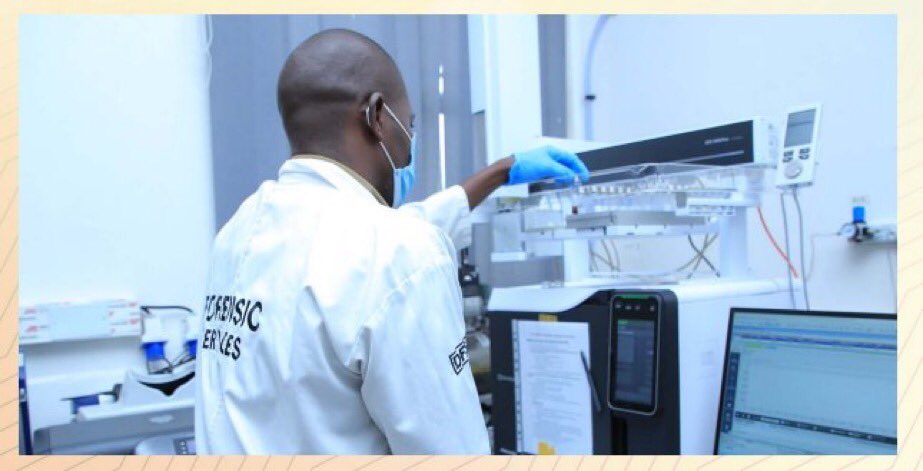
Uganda has taken a significant step toward strengthening its criminal justice system with the passing of the Forensic and Scientific Analytical Services Bill, 2025.
For many citizens, this law may sound highly technical, but its impact will be felt in everyday life, from how crimes are investigated to how evidence is handled in court.
At its core, the new law is about making investigations faster, more reliable, and more credible, while introducing long-overdue regulation in a field that has operated without clear national standards.
For years, delays in investigations and weak forensic processes have contributed to case backlogs, prolonged court proceedings, and in some instances, miscarriages of justice.
This new law aims to change that by building a more structured, accountable, and modern forensic system.
A National Forensic Authority is Now in Place
The law formally establishes the Government Analytical Laboratory (GAL) as the country’s national referral center for forensic and scientific analysis.
This means GAL will serve as the central authority for examining evidence in criminal and civil cases, setting standards, and guiding forensic practices nationwide.
In addition, GAL will now function as the National Poison Information Centre, giving it a public health role.
This is especially important in cases of suspected poisoning, food contamination, or chemical exposure, where timely and accurate information can save lives.
All Forensic Laboratories Must Be Licensed
For the first time, all laboratories offering forensic or scientific analytical services must register and obtain annual licenses.
This requirement, enforced by the Ministry of Internal Affairs through its Department of Inspection and Legal Services, is intended to ensure that only qualified and compliant facilities handle sensitive evidence.
For ordinary citizens, this means greater confidence that forensic results used in court meet professional and scientific standards.
Creation of a National Forensic Database
The law introduces a centralized forensic database, including DNA records, to support investigations.
This system is expected to improve the ability of law enforcement agencies to identify suspects, link crimes, and solve cases more efficiently.
However, Parliament has emphasized that this must be balanced with strong privacy protections, in line with constitutional rights.
The handling of genetic data remains a sensitive issue, and safeguards will be critical in maintaining public trust.
Integration with Existing Biometric Systems
The new framework allows forensic data to be integrated with existing biometric systems such as fingerprint and facial recognition databases used by the Uganda Police Force and the National Identification and Registration Authority.
This integration could significantly enhance crime detection, but it also raises questions about surveillance and data protection that the public will need to watch closely.
Modernization of Forensic Reporting
The law replaces the outdated term “certificate of analysis” with “laboratory analytical report,” reflecting the complexity of modern forensic science.
This change ensures that reports presented in court are more detailed and scientifically robust.
Importantly, all forensic reports issued before the law came into effect will remain valid, ensuring continuity in ongoing cases.
Why This Law Matters Now
The timing of this law is notable. It comes amid efforts to improve crime management, with reported cases dropping by over 10 percent in 2025.
Yet, behind that progress lies a deeper challenge: investigators are overstretched, and the system is burdened by a backlog of more than 120,000 cases.
With detectives handling far more cases than the global standard, the quality and speed of investigations have suffered.
Weak or delayed forensic evidence has often made it harder to secure convictions, even in serious cases.
The Forensic and Scientific Analytical Services law is, without question, a necessary reform.
It addresses structural weaknesses that have long undermined Uganda’s justice system, particularly the lack of regulation, poor coordination, and inconsistent forensic standards.
By centralizing services, enforcing licensing, and introducing a national database, the law lays the groundwork for a more efficient and credible investigative process.
However, passing the law is only the first step. Its success will depend on implementation.
First, the Government Analytical Laboratory must be adequately funded, equipped, and staffed to handle its expanded mandate.
Without investment in technology and skilled personnel, the expected improvements in speed and quality may not materialize.
Second, oversight and enforcement will be critical. Licensing laboratories is one thing; ensuring compliance and maintaining high standards is another.
Weak enforcement could allow substandard practices to persist under a regulated system.
Third, data protection will be a defining issue. The integration of DNA, fingerprint, and facial recognition data presents both an opportunity and a risk.
If safeguards are not strictly enforced, public confidence in the system could quickly erode.
Finally, the law must translate into real relief for investigators on the ground.
Reducing case backlogs and improving conviction rates will require not just better forensic tools, but also broader institutional support for detectives, prosecutors, and courts.
In simple terms, this law has the potential to make justice in Uganda faster, fairer, and more reliable. But whether it delivers on that promise will depend on how well it is put into practice and how carefully the balance between security and citizens’ rights is maintained.
By Ivan Kimbowa, Senior Investigative Journalist
Tel: +256 701 584195 | Email: ivankimbowa7@gmail.com