
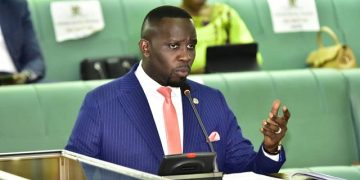




Mathias Mpuuga Nsamba has been singled out for his political maturity and restraint in the aftermath of the 2026 general elections, with religious leaders in pointing to his conduct as an example for the country.
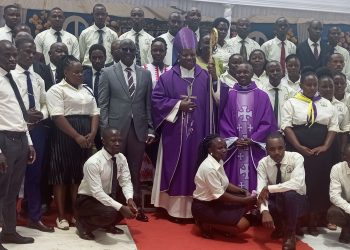
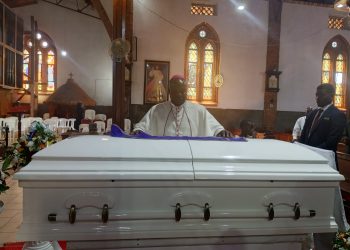
During Easter Sunday Mass, the Bishop of Masaka Diocese, Serverus Jjumba, commended Mpuuga for choosing not to challenge election results.
The Bishop revealed that Mpuuga’s leadership qualities were long recognized, noting that “three bishops saw a good leader in him” during his time as Leader of the Opposition, when he traversed the entire country engaging citizens.
He thanked him for exhibiting what he described as “mature politics” at a time when tensions remain high following the elections.
Bishop Jjumba used the occasion to deliver a broader message on justice and societal values, expressing deep concern over what he termed as the misuse of courts of law.
He criticized the growing tendency among politicians to rush to court immediately after elections, describing it as a “bad habit” that undermines the dignity of the judiciary.
He urged Ugandans to stop treating courts like a “dustbin” where every grievance is dumped, and instead view them as a sacred institution meant for genuine cases of injustice.
Drawing a comparison with the Sacrament of Penance in the Catholic Church, the Bishop described the court as a place that should be approached with seriousness and respect, only when one has truly suffered a wrong.
According to the Bishop, the situation in Greater Masaka has become particularly concerning, with a surge in election-related petitions.
He noted that in the 2026 elections, only two Woman Member of Parliament seats in the region went unchallenged, while several constituencies, including Kakuuto, Bukomansimbi North, Kalungu West and Lwemiyagaabo, are currently facing legal disputes.
He also warned against coercion in both politics and religion, stressing that affiliation to political parties such as the National Unity Platform or the National Resistance Movement, as well as religious beliefs, are personal choices that must be respected.
Mpuuga, speaking during the same gathering, did not shy away from addressing the flaws in the electoral process.
He stated that dishonesty continues to undermine Uganda’s politics and admitted that irregularities were evident, with those responsible well known.
However, he emphasized that his decision not to seek legal redress was guided by the need for national stability.
He noted that the country must move forward under all circumstances, warning that repeatedly contesting outcomes risks deepening divisions rather than resolving them.
Using local proverbs, Mpuuga illustrated the need for fresh approaches to national challenges, stressing that broken systems cannot be fixed using the same methods that caused their failure.
Beyond politics, Mpuuga raised concern over a growing social crisis in Nyendo-Mukungwe, where he said many parents especially fathers have neglected their responsibilities, leaving children vulnerable.
He described the situation as painful, noting that abandoned children are often left to wander in search of food, exposing them to exploitation and danger.
He called for urgent collective action to safeguard the welfare of the younger generation.
The message from Masaka was clear: while political disagreements are inevitable, the path to national progress lies in restraint, integrity, and a shared commitment to peace, values that leaders like Mpuuga are now being urged to uphold and others to emulate.
The Pokino Chief of Buddu, Jude Muleke, echoed the call for moral renewal, urging parents to take greater responsibility in guiding and protecting their children.
He condemned the practice of paying youth to spread insults on social media, saying it undermines their future and damages societal values.
He also warned about rising drug abuse among young people, noting that it contributes to reckless behavior online and erodes public trust.