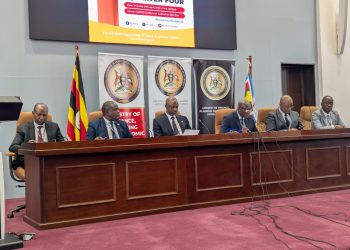

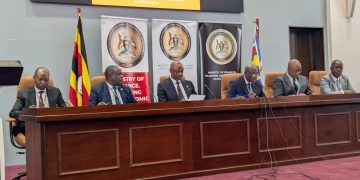













The Ministry of Health has launched the second wave of the national mosquito net distribution campaign, renewing efforts to combat malaria, one of Uganda’s leading public health threats.
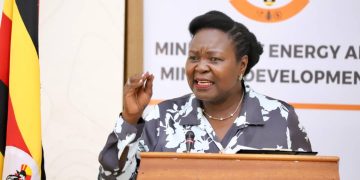
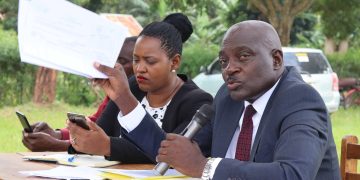
Speaking at the Uganda Media Centre, Dr. Kabanda Richard, Commissioner for Health Promotion, Education and Strategic Communication, said the campaign is part of the Uganda Malaria Elimination Strategic Plan, which aligns with the country’s long-term development agenda under Uganda Vision 2040.
Dr. Kabanda emphasized that the government remains committed to achieving a malaria-free Uganda by 2030, noting that the disease, though preventable and treatable, continues to place a heavy burden on the population.
“Malaria is preventable and treatable, but risk perception remains low, especially in rural communities,” he said, warning that complacency is undermining progress made so far.
According to the 2024 World Malaria Report, Uganda accounts for 4.7 percent of global malaria cases, ranking third worldwide. The country also ranks ninth in malaria-related deaths.
In 2025 alone, Uganda recorded more than 11 million malaria cases and over 2,342 deaths, with 55 percent of fatalities occurring among children under five a group described as highly vulnerable.
Recent findings from the 2024 Malaria Indicator Survey further reveal a rise in malaria prevalence to 12.5 percent, up from 9.1 percent in the 2018-2019 survey period. Health officials attribute this increase to poor adherence to prevention and treatment guidelines, climate variations, and emerging biological threats.
In response, the Ministry is scaling up interventions under its 2025–2026 malaria strategy, focusing on reducing malaria deaths to zero. Key measures include mass distribution of insecticide treated mosquito nets, indoor residual spraying, and intensified health education campaigns aimed at changing community behavior.
The government is also strengthening access to treatment services, urging Ugandans to seek care only after proper testing at recognized health facilities. Special attention is being directed toward malaria prevention during pregnancy, alongside improved surveillance, monitoring, and operational research at community level.
Dr. Kabanda called on the public to fully embrace preventive measures, particularly consistent use of mosquito nets, to help reduce infections and save lives.