










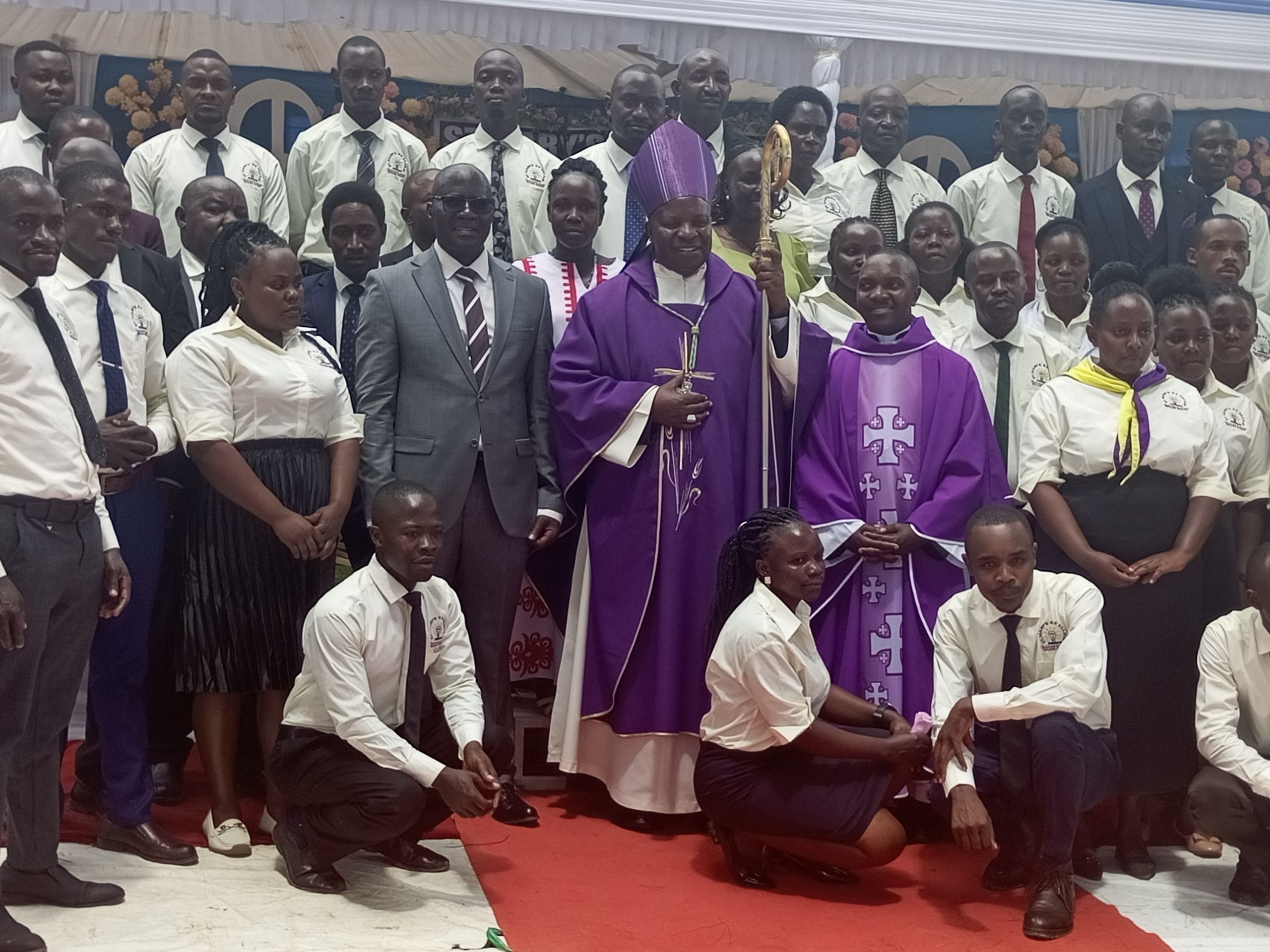
The Bishop of Roman Catholic Diocese of Masaka, Rt. Rev. Serverus Jjumba, has cautioned school managers against constructing weak and short-lived buildings, describing the practice as a costly misuse of resources.
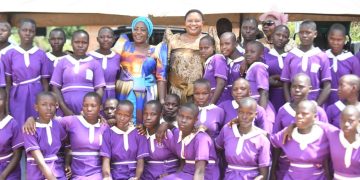
He delivered the warning during a thanksgiving Mass held at St. Mary’s Secondary School Ssanje to mark the school’s 46th anniversary and to launch its “Road to 50 Years” development plan ahead of its Golden Jubilee in 2030.
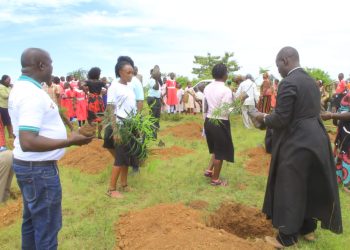
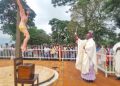
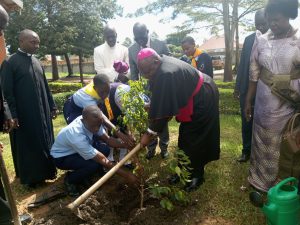
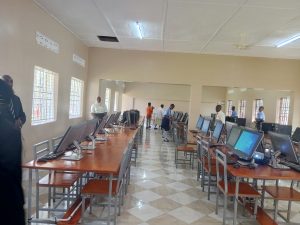
The celebrations began with Bishop Jjumba planting a memorial tree to commemorate the milestone. He also officially commissioned a newly constructed computer laboratory equipped with 60 computers, a major step in strengthening the school’s technological capacity.
In his address, Bishop Jjumba emphasized the importance of constructing durable structures that can stand the test of time. He noted that poorly built facilities force schools into a cycle of constant repairs and fundraising, placing unnecessary financial pressure on parents.
He further urged school administrators to ensure proper accountability in the use of construction funds and materials such as cement, iron sheets, and nails. According to the Bishop, mismanagement of these resources is a key factor behind the rapid deterioration of many school buildings.
Turning to education in the digital age, Bishop Jjumba encouraged schools to embrace technology as a tool for equipping learners with relevant skills for the modern job market. He advised students to use computers productively while maintaining discipline in their digital habits.
Drawing inspiration from Carlo Acutis, he urged learners to strengthen their faith and ensure that technology serves as a tool for growth rather than a source of distraction. He warned against excessive and aimless use of gadgets, encouraging structured and purposeful engagement instead.
The Headteacher, Joseph Mukasa Ssewalwanga, who also serves as the First Deputy Pokino, reflected on the school’s humble beginnings in 1980 in a mud-walled church. He expressed gratitude for the progress made over the past 46 years and outlined ambitious plans for the Golden Jubilee in 2030.
These plans include completing ongoing construction projects, renovating older structures, and establishing modern ICT, library, and science facilities. He revealed that the school will require approximately 3 billion shillings to achieve these goals, with funding expected from parents, alumni, government, and well-wishers.
Despite the progress, Ssewalwanga highlighted several challenges affecting the school’s operations. He pointed to high taxes imposed on private schools, which strain service delivery, and noted that only 21 out of the school’s 82 staff members are on the government payroll. This shortfall, he said, forces the school to rely on bank loans due to insufficient fee collections.
Also speaking at the event, the Masaka Diocesan Education Secretary, Rev. Fr. Michael Kamulegeya, praised the government’s new curriculum for its focus on practical and employable skills. However, he raised concerns about the high cost of essential training tools required for subjects such as construction, mechanics, and tailoring.
He noted that many parents cannot afford these materials, and schools often lack the financial capacity to provide them for every student. He called on the Ministry of Education to intervene, warning that without adequate equipment, the implementation of the otherwise promising curriculum could be undermined.