







By Kyeswa Hakim
I have spent the better part of my life defending the NRM. I have walked village paths, sat under trees, and explained to my people why they should trust the Movement. I told them about the Parish Development Model. I told them that the government finally understood that the only way out of poverty is to bring every Ugandan into the money economy, nobey as we call it. I said it with pride because I believed it.
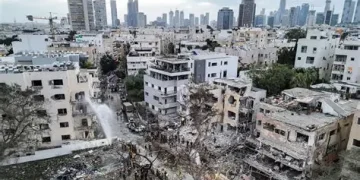
Then, in the last few weeks, I watched the bulldozers roll into our municipalities, and I felt my own words turn bitter in my mouth.
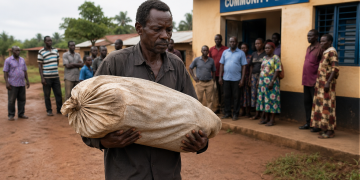
From Jinja to Mbarara, from Gulu to Mbale, the scene has been the same. Men and women stand in the dust, staring at the wreckage of their businesses, their hands trembling. In Jinja, I met a woman named Nalongo Grace. She had just taken a PDM loan of eight hundred thousand shillings to expand her vegetable stall. She built a small wooden structure and painted it in the colors of the NRM flag out of gratitude. Last Thursday, it was gone. Her stock of tomatoes, onions, and cabbages lay crushed under iron sheets. She was not crying. She was beyond tears. She kept repeating, “But I paid my taxes. I was trying to follow the money economy.”
That is what haunts me. We are demolishing the very people we promised to uplift.
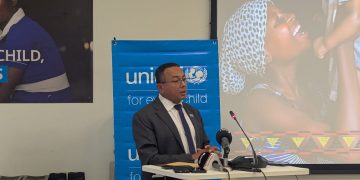
The directive came from the Permanent Secretary of the Ministry of Local Government. I do not doubt that he wants order. We all want order. But order imposed from Kampala without understanding the reality of each municipality is not order. It is violence disguised as administration. In Kampala, there is negotiation, phased redevelopment, and alternative spaces. In upcountry towns, the bulldozers come first and questions follow later. This double standard is not lost on our people. They ask me, “Cadre, are we not citizens too?”
The numbers behind this chaos are staggering, but numbers alone cannot capture the pain. Still, we must look at them because they tell a story of economic disruption. Sixty percent of Ugandans outside agriculture depend on the informal sector, including kiosks, markets, and small workshops. These are not just illegal structures. They are the engines of the money economy. In Mbarara, over two thousand businesses were demolished in one week. Each business, on average, supports four dependents. That means nearly ten thousand people, including children, elderly parents, and relatives, were suddenly cut off from their lifeline. In Jinja, five thousand vendors were displaced. Their annual turnover was estimated at three hundred billion shillings. That money is not abstract. It pays school fees, medical bills, meals, and supports reinvestment into the economy.
And then there is the Parish Development Model. How do I explain this to the people? The PDM was supposed to be our flagship program and the legacy of this government. We disbursed one hundred million shillings per parish to move households from subsistence to business. Many of the demolished stalls were built with PDM funds. The traders took loans and invested. They were trying to repay. Now the asset is gone, but the debt remains. What will happen to repayment rates? What will happen to the SACCOs? We are undermining our own efforts.
I am not against trade order. I understand the frustrations of congested streets, haphazard stalls blocking emergency access, and unregulated construction. We need proper markets, designated zones, and dignified spaces for our people to trade. But order cannot come at the cost of livelihoods. It cannot come through abrupt demolitions carried out without warning. We are the NRM. We have structures. We have local councils from the village to the district. We have RDCs. We have mayors and councillors. Why were these structures bypassed? Why was there no dialogue? A simple meeting at the parish level could have identified which traders needed relocation, which structures were genuinely dangerous, and which could be regularized. Instead, a blanket demolition swept away both lawful and unlawful structures.
Politically, this is a gift to our opponents. I say this not to cause alarm but as someone who engages directly with the people. There is anger. There is a sense of betrayal. People trusted us with the promise of the money economy, and now they feel pushed out of it. When a mother whose stall was demolished asks me, “Where is the NRM now?” I have no easy answer. I can only say that we made a mistake and must correct it.
The instruction from the Permanent Secretary should not have been implemented without first assessing the dynamics of each urban center. A municipality like Fort Portal is not the same as Gulu. A market in Masaka is not the same as one in Lira. The people understand their towns. They know where markets have existed for generations. They know which traders are legitimate and which are encroachers. Yet they were never consulted.
I am calling on my party and my government to pause and reflect. Let us suspend these operations immediately. Let us return to the parishes, municipalities, and divisions and engage with the people. Let us map traders, verify their PDM status, and find solutions that do not involve destruction. If relocation is necessary, let alternative sites be provided first. If regularization is needed, let there be clear timelines and affordable fees. Let us treat our people not as obstacles to order but as partners in building our towns.
We promised to bring Ugandans into the money economy. That promise cannot be fulfilled by destroying their livelihoods. The NRM was founded on the principle that people matter and that development must be felt by the ordinary person in the village and trading centre. I still believe in that principle. But we are losing our way if we equate directives with effective governance.
Trade order is necessary. But it must have a human face. It must involve dialogue. It must respect the hardworking men and women who are striving, against all odds, to find their place in the money economy. If we continue on this path, we will not only demolish kiosks, we will also erode the trust that holds this Movement together.
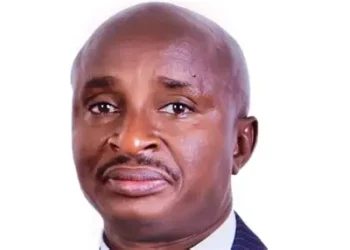
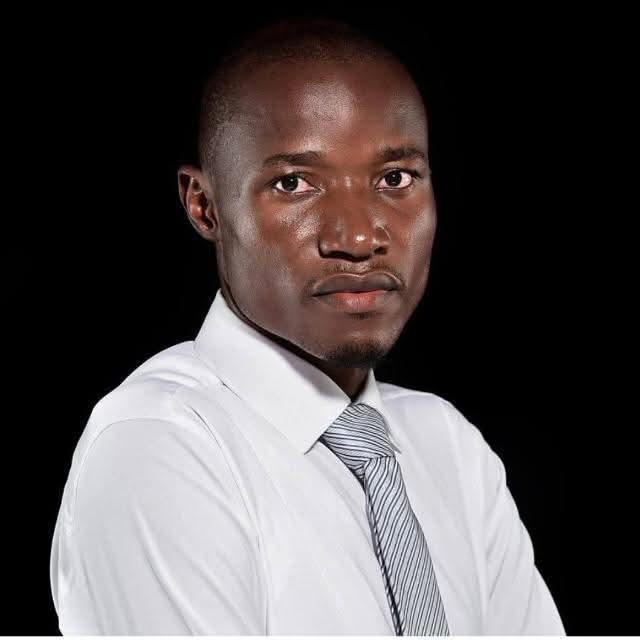
The author is an NRM cadre and NRM Publicity Secretary for Mukono District.
Email: hakimkim255@gmail.com