






















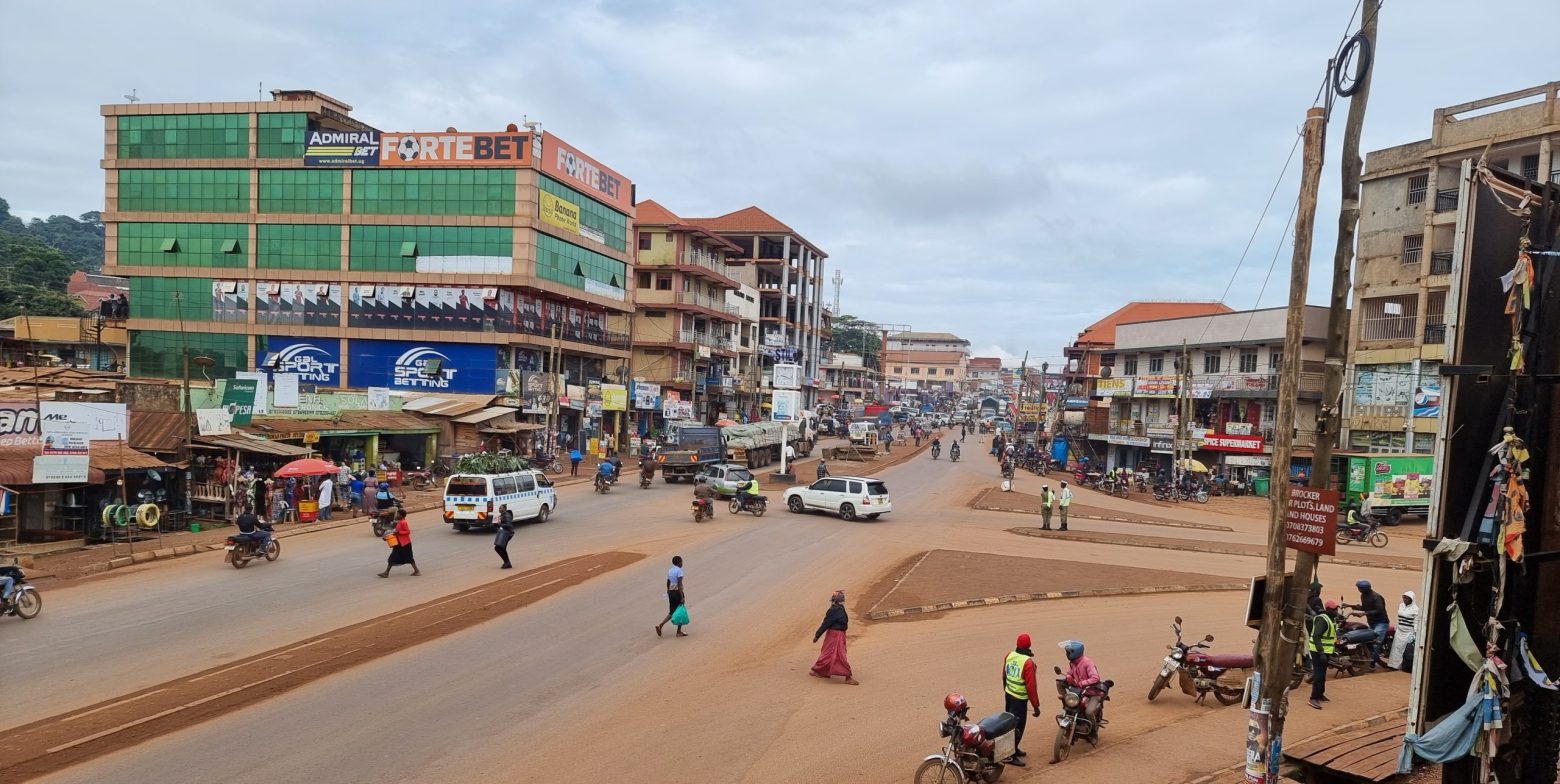
Mukono Municipality’s enforcement of a trade order to clear road reserves has stirred predictable debate, but beneath the public outcry lies a decision that reflects maturity in urban governance.
For a fast-growing municipality sitting along one of Uganda’s busiest corridors, the Kampala–Jinja highway axis, the choice to restore order is not merely administrative. It is strategic, necessary, and, in many ways, overdue.
For years, Mukono has evolved from a once tranquil town into a bustling urban centre. Population growth, increased commercial activity, and its proximity to Kampala have made it a magnet for traders, commuters, and investors.
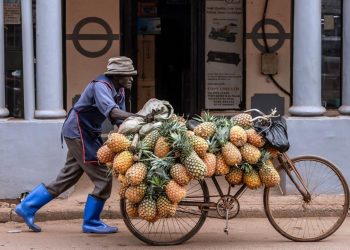
However, this growth has not always been matched with structured planning. Road reserves, originally set aside for pedestrian movement, drainage systems, and future road expansion, have gradually been taken over by informal traders, makeshift stalls, and, in some cases, semi-permanent structures.
The consequences of this encroachment have been visible to anyone who regularly navigates Mukono town. At peak hours, traffic congestion becomes the defining feature of daily life.
Vehicles crawl through narrow passages where roads have effectively been reduced in width. Pedestrians, deprived of walkways, spill onto the roads, competing for space with boda bodas and cars.
The result is a chaotic mix that slows movement, increases the risk of accidents, and erodes the efficiency of the town’s economy.
It is within this context that the trade order must be understood. Clearing road reserves is not an attack on small businesses; it is an attempt to restore the intended function of public infrastructure. Roads are not markets, and when they become so, the entire urban system begins to fail.
Traffic data and urban patterns across similar municipalities offer a clear picture of what is at stake. When road reserves are encroached upon, the effective capacity of a road can drop by as much as 30 to 50 percent. In practical terms, this means a road designed to handle a certain volume of traffic is suddenly overwhelmed, leading to bottlenecks and extended travel times.
In Mukono, where thousands of commuters pass through daily, even a small reduction in road efficiency has a multiplied effect. Delays ripple outward, affecting not only local traffic but also regional movement along the highway.
The economic cost of this congestion is often underestimated. Time lost in traffic translates directly into lost productivity. Traders receive goods late, workers arrive at their jobs exhausted or delayed, and transport costs increase as vehicles consume more fuel while idling.
For businesses operating on tight margins, these inefficiencies can be the difference between survival and collapse. In this sense, restoring order on the roads is not anti-business. It is, in fact, pro-economy.
Safety is another critical dimension. Encroached road reserves create blind spots and unpredictable movement patterns. Pedestrians crossing between stalls, boda bodas making sudden turns, and vehicles navigating through tight spaces all contribute to a heightened risk of accidents.
Emergency services face even greater challenges. An ambulance or fire truck navigating a congested, obstructed road can lose precious minutes, and in emergencies, those minutes can determine outcomes.
There’s also a public health and environmental aspect to consider. Informal roadside trading often lacks proper sanitation and waste management systems. Accumulated garbage, poor drainage, and overcrowding create conditions that can facilitate the spread of disease. By relocating trade into designated areas, the municipality has an opportunity to enforce standards that protect both traders and customers.
Critics of the trade order often frame it as an eviction exercise that targets the vulnerable. This concern is not without merit. Informal traders form a significant part of the urban economy, and many depend on daily sales for survival.
However, the alternative cannot be the permanent occupation of road reserves. Cities that have allowed such practices to continue unchecked have found themselves trapped in cycles of disorder that are difficult and costly to reverse.
The more constructive approach is one that balances enforcement with inclusion. Mukono Municipality must ensure that displaced traders are integrated into formal or semi-formal trading spaces.
Markets should not only exist on paper but should be accessible, affordable, and strategically located to attract customer traffic. Without this, traders will inevitably drift back to the roads, undermining the very objective of the trade order.
Encouragingly, experiences from other urban centres suggest that when properly implemented, such reforms can yield positive outcomes. Organised markets tend to attract more stable customer flows, improve hygiene, and create opportunities for traders to grow their businesses.
Over time, traders benefit from better working conditions, while customers enjoy safer and more predictable shopping environments.
There is also a psychological and reputational dimension to urban order. A well-organised municipality signals seriousness and readiness for investment.
Investors are more likely to commit resources to areas where infrastructure is functional and governance is effective. Mukono, given its strategic location, stands to benefit significantly from this perception shift.
At its core, Mukono’s trade order is a classic case of short-term disruption in pursuit of long-term gain. The immediate impact, particularly on informal traders, is undeniably painful. Livelihoods are interrupted, routines are broken, and uncertainty increases. These are real costs that cannot be dismissed.
However, when weighed against the broader trajectory of the municipality, the rationale becomes clearer. Congestion is not just an inconvenience; it is a structural barrier to growth.
Left unaddressed, it compounds over time, increasing the cost of doing business, reducing quality of life, and straining public services. By acting now, Mukono is attempting to avoid a future where disorder becomes entrenched and far more difficult to correct.
The success of this initiative will ultimately depend on execution. Enforcement alone is insufficient. It must be accompanied by thoughtful planning, stakeholder engagement, and continuous monitoring. Authorities must resist the temptation to treat the exercise as a one-off operation. Urban order is not achieved in a day; it requires sustained effort.
If implemented with consistency and fairness, the trade order has the potential to transform Mukono into a more efficient, safer, and economically vibrant municipality. Reduced congestion will improve mobility along the Kampala–Jinja corridor. Businesses will operate in a more predictable environment. Public spaces will regain their intended purpose.
The beauty of this trade order, therefore, lies not in the clearing of road reserves, but in the vision it represents. It is a statement that Mukono is ready to transition from reactive growth to planned development.
It is an acknowledgment that public space must serve the collective good. And it is a reminder that while change is often uncomfortable, it is also necessary. The path Mukono Municipality has chosen is not the easiest, but it is arguably the right one.
ENDS.