
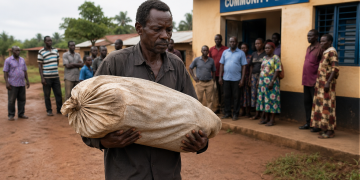

























What happened in Mukono is no longer just a Mukono story. It is a Ugandan story.
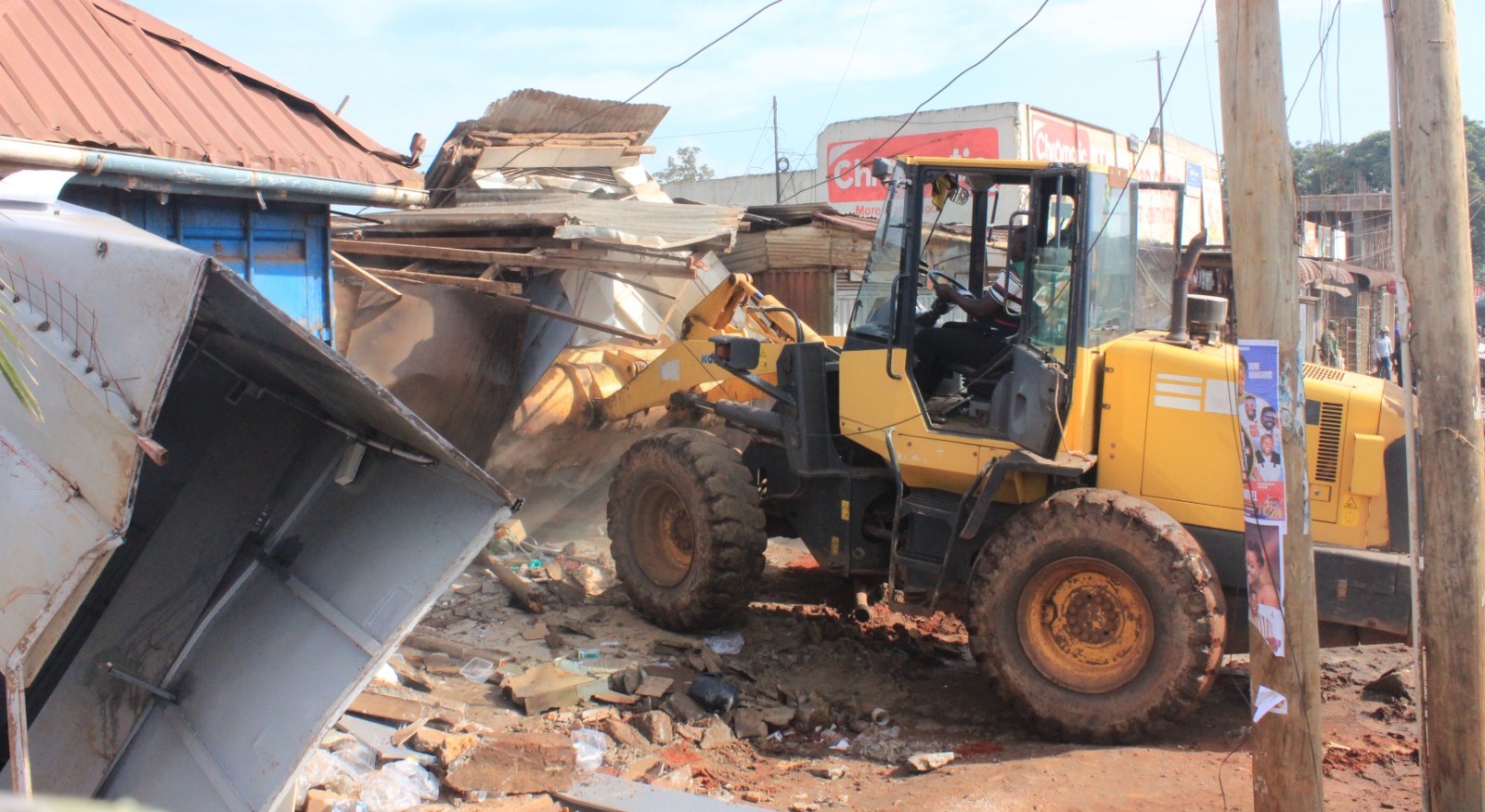
At dawn, when most families were still asleep, traders woke up to the sound of metal crashing and wood splintering under force.
By mid-morning, stalls that had taken years to build through sweat, loans, and sacrifice were reduced to debris. For authorities, it was an enforcement operation. For the traders, it was the collapse of a livelihood.
Across towns and trading centres in Uganda, the same script is playing out. Structures marked with an “X.” Deadlines issued.
And then, early morning demolitions. The justification is always the same: restore order, clear road reserves, and modernize urban spaces. On paper, it makes sense. In reality, it is far more complicated.
To understand this situation, one must step away from policy language and think like a common Ugandan.
This is a country where survival is daily. Where business is not always planned from a business school, but from necessity.
A mother starts selling tomatoes because school fees are due. A youth sets up a roadside welding shed because there are no jobs. A family builds a small kiosk because it is the only way to eat.
These are not illegal ambitions. They are acts of survival. So when such structures are demolished, the impact goes far beyond the physical. It cuts directly into the fragile economic lifeline of ordinary citizens.
A stall is not just a structure. It is school fees. It is rent. It is food on the table. Yet, there is another side that cannot be ignored.
Uganda’s towns have, for years, grown in a chaotic and unregulated way. Road reserves have been encroached on. Drainage channels blocked.
Pedestrians forced onto roads, increasing accidents. Fire risks have multiplied in congested trading zones. Anyone who has navigated through busy town centres knows the disorder is real.
In that sense, government intervention is not only justified, it is necessary. No country develops without order.
Clean, organized, and planned urban spaces attract investment, improve safety, and create a more functional economy.
The vision many leaders speak about, of modern cities that can compete regionally, cannot be achieved if every open space becomes an informal market. This is the strongest argument in support of the demolitions.
But even a good policy can become bad in execution.
The biggest concern in Mukono, and across similar operations in the country, is not the intention, but the method. Giving traders two weeks to vacate, without providing clear and affordable alternatives, is not transition. It is displacement.
Telling a small trader with capital of one or two million shillings to move into a shop costing five hundred thousand or one million in rent is, in practical terms, telling them to shut down. It ignores the economic reality most Ugandans operate in.
There is also the question of timing and approach. Why early morning demolitions guarded by security forces? Why not phased relocations? Why not structured engagement with traders’ associations? Why not ensure that alternative markets are not only available, but accessible and affordable before enforcement begins?
When enforcement appears abrupt and forceful, it creates the impression of a government that is out of touch with the people it serves.
Another troubling aspect is the issue of trust. Some traders claim their structures were on private land or had existed for years without interference.
Others say they cooperated with government projects before, such as road construction, believing that their sacrifices would be respected.
When demolitions come without compensation or clear explanation, that trust erodes. And once trust is lost, even the best policies face resistance.
There is also a deeper economic contradiction at play. On one hand, government programs like the Parish Development Model and Emyooga are encouraging citizens to start small businesses and lift themselves out of poverty.
On the other hand, enforcement operations are dismantling the very informal spaces where many of these businesses operate. The result is a cycle of hope and frustration.
A trader takes a loan, invests in a small business, struggles to grow, and then loses everything overnight. The loan remains. The collateral is at risk. Poverty deepens.
This is where policy must be harmonized. If the goal is to formalize the economy, then the transition must be gradual and supported.
Informal traders should not be treated as obstacles to development, but as participants in it. They need pathways, not just pressure.
At the same time, citizens must also take responsibility. There has been a tendency to ignore regulations until enforcement arrives.
Some traders expand into road reserves knowingly, hoping that enforcement will never come. Others resist relocation even when given notice. This culture of reactive compliance contributes to the cycle of conflict.
Development is a shared responsibility. So what is the way forward?
First, government must prioritize humane enforcement. This means longer transition periods, genuine consultations, and most importantly, the provision of viable alternatives before demolition.
Second, urban planning must be proactive, not reactive. Markets, trading hubs, and low-cost commercial spaces should be developed in anticipation of growth, not after chaos has already set in.
Third, financial realities must be considered. If traders are to move into formal spaces, rent structures must reflect their earning capacity. Otherwise, formalization becomes exclusion.
Fourth, communication must improve. Policies should not reach people through warnings and markings alone, but through continuous engagement that builds understanding and cooperation.
Finally, there must be accountability on all sides. Authorities must enforce fairly and transparently, while citizens must respect regulations and participate in orderly development.
What happened in Mukono is painful, but it is also revealing. It exposes the gap between policy and reality. Between the vision of modern cities and the daily struggle of ordinary Ugandans. Between order and survival.
If handled well, this moment can become a turning point, a chance to rethink how Uganda urbanizes without leaving its most vulnerable behind.
If handled poorly, it risks deepening inequality, resentment, and economic hardship. In the end, development should not feel like punishment. It should feel like progress that carries everyone along.
By Ivan Kimbowa, Senior Journalist
Tel: +256 701 584195 | Email: ivankimbowa7@gmail.com