



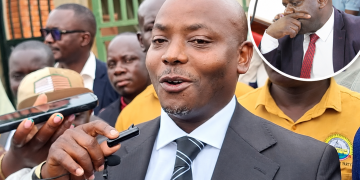











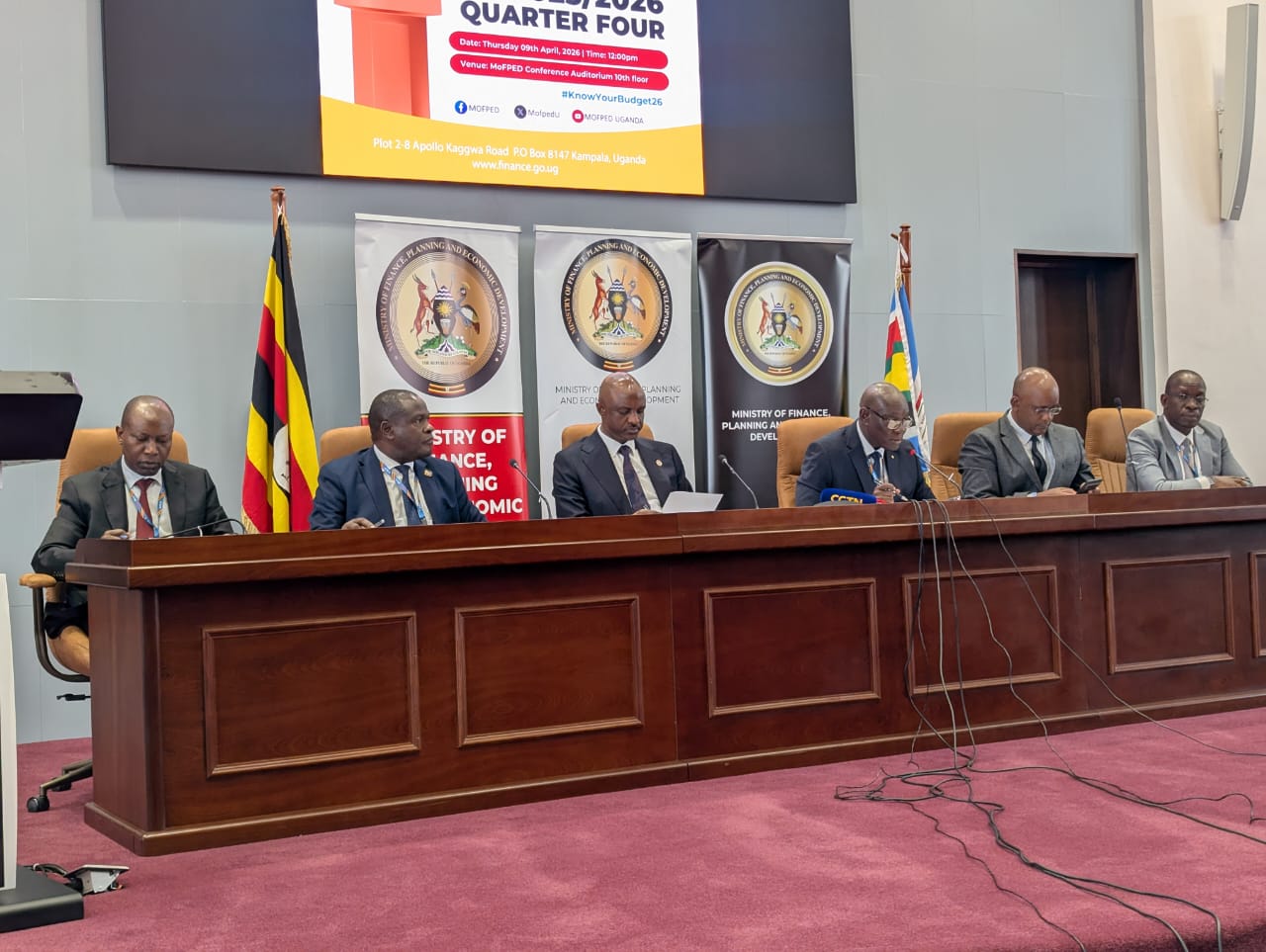
Ramathan Ggoobi, Permanent Secretary and Secretary to the Treasury at the Ministry of Finance, Planning and Economic Development, has announced the release of Shs 17.44 trillion for the fourth quarter of the 2025/26 financial year, as government moves to sustain economic growth while maintaining fiscal discipline.
The release, which brings total expenditure for the financial year to Shs 77 trillion, comes shortly after the conclusion of the 2026 General Elections and amid global uncertainty linked to geopolitical tensions in the Middle East. Ggoobi said the timing has informed a cautious but strategic approach focused on sustaining Uganda’s tenfold growth agenda while safeguarding macroeconomic stability.
He noted that government spending will remain within available resources, with priority given to wealth creation sectors under agro industrialisation, tourism, mineral development, and science and technology, alongside continued investment in key growth enablers such as security, infrastructure, and human capital development.
Ggoobi described Uganda’s economic performance as resilient, revealing that the economy expanded by 8.5 percent in the second quarter of the financial year, up from 5.4 percent during the same period last year. Average growth for the first half of the year rose to 6.7 percent, driven by increased activity in industry, agriculture, and services, as well as growth in investment and exports.
Gross Domestic Product is projected to grow between 6.5 and 7.0 percent by the end of the financial year, with further acceleration expected to double digit levels following the anticipated commencement of oil production. By June 2026, GDP is projected at USD 68.4 billion, with GDP per capita estimated at USD 1,399.
Inflation has remained stable at an average of 3.3 percent, below the government’s target of 5 percent, supported by a strong Ugandan shilling and declining global inflation. The shilling traded at about Shs 3,762 to the US dollar as of March 2026, reflecting strong foreign exchange fundamentals, including growing reserves now standing at USD 5.9 billion.
Investor confidence has also remained high, with both local and foreign investors maintaining optimism despite the election period. Key economic indicators, including the Purchasing Managers Index and Business Tendency Index, have consistently remained above growth thresholds, signaling continued expansion in business activity.
The fourth quarter expenditure prioritizes statutory obligations, including Shs 6.38 trillion for debt servicing, Shs 2.04 trillion for wages, and Shs 343 billion for pensions. Significant funding has also been directed towards development priorities, including infrastructure, health, and local governments.
The Ministry of Works and Transport received Shs 1.76 trillion to support major infrastructure projects, while the health sector was allocated Shs 372.8 billion, complemented by Shs 342 billion to the National Medical Stores for essential medicines. Local governments will receive Shs 519.8 billion to facilitate service delivery and development at the grassroots level.
Government also released Shs 542.3 billion for the Parish Development Model and an additional Shs 74.7 billion for other wealth creation initiatives, including support to the Uganda Development Bank and Uganda Development Corporation.
To address outstanding obligations, Shs 454.2 billion has been allocated this quarter for domestic arrears, bringing the total cleared this financial year to Shs 973.1 billion. Ggoobi urged accounting officers to prioritize settling verified arrears and avoid accumulating new ones.
Meanwhile, Julius Mukunda of the Civil Society Budget Advocacy Group welcomed the positive economic outlook but raised concerns over inconsistencies in budget figures presented to Parliament and the public. He questioned variations in projected domestic revenue figures and called for clarity to enhance accountability.
Mukunda also highlighted inefficiencies in the justice system, noting that commercial courts are handling thousands of pending cases due to understaffing, which he said is locking significant resources out of the economy.
He further raised concerns about the pace of clearing domestic arrears and the impact of taxation measures such as mobile money withdrawal charges on low income earners.
Despite these concerns, Ggoobi reassured the public that government remains committed to transparency, prudent financial management, and regular communication on budget performance.
He emphasized that Uganda’s economy has demonstrated resilience in the face of both domestic and global shocks and expressed confidence that the country will close the financial year with a stable liquidity position without compromising budget execution.