

























Uganda has moved swiftly to block hundreds of pornographic websites, signaling what officials describe as the beginning of a nationwide fight to protect children and restore moral values in an increasingly digital society.
The announcement, made at the Uganda Media Centre, brought together key government bodies including the Directorate of Ethics and Integrity, the Pornography Control Committee, and the Uganda Communications Commission.
But beyond the policy shift, the message was urgent and deeply human: Uganda’s children, officials say, are growing up in a digital environment that is exposing them to harmful content earlier than ever before.
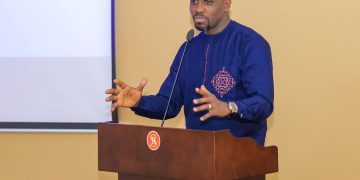
Joel Wanjala, Under Secretary at the Directorate of Ethics and Integrity, painted a troubling picture.
He linked the widespread consumption of pornography and misuse of social media to rising cases of indiscipline, drug abuse, and what he described as reckless sexual behavior among young people.
According to him, these trends are not isolated incidents but warning signs of a deeper breakdown in family structures and societal values.
“If left unchecked,” Wanjala warned, “these behaviors could derail Uganda’s long-term development goals,” including its ambition to become a modern and prosperous nation by 2040.
At the center of the crackdown is a growing concern for children, who officials say are increasingly vulnerable in the digital age.
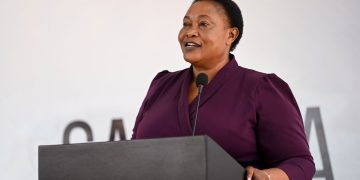
Dr. Annette Kezaabu, Chairperson of the Pornography Control Committee, described pornography not just as explicit content, but as a gateway to exploitation.
She warned that predators are using such material to groom minors, manipulate them into sharing explicit images, and trap them in abusive situations.
Even more alarming, she noted, is how easily children are encountering such content, often unintentionally, through smartphones, social media, and algorithm-driven recommendations.
“Pornography is no longer hidden,” she said. “It is in our homes, in our children’s hands, and sometimes appears without them even searching for it.”
Authorities say exposure at a young age is distorting children’s development, fueling harmful behavior, and in extreme cases contributing to serious mental health challenges, including depression and suicidal tendencies.
In response, telecom operators, under the guidance of the Uganda Communications Commission, have already blocked more than 500 websites identified as distributing pornographic content.
The move is backed by Uganda’s legal framework, including the Communications Act and Content Regulations of 2019, which mandate the protection of minors from harmful media.
However, officials acknowledge that enforcement alone cannot solve the problem.
Ibrahim Bbossa, Head of Public and International Relations at UCC, pointed to a more complex reality: the role of user behavior and global digital platforms.
He explained that algorithms on platforms like TikTok amplify content based on engagement, meaning users themselves can unknowingly contribute to the spread of explicit material.
“The challenge is no longer just regulation,” Bbossa noted. “It is also about how people use these platforms.”
He urged parents to take a more active role by using parental controls and monitoring their children’s online activity, while calling on the public to report harmful content to authorities.
Meanwhile, Dr. Kezaabu revealed that the committee is expanding school outreach programs and working with communities to break the silence around abuse, noting that many cases remain hidden due to stigma.
The crackdown is guided by the National Ethical Values Policy of 2013, which promotes principles such as integrity, respect, and social responsibility. But officials insist this is not just a government fight, it is a national one.
Religious institutions, schools, the media, and families are all being called upon to play a role in shaping a safer digital environment.
As Uganda tightens its grip on online pornography, the broader question remains: can regulation keep pace with the fast-moving digital world?
For now, authorities say this is only the beginning of a wider campaign, one that seeks not just to block websites, but to rebuild values in a generation growing up online.