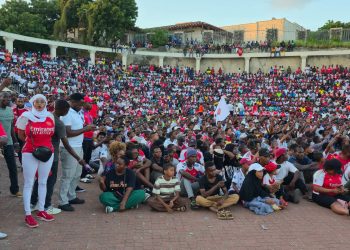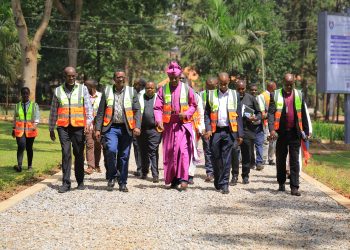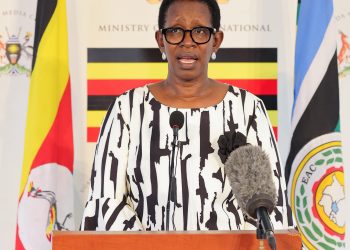















For the past days, the roads leading toward Namugongo have been becoming alive with the sound of hymns and the rhythmic steps of pilgrims walking in faith. This year, however, many journeys have come to an abrupt and disappointing halt.
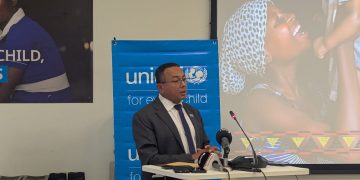
The government on Sunday announced the postponement of the annual Uganda Martyrs’ Day celebrations, scheduled for 3 June at the historic Namugongo Shrines, due to health risks posed by an Ebola outbreak in eastern Democratic Republic of Congo.
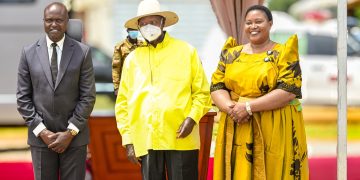
President Yoweri Kaguta Museveni, after consulting with the national epidemic response task force and religious leaders, made the difficult decision to place safety above tradition.
“After consultations with the national epidemic response task force and religious leaders, we have decided to postpone the Martyrs’ Day to a later date, which will be communicated. This decision was made because Uganda receives thousands of pilgrims annually from Eastern Congo, which is currently experiencing an Ebola outbreak. To safeguard everyone’s lives, it is essential that this important event be postponed,” the president wrote.
He added a direct appeal to those already on the move: “I encourage those who had begun their journey to return home, continue observing the precautionary measures… We regret any inconvenience caused, but the protection of life must come first.”
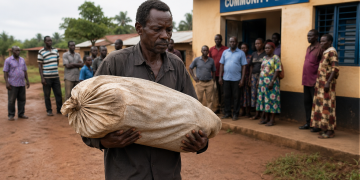
The announcement has directly affected hundreds already en route. Several groups of pilgrims, particularly those coming from afar had stated walking. On 15 May, a group of foot pilgrims from the Catholic Diocese of Butembo-Beni in eastern DRC successfully crossed into Uganda. They were warmly welcomed at the Mpondwe border by Bishop Francis Aquirinus Kibira of Kasese Diocese and are currently being hosted at St. Michael Church-Kabuyiri. Several more groups were reported making their way across the border when the news broke, forcing many to turn back mid-journey.
The Uganda Martyrs remain at the heart of this deep spiritual tradition. Between 1885 and 1887, 22 young Catholic and 23 Anglican converts were executed on the orders of Kabaka Mwanga II of Buganda for refusing to renounce their Christian faith. Their courage in the face of death left an indelible mark on the continent.
Pope Benedict XV beatified the Catholic martyrs in 1920. Then, in a landmark moment for the African Church, Pope St. Paul VI canonized them on 18 October 1964 at St. Peter’s Basilica in Rome; the first time Black African saints were raised to the altars of the universal Church.
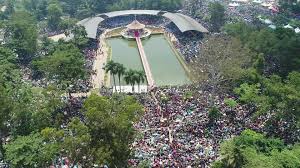
Since then, the twin shrines at Namugongo have grown into one of Africa’s greatest pilgrimage centres. Every 3 June, hundreds of thousands, often reaching into the millions, converge on the site in a vibrant explosion of faith, traditional dance, choral music, and fervent prayer. It is a day when Uganda proudly celebrates its Christian heritage.
Popes themselves have honoured the martyrs’ legacy on Ugandan soil. Pope St. Paul VI became the first reigning Pontiff to visit sub-Saharan Africa in 1969, laying the foundation stone of the Catholic shrine. Pope St. John Paul II prayed at both the Catholic and Anglican shrines in 1993, and Pope Francis made a memorable visit in November 2015 to venerate the martyrs and encourage the local Church.