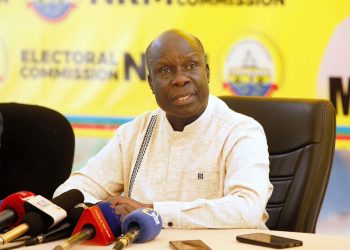

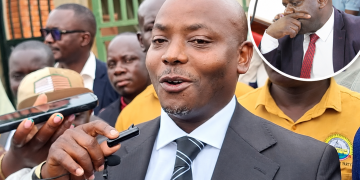





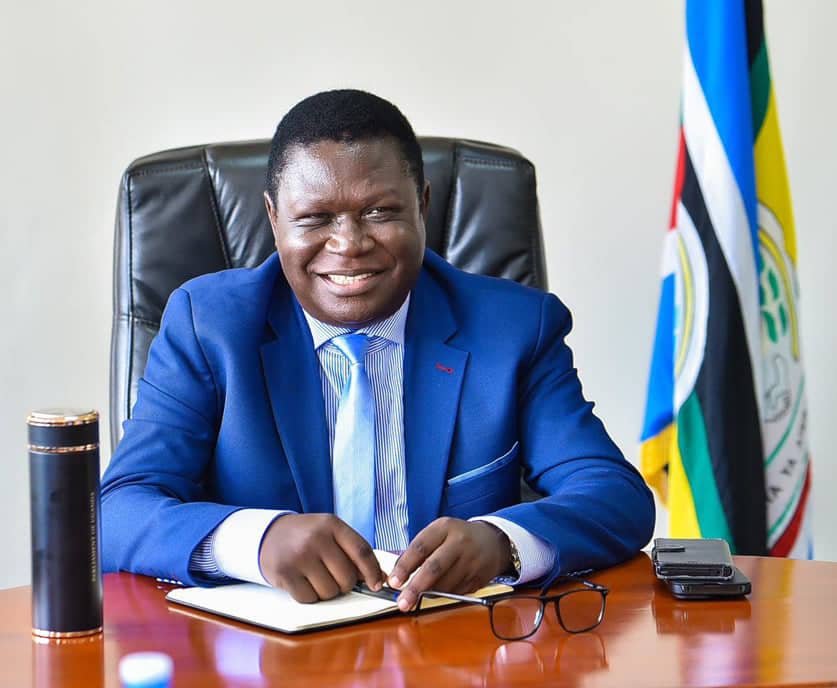
The Democratic Party (DP) President General and Minister for Justice and Constitutional Affairs, Norbert Mao, plans to consult leaders of political parties under the Inter-Party Organisation for Dialogue (IPOD) on the proposal by the National Unity Platform (NUP) to join the forum.
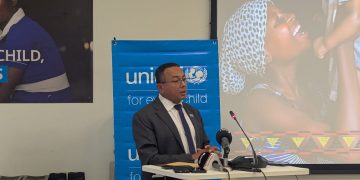
Speaking on Tuesday, Mao who now chairs IPOD after its recent leadership rotation at the Kololo summit, said he will engage the heads of other political parties currently in IPOD to build consensus on NUP’s possible entry.
“We will consult other party leaders on NUP’s bid to join IPOD,” he stated, signaling a deliberate pace to what could reshape the platform’s dynamics. This consultation is crucial, as IPOD’s admission process requires a signed Memorandum of Understanding (MoU) and consensus among its current members
IPOD brings together parties with representation in Parliament to promote dialogue and national consensus. The current members include the National Resistance Movement (NRM), Democratic Party (DP), Uganda People’s Congress (UPC), and Justice Forum (JEEMA).
From Boycott to Begging?
NUP, Uganda’s largest opposition party, has until recently boycotted IPOD, arguing that the platform lacked genuine dialogue and fairness. The party maintained that joining would only serve to legitimize what it described as a biased political framework.
That stance shifted after Parliament amended the Political Parties and Organisations Act to tie public funding to parties with parliamentary representation that also participate in IPOD. The amendment cut off NUP from accessing government funds.
At first, the party brushed off the impact, relying on internal fundraising and donor support. But growing campaign costs and pressure from constituencies have forced a rethink. With elections approaching, NUP is now seeking ways to re-engage and secure its funding amid concern that exclusion could weaken its national presence.
NUP’s latest move marks a major reversal. The party has boycotted IPOD since its 2021 rise under Robert Kyagulanyi, also known as Bobi Wine. Then, it dismissed the forum as “a tea table with the oppressor” and a platform that legitimized President Museveni’s rule without meaningful reform.
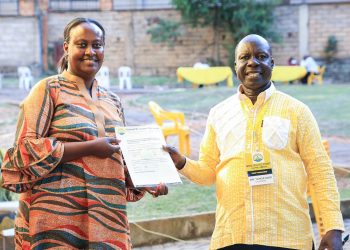
On October 7, NUP Secretary General David Lewis Rubongoya wrote formally requesting to join IPOD. In the letter, he acknowledged the binding nature of the amended law, which requires parliamentary parties to join either IPOD or the Forum for Non-Represented Parties to access state funding.
The shift followed months of tension. In August, Mao directed the Electoral Commission to withhold NUP’s allocation, estimated in the hundreds of millions of shillings, over its non-membership. NUP responded with a High Court petition, calling the decision illegal and discriminatory. The party argued that it already qualifies for funding as the second-largest parliamentary bloc and as a member of the National Consultative Forum.
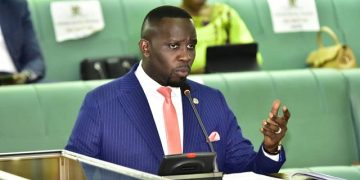
The legal battle continues, but with funds already disbursed to IPOD members and the 2026 elections nearing, NUP’s options appear limited. Critics, including party spokesperson Joel Ssenyonyi, have described the law as “blackmail,” accusing Mao of using financial control to weaken opposition unity.
The dispute traces back months. In July, Mao warned that parties outside IPOD would lose access to campaign financing. Ssenyonyi replied sharply: “To hell with your blackmail.”
NUP has long viewed IPOD, created in 2010 to foster inter-party dialogue, as dominated by the ruling NRM and ineffective in pushing reforms such as fair political financing or public order laws. Mao, however, insists that dialogue remains essential. He argues that NUP’s boycott strategy isolates it and undermines the opposition’s influence on national issues.