
















Uganda has become the first country in Africa, and the first Least Developed Country (LDC), to receive a results-based climate payment from the Green Climate Fund (GCF).
The Green Climate Fund has approved a grant of USD 31 million, about Shs 108 billion, in recognition of Uganda’s progress in reducing deforestation and greenhouse gas emissions.
The project, titled “Uganda REDD+ Results-Based Payment for Emission Reductions (2016–2017)”, was presented by the Food and Agriculture Organization (FAO) on behalf of the Ugandan government at the 43rd GCF Board meeting held in Songdo, South Korea.
According to FAO, Uganda reduced its net carbon emissions by over 8 million tonnes of CO₂ between 2016 and 2017. That reduction is equivalent to growing about 133 million tree seedlings for 10 years.
FAO Director-General Qu Dongyu said the decision rewards Uganda’s effective climate action. “The GCF’s approval shows how results-based finance can deliver tangible benefits for people and nature. Uganda’s example proves that early investments in capacity building can transform forests, food security, and rural livelihoods,” he said.
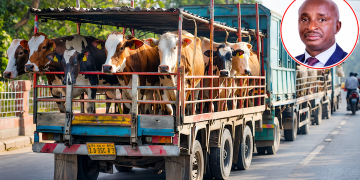
Uganda’s forests cover about 2.36 million hectares, providing vital ecosystem services and supporting millions of livelihoods. However, deforestation remains high, mainly due to agricultural expansion for crops and livestock.
REDD+, the UN-backed initiative under which Uganda achieved the reduction, aims to curb emissions caused by deforestation and forest degradation while promoting sustainable forest management.
Permanent Secretary for the Ministry of Water and Environment Alfred Okot Okidi welcomed the GCF decision.
“This payment is part of Uganda’s wider climate finance strategy. It shows that patience and consistency in climate action deliver results,” he said.
The project is part of FAO’s global results-based payment portfolio. Similar GCF-funded projects have been implemented in Argentina, Chile, Colombia, and Papua New Guinea, worth a combined USD 237 million.
FAO and the Ugandan government will channel the Shs 118 billion into programs that reduce pressure on forests, strengthen community-based forest management, and enhance local food security. The funds will also support income-generating activities, promote gender inclusion, and strengthen land tenure.
According to FAO, the initiative will fund community timber and pole plantations, helping rural women reduce the long distances spent collecting firewood. It will also establish a Benefit Sharing System to ensure equitable access to forest resources for Indigenous Peoples and vulnerable groups, including women.