


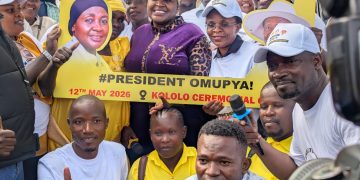
















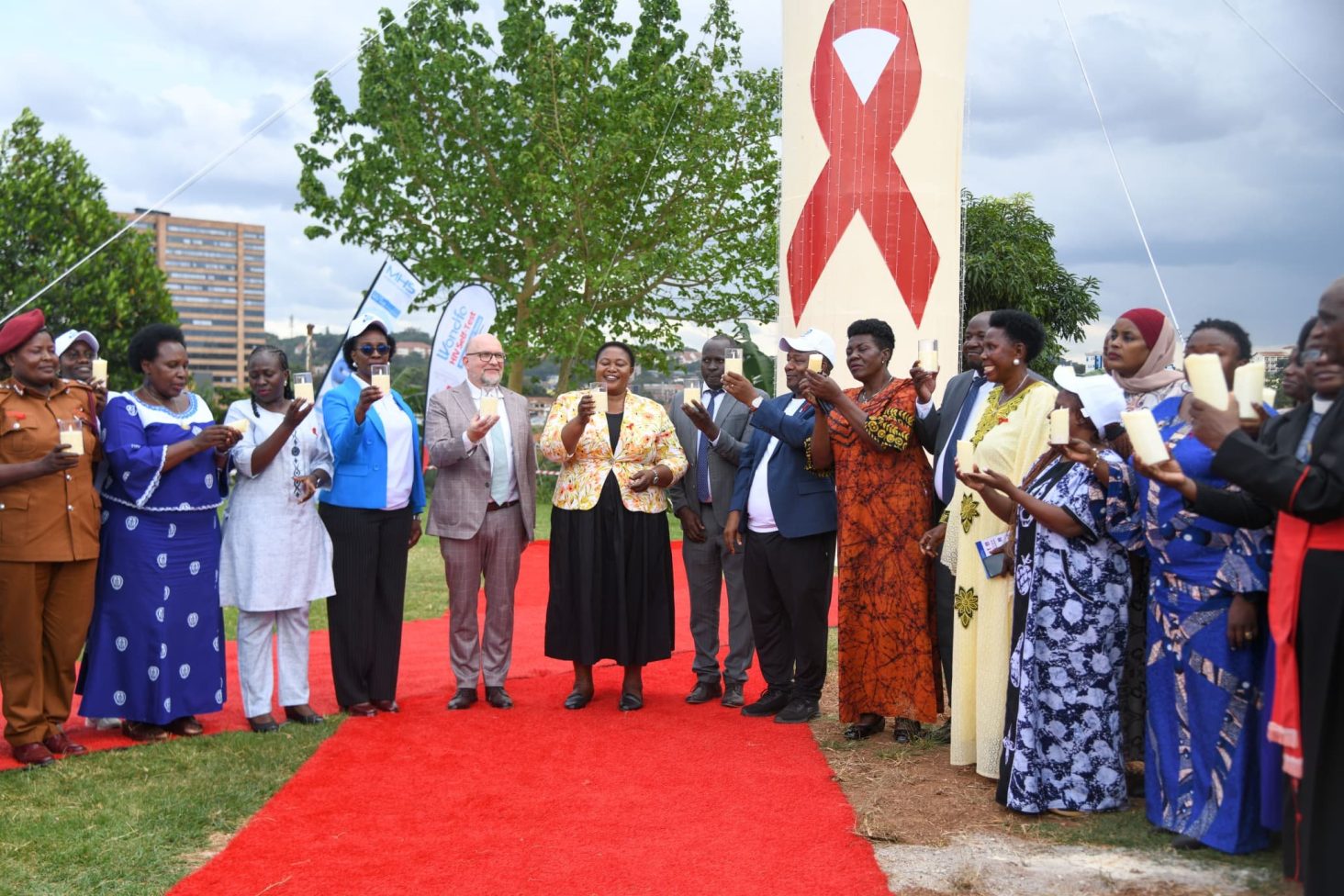
Uganda has reaffirmed its commitment to ending HIV/AIDS as a public health threat by 2030 during the International Candlelight Memorial Day commemoration held at Kitante Hill Secondary School grounds in Kololo under the theme, “Ending AIDS by 2030: Embracing the Role of Women.”
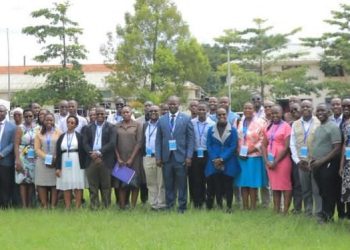
The event brought together government officials, development partners, civil society organizations, religious and cultural leaders, health workers, and people living with HIV/AIDS to honor those who lost their lives to the epidemic while renewing efforts toward prevention, treatment, care, and support services.
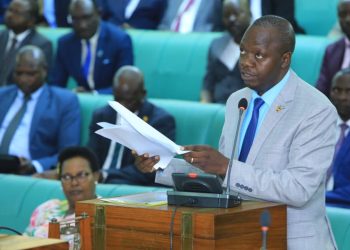
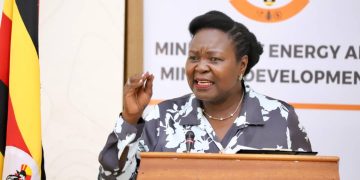
Speaking at the event, the Minister for the Presidency, Milly Babirye Babalanda, praised Uganda’s progress in the fight against HIV/AIDS and credited President Yoweri Kaguta Museveni for providing strong leadership since the outbreak of the epidemic.
She described Uganda’s HIV response as one of Africa’s most remarkable public health success stories, driven by political commitment, community mobilization, openness, and collective responsibility.
“Uganda rose through strong political leadership, community mobilization, openness, and collective responsibility,” Babalanda said.
She noted that new HIV infections and AIDS-related deaths have significantly declined over the years, with about 1.4 million Ugandans currently accessing life-saving antiretroviral treatment.
Babalanda added that Uganda is steadily progressing toward achieving the global UNAIDS 95-95-95 targets, while mother-to-child transmission has greatly reduced.
However, she warned that stigma and discrimination continue to hinder the national HIV response and urged ministries, departments, agencies, local governments, and the private sector to integrate HIV interventions into their development plans.
“We must eliminate stigma and discrimination in homes, workplaces, schools, health facilities, and communities,” she emphasized.
Earlier, the Director of Planning and Strategic Information at the Uganda AIDS Commission, Dr. Vincent Bagambe, speaking on behalf of the Director General, stressed the importance of sustaining strong multi-sectoral partnerships and maintaining evidence-based interventions in the fight against HIV/AIDS.
He highlighted the critical role women play in HIV prevention, treatment, care, and support services, saying their empowerment is essential if Uganda is to achieve the goal of ending AIDS by 2030.
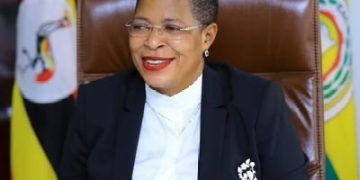
Delivering the keynote address, the Deputy Inspector General of Government, Ann Twinomugisha Muhairwe, described the memorial as a moment of remembrance, reflection, and renewed commitment.
“We gather not only to mourn lives lost, but also to honor courage, celebrate resilience, and reaffirm our determination to end AIDS as a public health threat by 2030,” she said.
Twinomugisha shared a personal story about her mother, a retired nurse who worked at Mulago National Referral Hospital during the height of the HIV/AIDS crisis in the early 1990s.
She recounted how her mother faced stigma and isolation after accidentally pricking herself while drawing blood from an HIV-positive patient, despite never contracting the virus.
“She was ostracized by colleagues, neighbors, and even family members, yet she remained strong and resolute,” Twinomugisha said.
She emphasized that women have remained the backbone of Uganda’s HIV response and called for greater empowerment of women and girls in prevention and care efforts.
Twinomugisha also reflected on the devastating impact HIV/AIDS had on Uganda during the 1980s and 1990s, when hospitals became overcrowded, schools lost teachers, children were orphaned, and communities lost productive citizens.
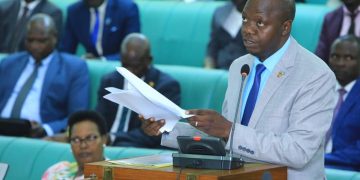
Representing the Ministry of Health, Dr. Robert Mutumba said Uganda has made significant progress in reducing HIV prevalence from 18 percent in the early 1990s to about 5 percent today.
He revealed that mother-to-child transmission has dropped from about 25,000 cases in the early 2010s to approximately 4,700 currently.
According to Dr. Mutumba, Uganda has an estimated 1.53 million people living with HIV, with about 97 percent currently on antiretroviral treatment and more than 90 percent achieving viral suppression.
However, he warned that children, adolescents, and young women remain disproportionately affected, with close to 100 new HIV infections recorded daily, including 33 among young people.
Dr. Mutumba said the Ministry of Health is implementing a combination prevention approach, including the recently introduced Lenacapavir six-month injection aimed at reducing new HIV infections.
He also acknowledged financial challenges affecting HIV programs following reduced donor funding but assured the public that government has adopted an integrated national response to sustain HIV services across the country.
The Deputy Chief of Mission at the United States Embassy in Uganda, Mikael Cleverley, praised Uganda’s leadership and community-driven HIV response.
Cleverley highlighted the recently signed $2.3 billion health memorandum of understanding between Uganda and the United States as a major milestone in strengthening collaboration and self-reliance in the health sector.
He described Lenacapavir as a “game changer” in HIV prevention, noting that the injection is nearly 100 percent effective in preventing new HIV infections.
“Today, as we light candles to honor those who lost their lives to AIDS, may we recommit ourselves to ending AIDS as a public health threat by 2030,” he said.
The commemoration concluded with a candle-lighting ceremony in memory of millions of people who have lost their lives to HIV/AIDS in Uganda and across the world.