


























The Uganda Vocational and Technical Assessment Board (UVTAB) has announced impressive outcomes from its November/December 2025 end-of-course and end-of-programme assessments, with a remarkable 95 percent of candidates who completed their programmes acquiring full competencies.
A total of 27,460 candidates registered for the assessments, of whom 26,312 (96 percent) turned up to sit the examinations. The assessments were conducted across 543 accredited centres nationwide between November 21 and December 19, 2025, covering a wide range of disciplines in technology, business, agriculture, and home science.
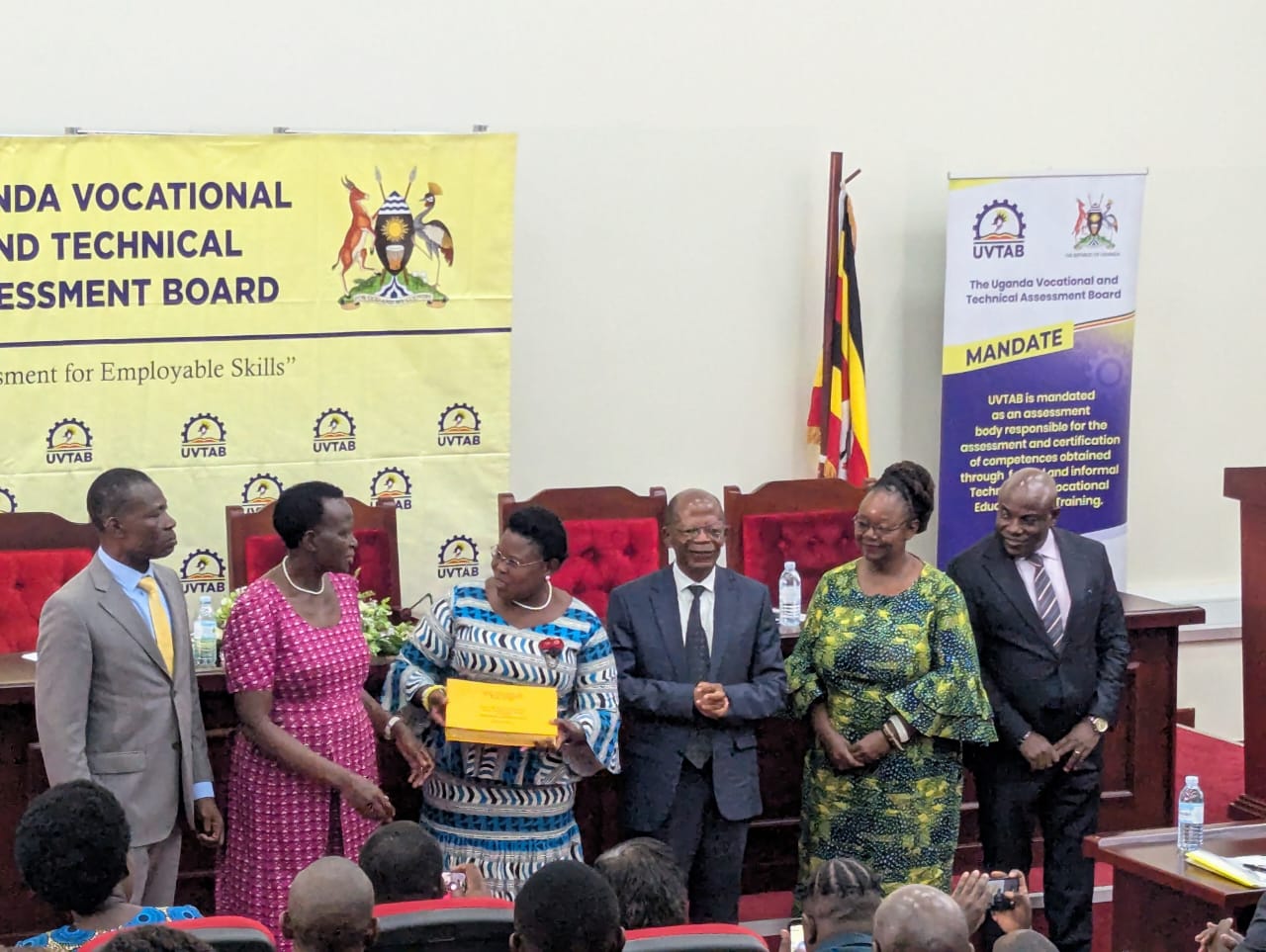
Speaking during the official release of the results at the UVTAB headquarters in Kampala, Executive Secretary CPA. Onesmus Oyesigye described the performance as very good across all fields.
“The general pass rate was 95 percent for candidates who completed their programmes,” he said, attributing the strong showing to steady improvements in the quality and delivery of vocational and technical education in Uganda
.Performance varied by programme level but remained robust overall. In National Certificate Business programmes, 92 percent of candidates acquired full competencies, with many achieving distinction and credit grades which is a clear sign of solid mastery in both theoretical knowledge and practical skills. T
echnical programmes under the National Craft Certificate performed even better, with 96 percent of candidates attaining full competencies, most of them at credit level or above.
UVTAB Chairperson Prof. Dorothy Okello highlighted a significant and encouraging rise in female participation. The proportion of female candidates increased from 35.9 percent in 2024 to 41 percent in 2025. Out of the candidates assessed, 11,169 were female compared to 16,291 males.
Women continued to dominate fields such as business, accounting and finance, fashion and design, and cosmetology, while men remained more prominent in technical areas like building technology and beekeeping.
“This demonstrates that TVET is increasingly becoming accessible and attractive to both male and female candidates,” Prof. Okello noted.
She added that although gaps persist in some technology-related fields, the upward trend in female enrolment and completion signals positive progress toward gender equity in skills development.
The Board also commended the performance of candidates with special needs, where 93 percent successfully acquired full competencies. This achievement was supported by inclusive measures such as extra time, sign language interpreters, and dedicated support personnel.
“This outcome demonstrates strong inclusivity and resilience,” Oyesigye said, pledging continued efforts to refine assessment methods and reduce barriers.
Despite the overall success, the Board identified key areas needing improvement. Candidates showed limited proficiency in Engineering Drawing, Computer-Aided Design, computer programming, and mathematics-related modules.
Many also struggled with scenario-based questions in business subjects, pointing to gaps in analytical and applied reasoning skills. These challenges were partly linked to inadequate access to modern equipment, software, and sufficient practical training opportunities in some institutions.
Government officials welcomed the results as evidence of growing momentum in the Technical and Vocational Education and Training (TVET) sector.
State Minister for Primary Education Dr. Joyce Moriku Kaducu described the occasion as a celebration of skills, resilience, and the dignity of work.
State Minister for Higher Education John Chrysostom Muyingo urged more young people to embrace TVET, stating that “if you want to be rich, this is where you need to go.”
He reaffirmed the government’s commitment to expanding funding, infrastructure, and sponsorships, especially for female trainees and persons with special abilities, in the 2025/2026 financial year.