



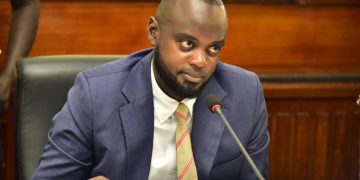
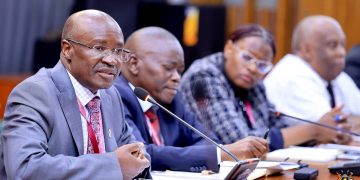
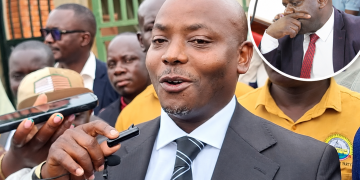





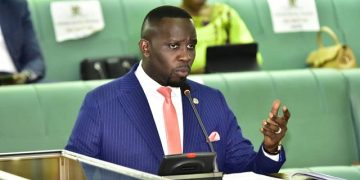







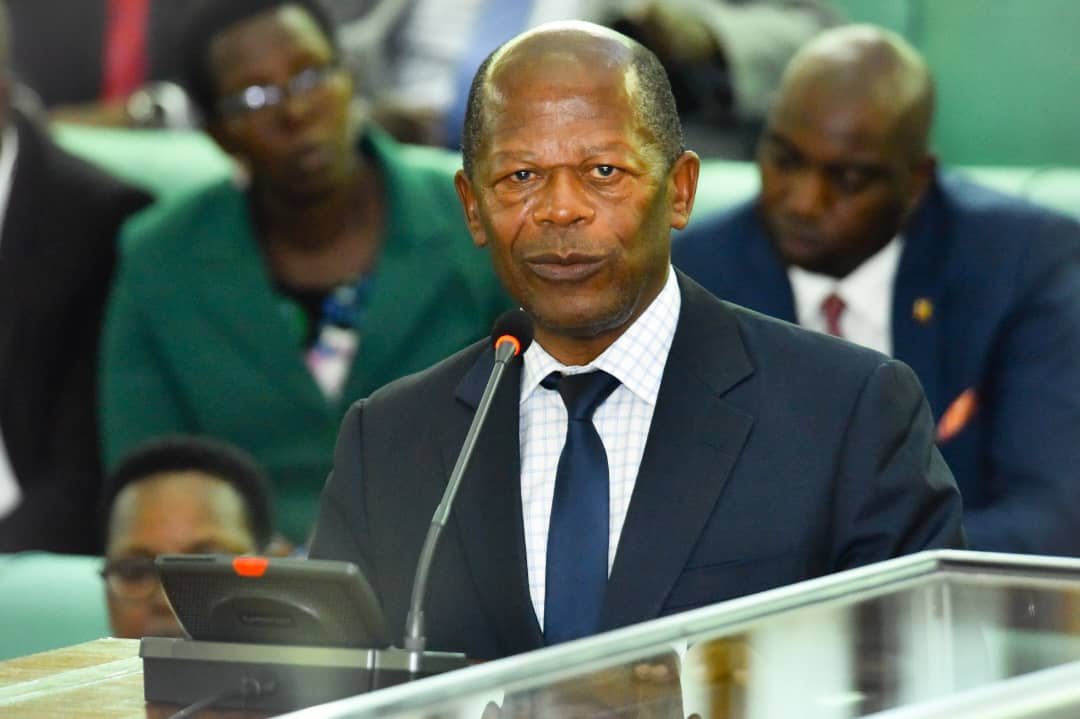
For over 18 long months, State Minister for Higher Education Dr John Chrysostom Muyingo had carried the weight of the National Teachers Bill on his shoulders. On Thursday afternoon, he finally let it go.
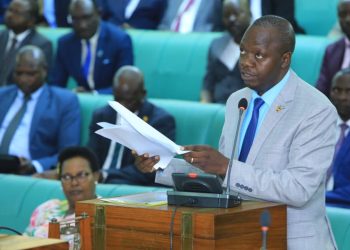
As the third reading concluded and the Speaker’s gavel came down, the minister leaned into his microphone. What followed was not a speech, not a formal declaration; but a loud, unmistakable sigh of relief that echoed across the floor of Parliament.
“I want to say that today is a good day for me,” Dr Muyingo said, his voice carrying the exhaustion of months of heated negotiations, delays, and what he later called “sleepless nights.”
The National Teachers Bill, first introduced in 2024 to operationalize the 2019 National Teacher Policy, had bitterly divided lawmakers. The Education Committee had tabled both majority and minority reports and after heated a debate Parliament stood over the bill. In march this year, a harmonisation committee was formed. Stakeholders met for months. At times, passage seemed impossible. But on Thursday, the harmonised version finally crossed the finish line.
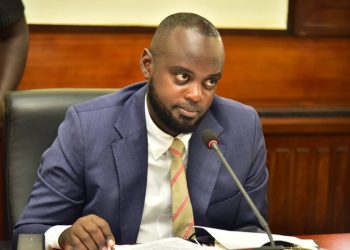
Attorney General Kiryowa Kiwanuka presented the agreed positions to the House. The mandatory one-year internship for graduate teachers, modelled after medical doctors’ training, had been dropped after strong objections from the Parliamentary Committee on Education and Sports. Lawmakers had argued that student teachers already undergo substantial school practice during university, and an extra internship year would unnecessarily delay their entry into the job market.
However, the controversial degree requirement remained. Under the passed bill, anyone wishing to teach in pre-primary, primary, or secondary schools must hold a bachelor’s degree in education, or a relevant degree plus a postgraduate diploma in education. A 10-year grace period was granted to allow currently serving teachers who do not yet meet the requirement to upgrade their qualifications.
But not everyone was relieved.
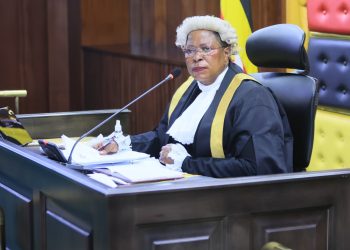
MPs Johnathan Odur and Nandala Mafabi raised sharp concerns, arguing the government was being insensitive to teachers’ meagre salaries. “What I am pleading, Madam Speaker,” Odur said, “is that teachers who have already trained and qualified under previous standards should not be penalised.”
The Attorney General offered some flexibility, saying the fate of affected teachers and how they would be catered for on the register would be determined later by the minister in consultation with the National Teachers Council.
The bill also introduced tough penalties for illegal teaching. Teaching without a licence will attract a penalty of 100 currency points (about 2 million shillings) or imprisonment of up to four years, or both. Schools that employ unlicensed teachers face a fine of 400 currency points (approximately 8 million shillings), revocation of their operating licence for one year, and possible additional administrative penalties.
Existing school practice arrangements will continue, with adjustments aimed at strengthening practical training for future teachers. Student teachers undergoing formal school practice are exempted from the licensing requirement while on training.
The bill now awaits the president’s signature.
For Dr Muyingo, standing on the floor as the chamber emptied, the journey was finally over. His sigh—audible, unrestrained, human—said what no speech could.
“I want to say,” he repeated quietly, “today is a good day for me.”