




















Education experts and activists from across East Africa are pushing for a regional capacity-building hub to train teachers in delivering and assessing competency-based education (CBE). The proposal follows a regional meeting in Kampala under the Action for Life Skills and Values in East Africa (ALiVE) initiative.
The experts said the shift to CBE will fail unless teachers gain the skills to assess life skills and values, not only academic content.
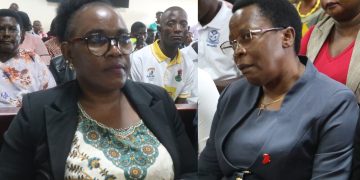
“We can have the best curriculum on paper, but if teachers lack the tools and confidence to assess competencies, the system will not change,” said Stella Rosa Kongo from the Luigi Giussani Institute of Higher Education.
CBE focuses on what learners can do with their knowledge, including teamwork, problem-solving, empathy, and respect. Assessing these skills demands a different approach.
“Teachers must observe learners in real situations, how they solve problems, how they relate with others, and how they apply knowledge,” Kongo said. “That is why we need a regional mechanism to train, support, and connect teachers.”
Since 2020, ALiVE has worked to strengthen how life skills and values are taught and assessed in schools. Led by Zizi Afrique Foundation in Kenya, UWEZO Uganda, and Tanzania’s Milele Zanzibar Foundation, the initiative has trained 47 experts and reached more than 45,000 learners aged 13 to 17.
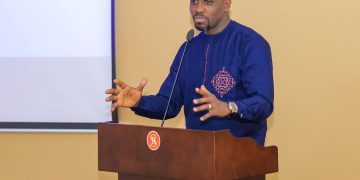
Despite progress, regional assessments show that many teachers still rely on rote learning and written exams. “There is a serious mismatch between the curriculum’s vision and classroom practice,” said John Mugo, Executive Director of Zizi Afrique Foundation and ALiVE’s Principal Investigator.
Mugo said teachers need structured support to assess competencies. “Evaluating collaboration or problem-solving is not like marking an exam. It requires observation, reflection, and the right tools,” he said.
To bridge this gap, the activists are proposing the creation of an African Centre for Social and Emotional Learning, a regional hub that would train teachers, develop assessment tools, and support national education systems to embed life skills and values.
Mary Goretti Nakabugo, Executive Director of UWEZO Uganda, said the hub would help coordinate training, policy, and curriculum support. “Each country has lessons to share,” she said. “Kenya has advanced its rollout, Tanzania is strengthening teacher preparation, and Uganda is aligning assessment systems. A shared hub would consolidate these efforts.”
Nakabugo added that most teachers support CBE but lack guidance on assessing life skills. “Teachers were trained to mark exams, not to observe collaboration or problem-solving. We must retool them continuously,” she said.
Kongo emphasized that teachers must also be lifelong learners. “When teachers observe students in action and give immediate feedback, they help learners grow. That is the heart of competency-based education,” she said.
Activists agreed that reform success depends on how much governments invest in teacher training and mentorship. “Policies alone will not transform education,” Nakabugo said. “Budgets must prioritize teacher capacity and continuous professional development.”
The next phase of ALiVE, running from 2026 to 2030, will focus on building national systems through teacher training, developing regional assessment tools, and creating peer-learning networks. The goal is to reach at least 10 million learners across East Africa.
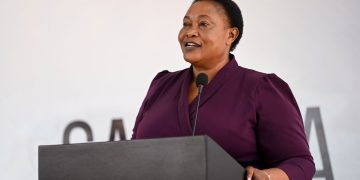
Hadija Sharif, Executive Director of Milele Zanzibar Foundation, said Africa’s young population makes this investment urgent. “Our children need thinkers, innovators, and problem solvers, not memorizers,” she said. “If we empower our teachers to guide them that way, we secure Africa’s future.”
The Kampala meeting ended with a shared call for collaboration across borders to make CBE practical and sustainable. Participants agreed that the region’s education future depends on one thing: empowering teachers to deliver meaningful learning.