





















A new cohort of 89 health workers who graduated from the Harvey Institute of Health Sciences was challenged to redefine patient care in Uganda by restoring dignity, empathy, and professionalism in the health system.
The graduates, comprising 64 nurses, 22 midwives, and three records officers, were passed out on April 16, 2026, in Nkozi, stepping into a sector still grappling with public dissatisfaction over the quality of services.
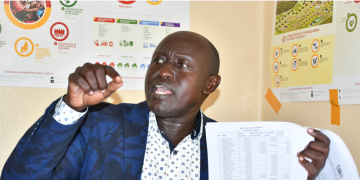
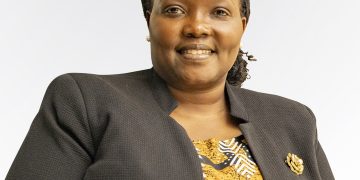
Speaking at the ceremony, Phiona Wall Nabaasa, former ULS president, cited a 2022 survey indicating that seven in ten patients were unhappy with hospital services, largely due to poor communication, neglect, and unfriendly attitudes by some health workers. The findings, drawn from more than 400 health facilities across the country, pointed to strained relationships between patients and providers.
Nabaasa urged the graduates to rise above these shortcomings and become agents of change.
“Patients do not only go to hospitals for medicine; they go for reassurance and dignity,” she said. “If we fail in how we relate with them, then we have failed in the most basic duty of care.”
The ceremony balanced acknowledgement of the challenges within Uganda’s health system with a message of opportunity driven by a new generation of professionals.
Representing the Commissioner for Health Education and Training, Harriet Birungi Nsamba called on the graduates to distinguish themselves through discipline, integrity, and commitment to service.
“You are entering communities that are watching closely,” she said. “Let your actions rebuild confidence in the health system, one patient at a time.”
A recurring message throughout the event was the need to anchor professionalism in empathy, values speakers said have gradually declined in many health facilities.
Dr Daniel Nanoka, who hosted the ceremony, urged the graduates to focus on long-term impact rather than immediate financial gain.
“Do not measure your success by how fast you earn, but by how many lives you improve,” he said. “The knowledge you carry will outlast any temporary comfort that money brings.”
He also encouraged them to embrace innovation and research, particularly in addressing the growing burden of non-communicable diseases such as hypertension, noting that shifting disease patterns require adaptable and forward-thinking health workers.
The institute’s principal, Isaac Ssembajjo, reiterated the school’s commitment to producing ethical practitioners who understand that care goes beyond clinical treatment.
“We are sending out practitioners who understand that care goes beyond treatment,” he said. “It is about listening, patience, and respect for every individual who walks into a health facility.”
Since its first graduation in 2019, the institute has steadily increased its output in a bid to address gaps in Uganda’s health workforce. However, speakers emphasized that increasing numbers alone will not fix systemic challenges unless matched with integrity and dedication.
For many of the graduates, the responsibility ahead is both professional and deeply personal.
Mercy Nakaweesi said she is preparing to begin work at a family-run clinic currently under construction, with a focus on patient-centered care.
“I want to be present for patients in a way that makes them feel valued,” she said. “Sometimes people just need someone who listens before even receiving treatment.”
Her classmate, Pauline Nakiwala, expressed plans to further her education while continuing to serve.
“This is just the beginning for me,” she said. “I plan to upgrade my qualifications while continuing to serve so I can offer better care in my community.”
Their ambitions reflect a growing trend among young health professionals who see continuous learning as key to improving service delivery.
The institute’s director, Dr David Mabiriizi, said the training model is designed to produce adaptable professionals capable of responding to evolving health challenges.
“We recognised a serious gap in both numbers and quality of health workers,” he said. “Our focus is to train individuals who will not only fill positions but also transform the way healthcare is delivered.”
As the graduates celebrated their achievement, the mood remained both hopeful and reflective. Beyond the certificates lies a broader expectation to help rebuild trust in a health system where patient confidence has been weakened but not entirely lost.
For Uganda, the path to better healthcare may ultimately depend not only on infrastructure or equipment, but on something more fundamental, the human touch.