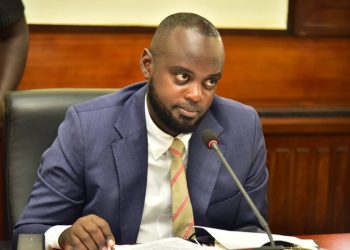



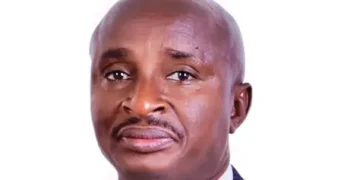
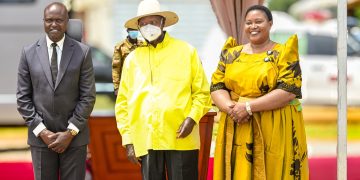












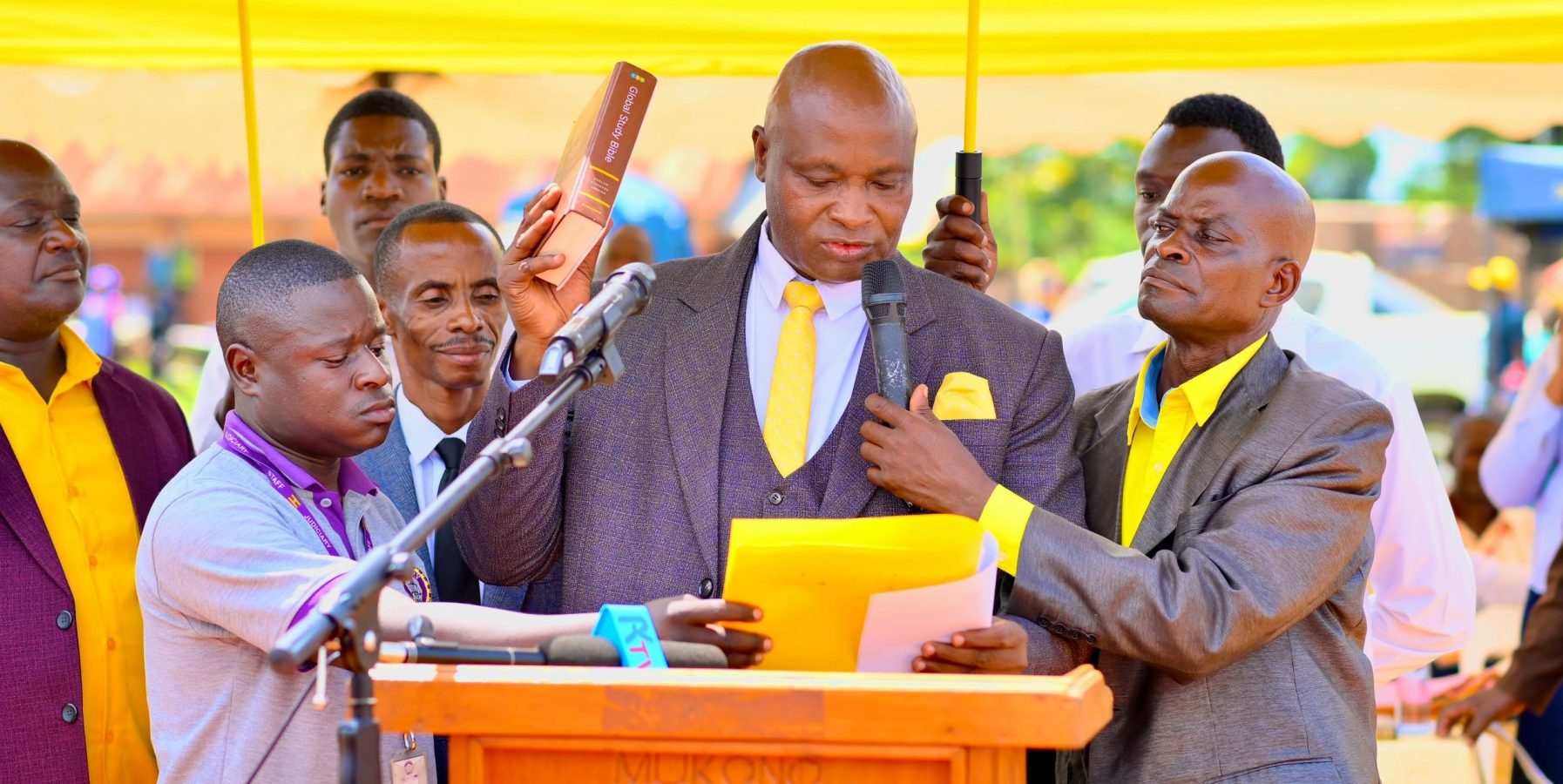
The political temperature in Mukono District has risen sharply following the return to leadership of Francis Lukooya Mukoome, whose re-emergence as District LC5 Chairperson has been described by observers as both dramatic and assertive, reshaping expectations within the local administration.
Once a district chairperson before making unsuccessful attempts to transition into legislative politics, Lukooya has returned to the helm with a firm message to civil servants: performance will be closely monitored, and underperformance will not be tolerated.
During his maiden address in which he introduced his executive team, Lukooya struck a hard line on accountability, warning that inefficiency would not be tolerated in his administration.
“Even when I am sleeping and I think that you have underperformed, I will fire you.”
The remark, delivered in a charged tone, immediately set the stage for what appears to be a more aggressive administrative approach focused on discipline and results.
He announced plans to reintroduce the clients’ charter, a governance tool last actively implemented in 2014, arguing that public service delivery must return to measurable standards. Lukooya also warned against corruption, urging officers implicated in malpractice to step aside.
“Corrupt officers should pack and go. I want value for money for every activity. Audit reports come in and are never attended to. There are even government workers using fake receipts.”
The district leader directed specific attention to senior technical officers, urging the Chief Administrative Officer (CAO) and the entire technical team to be more proactive. Particular concern was raised about the production department, where he cautioned the officer in charge, Dr. Mukulu, to remain vigilant.
He also expressed dissatisfaction with the fisheries officer, whom he accused of failing to attend his swearing-in ceremony and allegedly missing key communication engagements.
“I don’t want to fight with you on this,” he remarked, signaling both warning and restraint.
Development Priorities and Infrastructure Push
Lukooya revisited his earlier tenure, asserting that sectors such as education, roads, and electricity had previously seen improvement under his leadership but had since stagnated.
He pledged that road rehabilitation would be among his first priorities, appealing to the Ministry of Works to support the district with equipment.
He further emphasized that Mukono Municipality should have no untarmacked roads, while town councils would undergo structured road coding ahead of tarmacking programmes.
In transport innovation, he called on government and private partners to expedite delivery of the Koome ferry project and proposed collaboration with automotive stakeholders such as Kiira Motors Corporation to explore electric boat solutions aimed at reducing fuel costs and improving island connectivity.
On water access, Lukooya prioritised expansion of piped water systems over borehole drilling, while still committing to rehabilitating existing water infrastructure. He also pledged youth skills development initiatives linked to community needs.
Administrative reforms included revision of occupation permits, completion of the district headquarters, and revival of housing projects for older persons and persons with disabilities.
On environmental protection, he proposed intensified action against land conflicts, wetland degradation, and illegal encroachment, alongside tree planting, fish farming, and structured forest management starting at village level.
He also advocated for greenhouse farming, model villages, and value addition chains for coffee and cocoa as part of a broader local economic transformation agenda.
In health, Lukooya proposed quarterly engagement meetings (“balaza”), closer supervision of the hospital private wing, and stricter monitoring of corruption within health facilities. He also floated the idea of elevating certain health centres and introducing specialist outreach visits to lower-level facilities.
In education, he ruled out unauthorized payments in government schools, stating that any such transactions must be cleared by the District Education Office and his office. He further promised water provision in schools to reduce time lost by learners fetching water.
National Leadership Guidance and Political Tensions
During the same event, Gen. Edward Katumba Wamala urged the newly sworn-in leadership to prioritize service delivery over prestige, calling for unity, discipline, and focus on tangible development outcomes.
He encouraged leaders to mobilize citizens for government programmes and avoid political divisions that could derail district progress.
However, despite the optimism surrounding the new administration, legal and political uncertainty remains. Johnson Muyanja Ssenyonga has challenged Lukooya’s declaration in court, raising questions about the legitimacy and timing of his assumption of office.
Muyanja has also criticized delays in judicial handling of election disputes, arguing that prolonged stay in office by contested leaders risks undermining governance processes.
Analytical overview
Lukooya’s return to leadership is marked by a strong executive posture that prioritizes discipline, accountability, and rapid service delivery. His rhetoric suggests an intention to reposition the district administration as performance-driven, with reduced tolerance for bureaucratic inefficiency and corruption.
However, such an assertive leadership style carries both opportunities and risks. On one hand, it may improve responsiveness among civil servants and accelerate stalled infrastructure and service delivery projects. His emphasis on roads, water systems, and economic transformation aligns with core development priorities in rapidly urbanizing districts like Mukono.
On the other hand, the confrontational tone toward technical officers could strain working relations within the civil service if not balanced with institutional coordination mechanisms. Effective implementation of his agenda will depend heavily on cooperation from the CAO’s office and sector heads.
Politically, the ongoing court challenge by Johnson Muyanja Ssenyonga introduces a layer of uncertainty that may affect administrative stability. Extended litigation in electoral disputes can slow down decision-making and weaken authority on the ground, especially if perceptions of legitimacy remain contested.
Overall, Lukooya’s leadership approach signals a return to directive governance with a strong emphasis on results. Its success will likely depend on whether assertiveness is matched with institutional cohesion, legal clarity, and sustained stakeholder engagement.
ENDS.