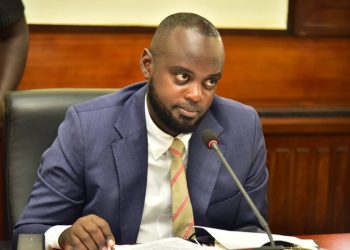







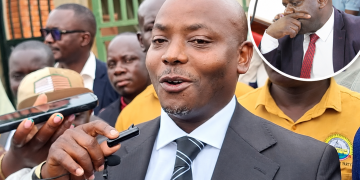




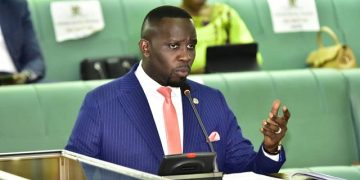








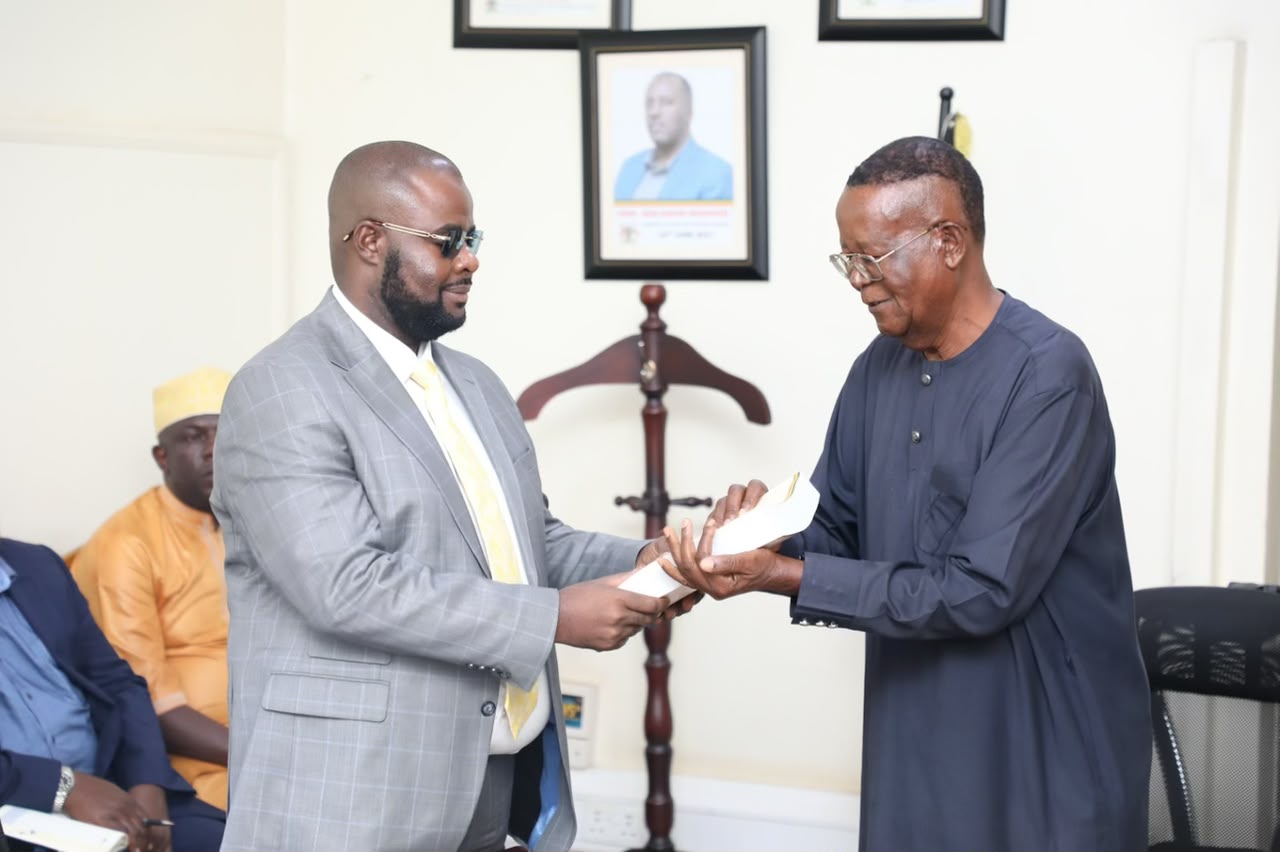
KAMPALA – Newly appointed State Minister for Internal Affairs, Hon. Juma Witonze Kisekka, has assumed office with a pledge to tackle corruption, improve public service delivery and accelerate the digitisation of ministry operations.
Witonze made the commitment on Wednesday during the official handover ceremony at the Ministry of Internal Affairs headquarters in Kampala, where he took over his responsibilities alongside the new Minister for Internal Affairs, Prof. Ephraim Kamuntu.
Speaking after assuming office, Witonze said he was honoured to join a ministry whose mandate is central to protecting the security and welfare of Ugandans.
“I’m so honoured to be working with you and with this mighty team,” he said, explaining that the ministry had been his preferred choice because of his concern for the security and wellbeing of citizens.
Witonze acknowledged concerns surrounding corruption in the ministry and pledged to work with staff and the senior minister to address the problem.
“We want to end corruption,” he said, adding that the ministry would support President Yoweri Museveni’s efforts to combat corruption and promote accountability in public institutions.
He also urged ministry officials to put citizens at the centre of service delivery, saying Ugandans seeking government services should be treated with dignity and respect.
“We are serving Ugandans, we are not serving foreigners,” Witonze said, emphasising that citizens should remain the primary focus of the ministry’s work.
The minister further pledged to promote the digitisation of ministry systems, arguing that greater use of science and technology could improve efficiency, strengthen service delivery and support efforts to prevent and detect crime.
Witonze said he would first consult Prof. Kamuntu before holding a press conference to outline his priorities and plans for his tenure.
He also called for cooperation among ministry officials, saying he intended to foster teamwork rather than create divisions.
“I don’t want to create wars. I want to create a friendship and a good relationship with this place,” he said.
Prof. Kamuntu welcomed Witonze to the ministry, describing him as highly educated and committed to serving vulnerable communities.
He said the ministry’s political leadership was now fully constituted and urged staff to work together to deliver on its mandate. He also appealed to the media to support and scrutinise the ministry’s work.
Kamuntu said internal security remains a key pillar of Uganda’s development, noting that insecurity has historically disrupted economic and social progress.
“We are going to do what it takes to make Uganda a crime-free country,” he said.
The minister also endorsed Witonze’s focus on digitisation, saying the application of science and technology could strengthen the ability of security agencies to detect and prevent crime before it occurs.
Kamuntu further linked effective crime prevention to reducing pressure on Uganda’s prison system. He argued that if potential offenders were convinced that criminal acts would be detected and punished, crime levels would fall significantly.
“If you can build the capacity so that every Ugandan in his mind feels that you cannot dare do anything without being caught, these prisons could become shopping malls,” he said.
On citizenship and regional integration, Kamuntu said Uganda should continue supporting efforts to deepen East African integration. He argued that stronger regional cooperation could eventually help address some of the challenges created by colonial-era borders.
The new leadership said it would prioritise strengthening internal security, improving government services and embracing technology as Uganda continues to pursue economic transformation.