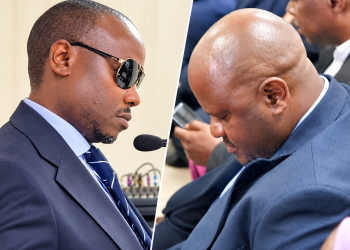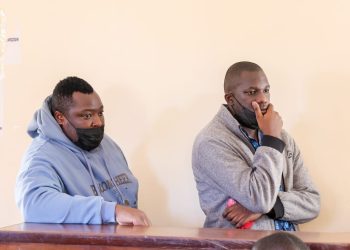












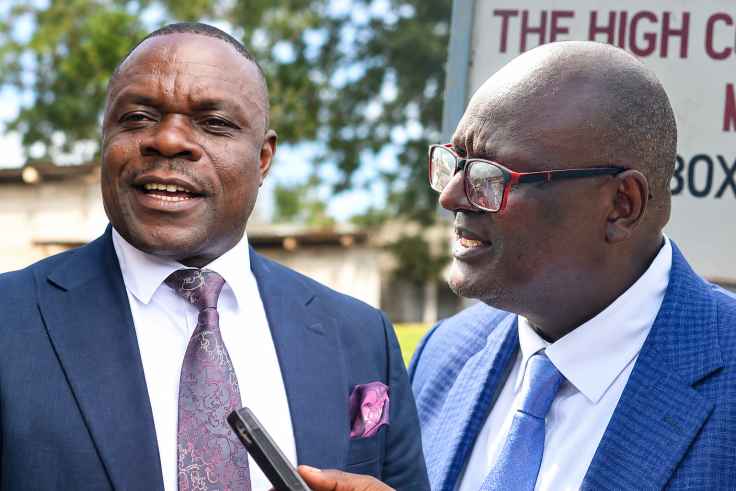
The High Court in Mukono has dismissed an election petition filed by Kiiza Arthur challenging the election of Bbaale County Member of Parliament Charles Tebandeke, ruling that the petitioner failed to prove allegations that the legislator made false statements about his character and conducted sectarian campaigns.
In a judgment delivered on November 11, 2026, Justice Philip W. Mwaka upheld Tebandeke’s election, allowing him to retain the parliamentary seat. The court also ordered Kiiza to pay the costs of the petition.
Kiiza had challenged the results of the January 15, 2026 parliamentary elections, accusing Tebandeke of making statements during campaign rallies and public gatherings that portrayed him as dishonest, a land grabber and an outsider who did not belong to the Bbaale community.
However, Justice Mwaka ruled that the petitioner had failed to establish the alleged electoral offences to the required standard of proof under the Parliamentary Elections Act.
The Electoral Commission had declared Tebandeke the winner with 17,507 votes against Kiiza’s 12,246, giving him a majority of 5,261 votes. Six other candidates also contested the seat.
The results were subsequently published in the Uganda Gazette on March 2, 2026.
Unlike several other election petitions that challenge the voting process, tallying or declaration of results, Kiiza did not dispute the polling process or the figures declared by the Electoral Commission. Instead, his case focused entirely on alleged misconduct by Tebandeke during the campaign period.
He argued that the statements attributed to the legislator violated Section 92(1) of the Parliamentary Elections Act, which prohibits making false statements about the personal character of candidates, and Section 41(1), which prohibits sectarian campaigning.
According to the petition, Tebandeke repeatedly referred to Kiiza as the biblical Goliath while portraying himself as David. The petitioner argued that the references were intended to ridicule him and damage his standing among voters.
He further alleged that Tebandeke used the campaign platforms to portray him as a land grabber, a soldier intending to use his connections to acquire land, a tenant without an established residence and a foreigner whose origins were in Rukungiri District rather than among the indigenous Bakenye community.
Kiiza also relied on statements allegedly made by Tebandeke at several burial ceremonies and campaign rallies between October and December 2025, which he said were intended to influence voters against his candidature.
To support his claims, the petitioner presented affidavits from several witnesses and six audio-visual recordings. Three recordings had been downloaded from TikTok, while another three were allegedly captured by witness Stella Nakamoga during a campaign rally at Kisalizi Trading Centre on November 15, 2025.
The petitioner also presented a forensic examination report prepared by digital forensics expert Emuye Richard, who examined the recordings extracted from two mobile phones.
However, the court rejected all six recordings, finding that the petitioner had failed to establish their authenticity, origin and chain of custody.
Justice Mwaka particularly questioned the credibility of Nakamoga, whose evidence was central to establishing the source of the three recordings allegedly made using a Samsung A06 mobile phone.
In her affidavit, Nakamoga had stated that she attended Tebandeke’s campaign rally and personally recorded three videos using a phone she had borrowed from Lawulensio Muwonge.
However, during cross-examination, she initially testified that she had recorded one video lasting either one or two hours before changing her account to say that she had recorded three separate videos.
The judge described her testimony as inconsistent and unreliable, saying her contradictions undermined the authenticity of the recordings from their source.
The court noted that the forensic expert could only confirm that the recordings extracted from the Samsung phone showed no evidence of tampering or manipulation. However, that finding could not independently establish that Nakamoga had actually recorded them as claimed.
The court also rejected the three TikTok recordings downloaded by Kiiza from accounts identified as @shakirahamir256 and @tebandekecharles7.
Justice Mwaka observed that the expert could only establish that the files had not been altered after being downloaded onto Kiiza’s Tecno BG6m phone on March 24, 2026. He could not verify their original recordings, authorship or handling before they were uploaded to TikTok.
The judge consequently ruled that the recordings could not be relied upon as evidence. He also held that the transcripts and English translations prepared from the disputed videos by Dr Deo Kawalya had no evidential effect.
With the electronic evidence excluded, the court turned to the affidavits presented by Kiiza and his witnesses, but found significant inconsistencies in their accounts of what Tebandeke allegedly said at different events.
At the October 26, 2025 burial of Matte Elizaphani in Mbulakati Village, one witness, Muyimba Enock, claimed that Tebandeke referred to Kiiza as a Munyarwanda who had come to Bbaale to take land and exploit local resources.
However, the other witnesses who testified about the same event did not mention the alleged statement.
Justice Mwaka also noted that the allegation was inconsistent with Kiiza’s own pleadings, which mainly referred to Tebandeke allegedly portraying him as someone originating from Rukungiri District.
At another burial on October 29, 2025, in Bugonya, witnesses gave varying accounts of statements allegedly made by Tebandeke concerning land evictions, destruction of gardens, burning of grass-thatched houses and violence against residents.
Some witnesses also introduced allegations involving soldiers, gold mines and water bodies, which the judge found were not consistently supported by the other accounts.
The court similarly found inconsistencies in evidence relating to a November 5, 2025 burial at Kirimampokya B Village, where one witness alleged that Tebandeke compared Kiiza’s supporters to frogs, an expression the witness interpreted as portraying them as foolish.
Other witnesses who attended the same event did not report hearing the statement.
Regarding Tebandeke’s November 12, 2025 campaign rally at Mugongo Trading Centre, witnesses also differed on the alleged remarks, with some attributing statements about evictions, destruction of gardens and burning of houses to the legislator, while others gave different accounts.
At the November 15, 2025 rally at Kisalizi Trading Centre, two witnesses alleged that Tebandeke had said, “They have killed the Kabaka,” but another witness who was also presented by the petitioner did not mention the statement.
The judge further observed that Kiiza did not personally hear most of the statements he attributed to Tebandeke. During the proceedings, he conceded that he had arrived at some burial ceremonies after Tebandeke had already spoken and had not attended the other candidates’ campaign events where the alleged remarks were made.
Justice Mwaka said the witnesses’ reliance on paraphrased statements, rather than precise and consistent accounts of the words allegedly spoken, weakened the petitioner’s case.
He observed that where a litigant intends to attribute particular words to an individual, it is prudent to present the exact statements, particularly where corroboration is required.
The judge noted that although the exclusion of the audio-visual recordings left the petitioner without verbatim evidence, nothing had prevented him from recording the exact alleged statements in the affidavits of his witnesses.
On the allegation of sectarian campaigning, the court made an important distinction between Section 41 of the Parliamentary Elections Act, which deals with non-sectarian campaigns, and Section 38 of the Penal Code Act, which provides for the offence of promoting sectarianism.
Justice Mwaka explained that Section 41 prohibits the use of symbols, colours or other sectarian connotations as a basis for candidature or in support of a campaign.
He noted that previous judicial interpretation had given the provision a wider meaning, allowing campaign statements to fall within the category of other sectarian connotations.
The judge, however, held that the petitioner still had to establish through credible and consistent evidence that the alleged statements were made by Tebandeke and that they amounted to the prohibited conduct.
On the alleged false statements concerning a candidate’s character, the court explained that Section 92(1) requires proof that the statements were made before or during an election, related to the personal character of a candidate, were false and were made to influence the election of a candidate, with the speaker knowing they were false or acting recklessly as to their truth.
The court also emphasised that under Section 80(1)(c) of the Parliamentary Elections Act, an election may be set aside where an electoral offence or illegal practice is committed by a successful candidate personally or with their knowledge and consent or approval, provided the allegation is proved to the satisfaction of the High Court.
The applicable standard of proof, the judge noted, is a balance of probabilities.
Justice Mwaka cautioned that although election campaigns are naturally competitive and sometimes characterised by provocative language, candidates must exercise care not to inflame public sensitivities or undermine the conduct of free and fair elections.
He nevertheless concluded that the evidence presented by Kiiza did not establish that Tebandeke committed either of the two alleged electoral offences.
The judge added that some of the allegations raised by the petitioner appeared to concern civil and criminal disputes, particularly those relating to land ownership and alleged evictions, which fell outside the scope of the election petition.
He observed that Kiiza remained at liberty to pursue such complaints before the appropriate authorities and forums.
In the final orders, the court dismissed Election Petition No. 06 of 2026, upheld Tebandeke’s election as the duly elected MP for Bbaale County and directed Kiiza to meet the costs of the proceedings.
The judgment was signed by Justice Mwaka on November 11, 2026.