












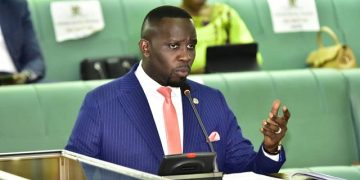









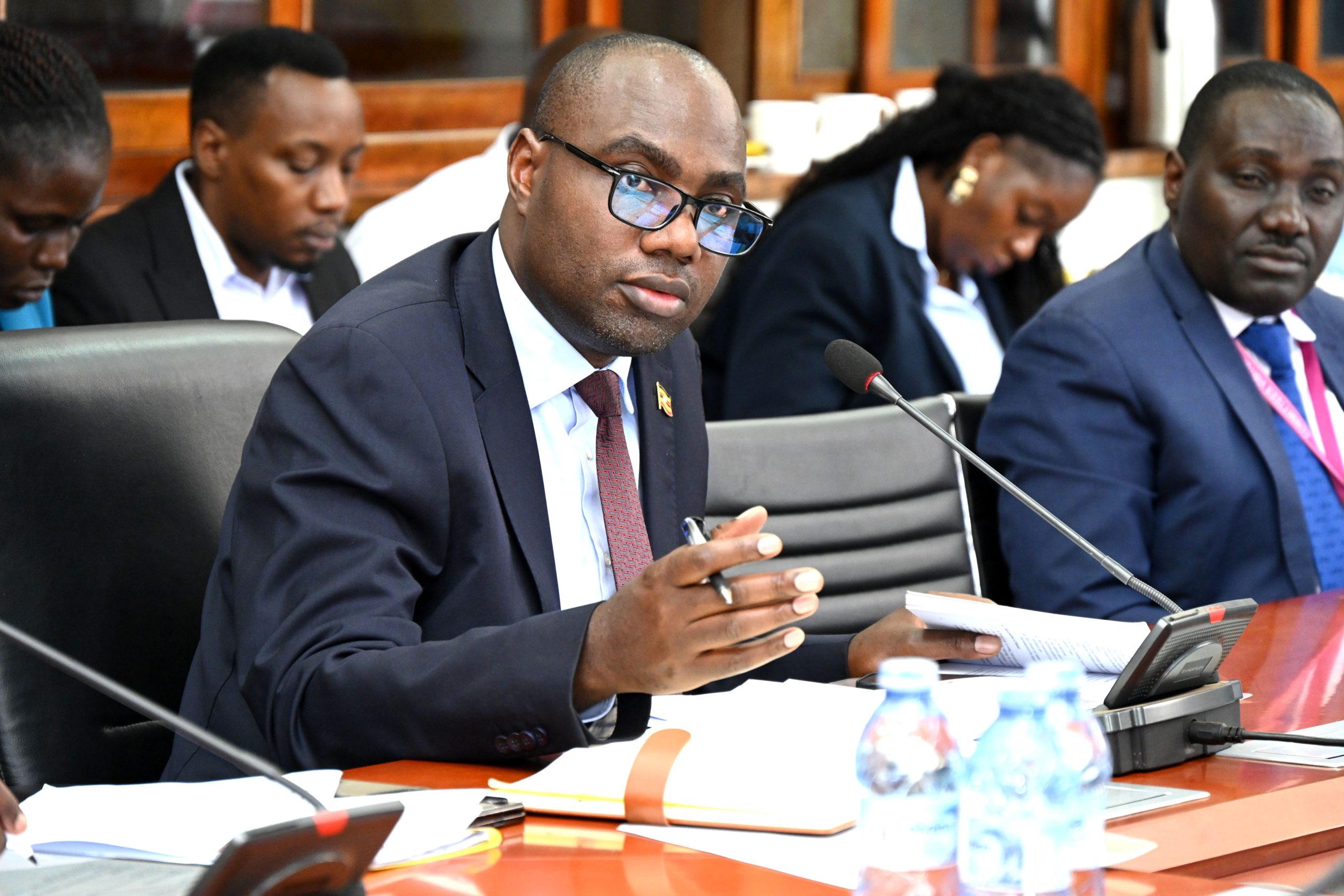
Finance Minister Henry Musasizi
Uganda’s Petroleum Fund has risen to Shs212.6 billion, as the country moves closer to commercial oil production and major petroleum projects enter advanced stages.
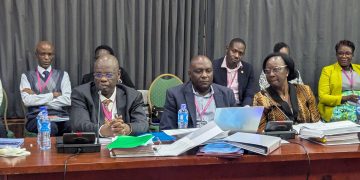
The latest figures were presented to Parliament’s Committee on Finance, Planning and Economic Development by officials from the Ministry of Finance, Petroleum Authority of Uganda (PAU), Uganda National Oil Company (UNOC) and other government agencies.
Finance Minister Henry Musasizi told MPs that the fund stood at Shs131.27 billion as of June 30, 2025, down from Shs145.98 billion the previous financial year.
The decline followed the appropriation of Shs281.87 billion from the fund to finance infrastructure and development projects during the 2024/25 financial year.
However, by December 31, 2025, the fund had increased by about Shs81 billion to Shs212.6 billion, following additional petroleum revenue inflows.
Annual petroleum receipts also increased from Shs184 billion to Shs263.2 billion, with the collections comprising tax and non-tax revenue.
Of the Shs281.87 billion appropriated from the fund, Shs166.5 billion was channelled through UNOC towards Uganda’s equity contribution to the East African Crude Oil Pipeline (EACOP), while Shs115.37 billion was used to support construction of Hoima City Stadium ahead of the 2027 Africa Cup of Nations.
The expenditure has attracted scrutiny from MPs, who are demanding a detailed account of infrastructure projects financed using petroleum revenues..
The development of the Petroleum Fund comes as Uganda’s oil infrastructure moves closer to completion.
Uganda Revenue Authority Acting Commissioner General Abel Kagunire told the committee that government has so far invested US$421 million through UNOC in EACOP, in which Uganda holds a 15 percent stake.
Officials said that 1,414 kilometres of the 1,443-kilometre pipeline had been completed.
Most associated facilities are also nearing completion, although pump stations three and four remain under construction.
Other works still underway include electrical installations, instrumentation, telecommunications, information technology and security systems.
PAU expects the remaining works to be completed by early December, with the pipeline expected to be ready to receive crude by mid-December.
Member of Parliament Patrick Oshabe Nsamba, however, challenged government to provide a more specific timeline for the start of oil production.
He questioned whether completion of EACOP in December would mean crude pumping starts in January or February.
Musasizi defended the use of financial-year timelines, saying government must avoid providing dates that could later change and affect investor confidence.
Government is also progressing with plans for an oil refinery.
PAU officials said a feasibility study had confirmed the refinery’s viability and the project had entered the pre-front-end engineering design stage.
Detailed engineering designs are currently being reviewed in London, with the process expected to be completed by January 2027.
If approved, construction is expected to take about four years, followed by six months of testing, putting the projected completion date around 2031.