











The Parliamentary Committee on Commissions, Statutory Authorities and State Enterprises (COSASE) has questioned Kiira Motors Corporation over slow vehicle production, accountability for public funds and the ownership of a company operating 46 buses manufactured by the state-owned vehicle maker.
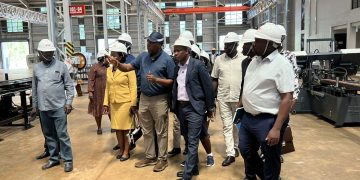
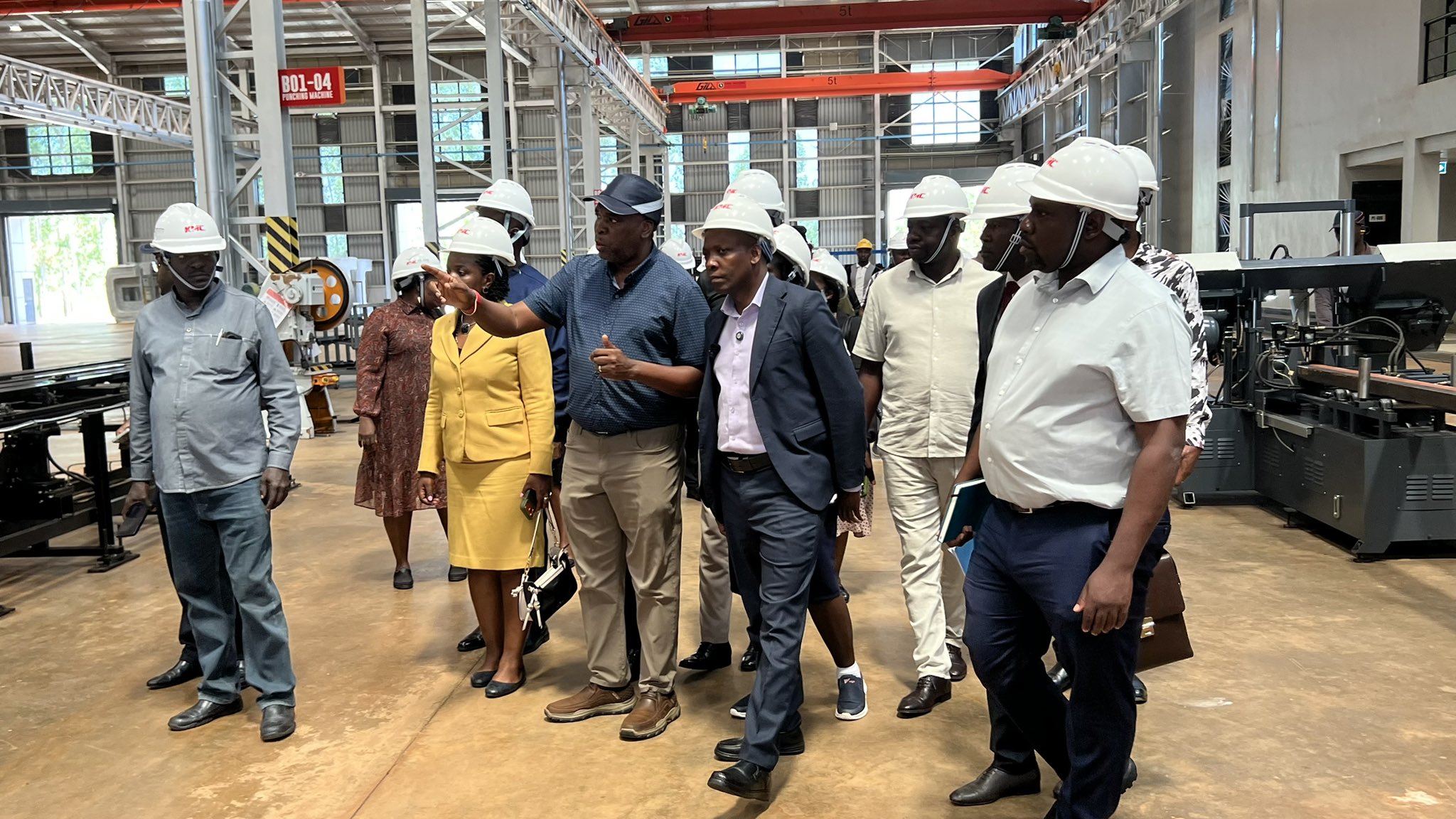
The concerns emerged during an oversight visit to the Kiira Motors manufacturing plant in Mutai Village, Jinja District, where legislators interrogated management over production performance, the utilisation of government funds and the registration of EVS Kayoola, reportedly under the personal name of former Science, Technology and Innovation Minister Dr Monica Musenero.
The committee, chaired by Kyadondo East MP Muwada Nkunyingi, questioned how the company could have received substantial government investment since its operationalisation in 2018 yet struggle to meet its production targets.
Kiira Motors Chief Executive Officer Paul Isaac Musasizi told the committee that the corporation had received Shs498 billion in government capitalisation, with another Shs128 billion appropriated but not yet released in the current financial year.
He said the factory, whose installed capacity is 2,500 vehicles annually, had produced 45 buses between July and the time of the visit, against an annual target of 346 vehicles. The company currently has about 120 production workers but requires 900 to fully utilise its installed capacity.
However, MPs expressed concern over the slow pace of production and the company’s ability to deliver value for public investment.
Elgon North MP Gerald Nangoli questioned whether Kiira Motors could achieve its long-term production targets, noting that its current output remained far below expectations.
Workers’ representative Annet Birungi also criticised the low production levels, arguing that the company had received substantial public funding without producing enough vehicles to justify the investment. She further questioned how the planned expansion of electric buses would be supported by only 14 charging stations currently installed across the country.
Buzaaya County MP Martin Mugabi Muzaale questioned the competitiveness of Kiira Motors buses, some of which cost approximately Shs1.2 billion, compared to cheaper alternatives on the market. He also sought clarification on when the company expects to break even, given the limited returns on government investment.
Bamunanika County MP Robert Ssekitooleko questioned whether the buses were suitable for rural roads, arguing that the company needed to demonstrate their ability to operate beyond urban transport routes.
In response, Musasizi defended the electric buses, saying they cost approximately Shs900 per kilometre to operate compared to Shs3,800 for diesel-powered buses. He said the company was also planning to establish 260 fast-charging stations in 14 major cities by 2030, with a target of increasing the current 14 stations to 100 by the end of the financial year.
He added that electric buses carry a warranty of five years or 550,000 kilometres, whichever comes first, while the company was pursuing financing arrangements to enable transport operators to acquire the vehicles through leasing, instalments and a pay-as-you-drive model.
The committee also raised concerns over the ownership of EVS Kayoola, through which 46 Kiira Motors buses have reportedly been deployed. Legislators questioned why company records identified Musenero as the beneficial owner with 98 per cent ownership and 100 per cent voting rights.
Musasizi explained that beneficial ownership declarations require the identification of a natural person and that Musenero had been listed in her capacity as the minister overseeing the investment at the time. He acknowledged that the company had not consulted the Attorney General before filing the documents and pledged to seek legal guidance to regularise the arrangement.
The committee further questioned procurement irregularities highlighted in the Auditor General’s report, including awarding contracts to higher bidders and signing contracts after bid validity periods had expired.
Musasizi also told MPs that locally sourced materials account for approximately 20 per cent of the value of components used in the company’s key vehicle model, with a target of increasing local content to 65 per cent by 2040.
COSASE Chairperson Nkunyingi said the committee would summon the responsible minister and other officials to Parliament for further explanations on the ownership structure of EVS Kayoola, the transfer of public assets and the safeguards in place to protect government investment.