












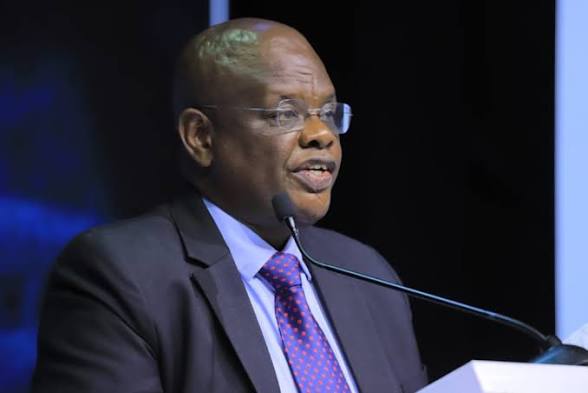
KAMPALA — The Uganda Civil Aviation Authority (UCAA) has asked Parliament to intervene and help to recover Shillings 166.32 billion owed to the authority by various government institutions, saying the unpaid funds are limiting its ability to expand and maintain the country’s aviation infrastructure.
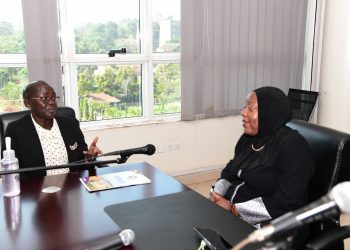
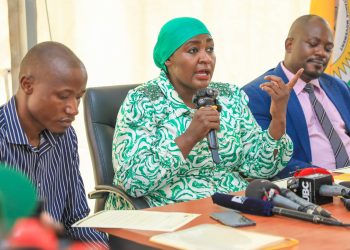
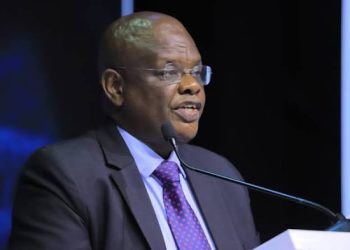
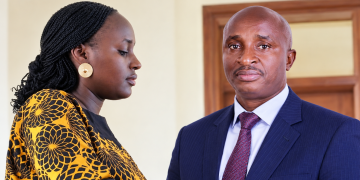
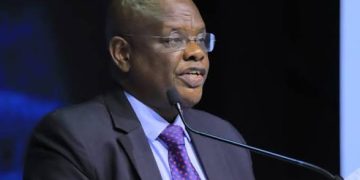
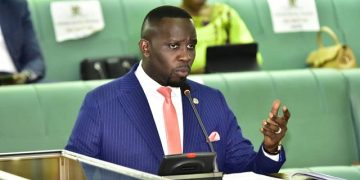
UCAA Director General Fred Bamwesigye made the appeal while appearing before Parliament’s Committee on Physical Infrastructure to respond to issues raised in the Auditor General’s report for the 2024/25 financial year and update Member of Parliament on the progress of works at Entebbe International Airport and other airports across the country.
Bamwesigye said clearing the outstanding debt would give UCAA the financial capacity to undertake major infrastructure projects, including the construction of an additional modern terminal building at Entebbe International Airport to accommodate the growing number of passengers.
He said UCAA is also constrained by the high cost of developing and maintaining aviation infrastructure to meet international safety and security standards.
“Much of the money we get through Entebbe is for cost recovery. The passengers pay for the services we run, not anything extra for investment,” Bamwesigye told MPs.
He explained that major infrastructure such as runways requires central government funding because UCAA cannot finance such projects from its operational revenues.
Bamwesigye said, for example, that constructing a 3.6-kilometre runway would consume UCAA’s budget for several years, making it necessary for the Government to take responsibility for major capital investments.
He said the authority had nevertheless used available revenue to support works at airports including Jinja and Kisoro, but warned that limited resources continue to delay several projects.
On Entebbe International Airport, Bamwesigye said the ongoing upgrade and expansion works had reached about 87 per cent completion. The first phase of the project, valued at about US$200 million, included rehabilitation of the main runway and associated taxiways, construction of a new passenger terminal and rehabilitation of Apron One.
He said UCAA had also acquired specialised aircraft recovery equipment worth Shs3.2 billion, capable of removing large aircraft such as the Airbus A380 from the runway in case they skid off and obstruct other aircraft operations.
The authority is also working to maintain Category 9 airport emergency standards, which require specialised firefighting equipment and other safety facilities.
However, MPs raised concerns over several issues, including disputed land involving UCAA and other parties, equipment purchased but not being utilised, incomplete airport projects outside Entebbe and the division of responsibilities between UCAA and other government agencies.
The Minister of State for Works and Transport, Siraje Ali, told the committee that the Government was aware of the challenges and would present them to Cabinet for resolution.
He said the Government would also pursue a solution to the outstanding debt owed to UCAA and address land disputes affecting the authority.
Bamwesigye further said the aviation sector is facing rising operational costs, changing international regulatory requirements, cybersecurity threats, pandemics and disruptions caused by conflicts, particularly in the Middle East.
He said disruptions in the Middle East have significantly affected air traffic because the region is a major global aviation hub.
Despite the challenges, Bamwesigye said UCAA recorded an overall performance of 79.7 per cent in the 2025/26 financial year, with continued growth in passenger traffic and revenue and progress in aviation safety and security.
He said UCAA would continue lobbying the Government through the Ministry of Works and Transport to clear its outstanding debt and support the expansion of aviation infrastructure.