







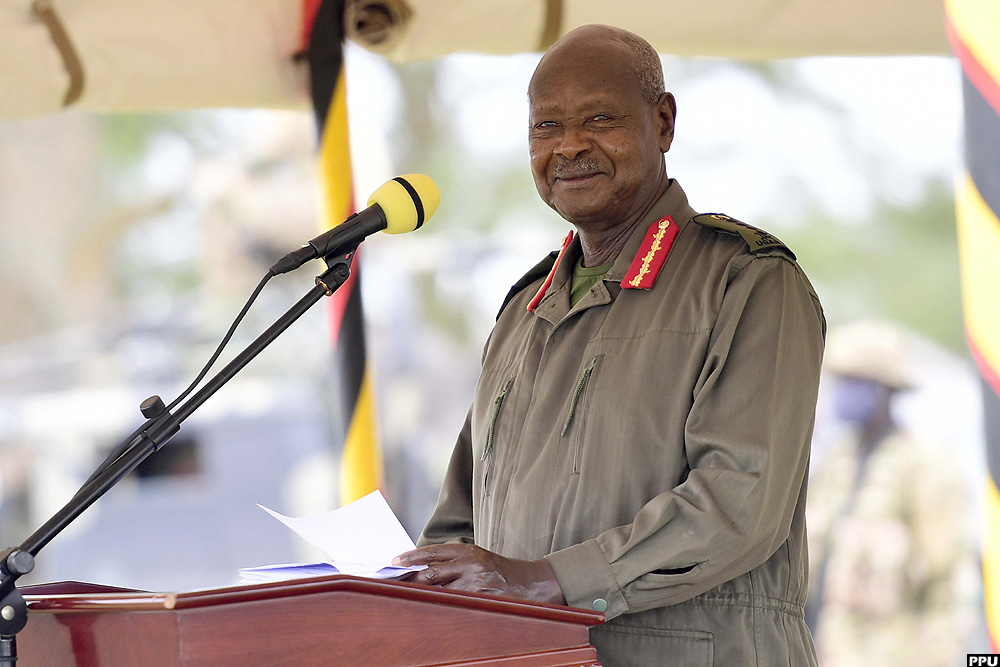
President Yoweri Kaguta Museveni has issued a detailed clarification on the proposed Sovereignty Bill, responding to growing public debate and criticism surrounding its contents.
In a message addressed to Ugandans, the President said there had been “a lot of noise (orwaari) about the Bill, questioning whether the version being discussed in public reflects the one he originally initiated in Cabinet.
Museveni dismissed concerns that the Bill seeks to restrict foreign direct investment, religious donations, or remittances from Ugandans abroad, insisting that such interpretations are incorrect.
“The Bill will stop FDIs, support for religious bodies from abroad, remittances from Ugandans working abroad, etc., etc. Really!! That is not the Bill I initiated,” he said.
The President explained that his intended version of the legislation focuses on what he described as “sovereignty in policy decision-making,” rather than restricting financial flows or private economic activity.
He linked the concept of sovereignty to Africa’s historical struggle against colonialism, referencing the continent’s political evolution from colonisation to independence, and the role of Pan-African movements and liberation struggles across the 20th century.
According to Museveni, sovereignty should mean the ability of countries to make independent policy choices without external influence.
“Independence means the right to make our own mistakes if necessary and learn from them. Sovereignty means: ‘Please, muteleke (leave us alone), so that we make our own decisions,’” he said.
He outlined areas he considers central to policy sovereignty, including political decisions such as representation systems, social issues, economic policy choices like privatisation, and foreign policy positions on global conflicts.
Museveni also cautioned against what he described as external interference through funding or influence of domestic political processes, arguing that such actions undermine national decision-making.
He said Uganda’s Constitution already provides mechanisms for exercising sovereignty through elections and referenda, citing provisions under Articles 1(4), 59, and 68.
“Do not interfere by word, action or money in that effort,” he said, adding that ideological and policy decisions “can make or break countries.”
The President further clarified that Uganda remains committed to a free-market economy, rejecting any suggestion that the Bill targets lawful financial flows.
He said there are no provisions in government policy that restrict foreign investment, church donations, or remittances, noting that Uganda’s foreign exchange system operates through privately run forex bureaus.
“We run a free economy,” he said, adding that the freedom of capital movement has helped support national growth and compensate for inefficiencies in public service delivery.
In his message, Museveni also reflected on Uganda’s political and economic journey under the National Resistance Movement (NRM), stating that the country has made deliberate policy choices over the past four decades that support its current economic direction.
He argued that Uganda’s progress has been achieved despite challenges such as corruption and weak governance structures, which he said are mitigated by private sector freedom.
The President said he had engaged relevant parliamentary leaders, including Hamson Obua and committee chairs, urging them to ensure that the Bill remains focused on protecting policy sovereignty rather than regulating private financial transactions.
He concluded with a moral appeal, quoting biblical scripture, encouraging influence through example rather than coercion.
“Let your light so shine before men, that they see your good deeds,” he said, citing the Book of Matthew.
Museveni signed off his message with a call for African unity and progress.
ENDS.