






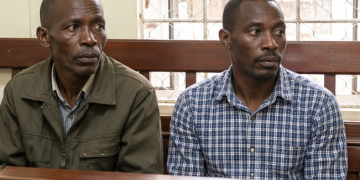

















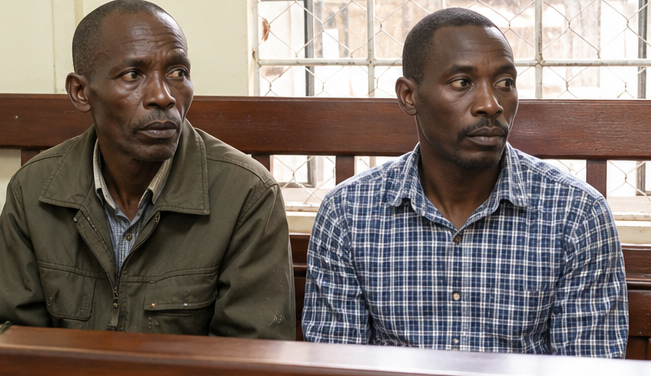
The Court of Appeal has overturned the murder convictions of two men who had been serving 45-year prison sentences, ruling that the evidence used to identify them as killers was unreliable and failed to meet the standard of proof required in criminal cases.
Ngabirano Moses and Barahukwa Richard had been convicted by the High Court in Kabale in 2022 for the murder of Bukabeba Benson and each sentenced to 45 years in prison.
In a unanimous decision, a panel of Court of Appeal judges comprising Justices F.M.S. Egonda-Ntende, Oscar John Kihika and Jesse Byaruhanga-Rugyema found that the prosecution had failed to prove beyond reasonable doubt that the two men were among the attackers.
The judges held that weaknesses in the identification evidence, coupled with the prosecution’s failure to produce the first police report and call the investigating officer as a witness, rendered the convictions unsafe. The two men had been convicted and sentenced by High Court Judge Moses Kazibwe Katvumi on May 6, 2022.
Court records indicate that Benson was killed on the evening of November 9, 2017, at Karukara Cell in Hamurwa Town Council, Rubanda District. Prosecutors alleged that the deceased had been involved in a longstanding land dispute with Barahukwa, who is the father of Ngabirano, and that threats had been made against him before his death.
According to evidence presented at trial, Benson and another man, Samwiri Tukamushaba, were walking home from Karukara Trading Centre at about 7:30 p.m. when they were ambushed. Tukamushaba was injured in the attack while Benson sustained multiple cut wounds and later died. A post-mortem examination attributed his death to sharp force trauma and severe blood loss.
The appellate judges found significant weaknesses in the prosecution’s case, which largely depended on Tukamushaba’s testimony as the sole witness identifying the accused.
They observed that the attack occurred at night under difficult conditions and that Tukamushaba himself had been assaulted and injured during the incident. The court noted that two defence witnesses testified that shortly after the attack, Tukamushaba told them he had not recognised the assailants.
The judges said this contradiction cast doubt on the reliability of his later testimony identifying the appellants as the attackers.
They also faulted the prosecution for failing to present the first report made to police after the incident and for not calling the investigating officer to testify. According to the court, these omissions left unanswered questions about whether the witness had identified the accused persons at the earliest opportunity.
While acknowledging that evidence of a land dispute and prior threats could establish a possible motive, the court emphasised that motive alone could not prove participation in the killing.
The judges further ruled that the trial court had not adequately considered the alibi defences raised by the two appellants, noting that the burden remained on the prosecution to disprove an alibi beyond reasonable doubt.
After reviewing the evidence, the Court of Appeal concluded that the prosecution had failed to establish beyond reasonable doubt that Ngabirano and Barahukwa were among the assailants.
“The conviction was unsafe and occasioned a miscarriage of justice,” the judges held.
Having quashed the convictions, the court said it was unnecessary to determine whether the 45-year sentence imposed by the High Court was excessive, since the sentence automatically fell with the overturned conviction.
The two men were ordered to be released immediately unless they are being held in connection with any other lawful charges.