









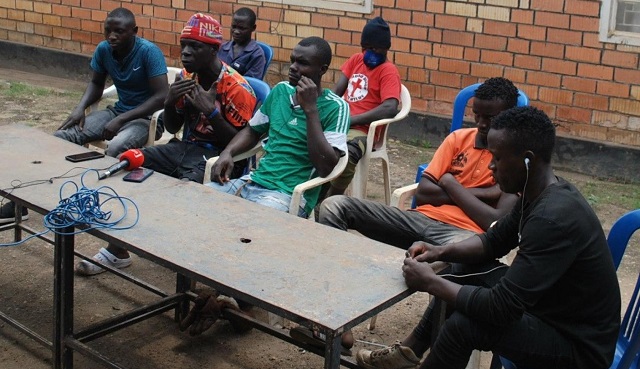
Ugand’s opposition political activists have raised concern over what they describe as persistent persecution by state agents, forcing some of their colleagues to flee their homes for safety.
The activists claim that intimidation and threats, which were previously associated mainly with security operatives, are now also being carried out by individuals linked to the ruling National Resistance Movement (NRM) party, which continues to narrow space for political participation in the country.
Philemon Mbalire, the People’s Front for Freedom (PFF) Secretary for Youth Affairs in the greater Masaka sub region, says the alleged threats have become a major obstacle to the party’s mobilisation efforts and growth in the region.
The PFF, one of Uganda’s newest opposition political parties, emerged in early 2025 following internal disputes that split the Forum for Democratic Change (FDC). The breakaway faction is led by detained former presidential candidate Dr. Kizza Besigye, with Kampala Lord Mayor Erias Lukwago serving as deputy leader.
According to Mbalire, many of the party’s mobilisers and coordinators have over the years been targeted through arrests, intimidation, and violent confrontations involving both security operatives and known NRM supporters opposed to their activities.
He says, such state-inspired harassment and arbitrary arrests of opposition activists have for years been reported in different parts of the country, hence threatening principles of multiparty dispensation.
”The most popular incidents can be traced way back 2015, when FDC leadership mobilized civil resistance against government’s excesses of tampering with the constitution, to scrap the presidential 75 years age limits of the president,” he narrates
He alleges that the state ruthlessly responded to the resistance, hence abducting and maiming several activists, and some of them abandoned their homes for their safety,” he says.
Among those affected, he says, are Sam Mugumya, one Dr. Besigye’s Assistants Ibrahim Bruce, the FDC Coordinator for the Business Sector in greater Kampala, Muhammad Lutaaya the party youth coordinator for Masaka sub region, Farouk Matovu, Ronald Mulindwa, Sulait Muwonge, and Moses Migadde, among others who were part of the central mobilisation team.
Mbalire alleges that while in detention, the activists were accused of organising political insurrection and subjected to torture.
Sulait Muwonge says some of the victims continue to suffer emotional trauma and unexplained health complications allegedly resulting from the mistreatment they endured in detention. He adds that several activists have since gone into hiding or stealthily fled the country for fear of further persecution.
Vincent Mugenyi, the PFF Regional Deputy Mobiliser for the informal sector, accuses security agencies of closely monitoring individuals who have attended political training sessions or are perceived to be close associates of opposition leaders.
Mugenyi claims that his brother, Ibrahim Bruce, together with other activists, was repeatedly arrested on what he described as trumped-up charges and pressured into recording statements implicating senior party leaders in subversive activities.
“Many of these people are living in fear because the state can at any time use the same statements against them. Such circumstances are forcing them to either giveup and join the government or fle of their safety,” he says.
He further notes that many victims remain reluctant to publicly speak about their experiences in detention centres due to fear allegedly instilled in them by their captors before release. According to him, this fear has also hindered efforts to seek justice through the courts.
In response to the allegations, Uganda Police Force Deputy Spokesperson Diana Nandawula urged the activists to formally report their complaints to the nearest police stations to facilitate investigations.
“We need to have their concerns formally registered for proper follow-up,” Onyango says.
Meanwhile, PFF Deputy Secretary General Harold Kaija maintains that many opposition supporters continue to live in fear due to what he describes as increasing state hostility toward dissenting political voices.
Kaija referenced the July 2024 arrest of 36 party members who had travelled to Kenya for political training before they were extradited to Uganda and charged with terrorism-related offences.
”Prior to that, many of our colleagues have endured terrible experiences in the hands of state agents who have deliberately failed to reform their ways despite the repeated appeals from various stakeholders,” he says.
He argues that the government has steadily narrowed the space for opposition politics through intimidation and persecution of activists, creating widespread fear among supporters and the general public.
Kaija observes that their party has now considered profiling all opposition activists who have since suffered state-inspired violations, saying that such records will be used to hold the authorities accountable after the lose power.