




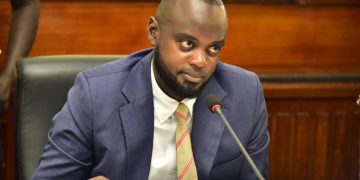












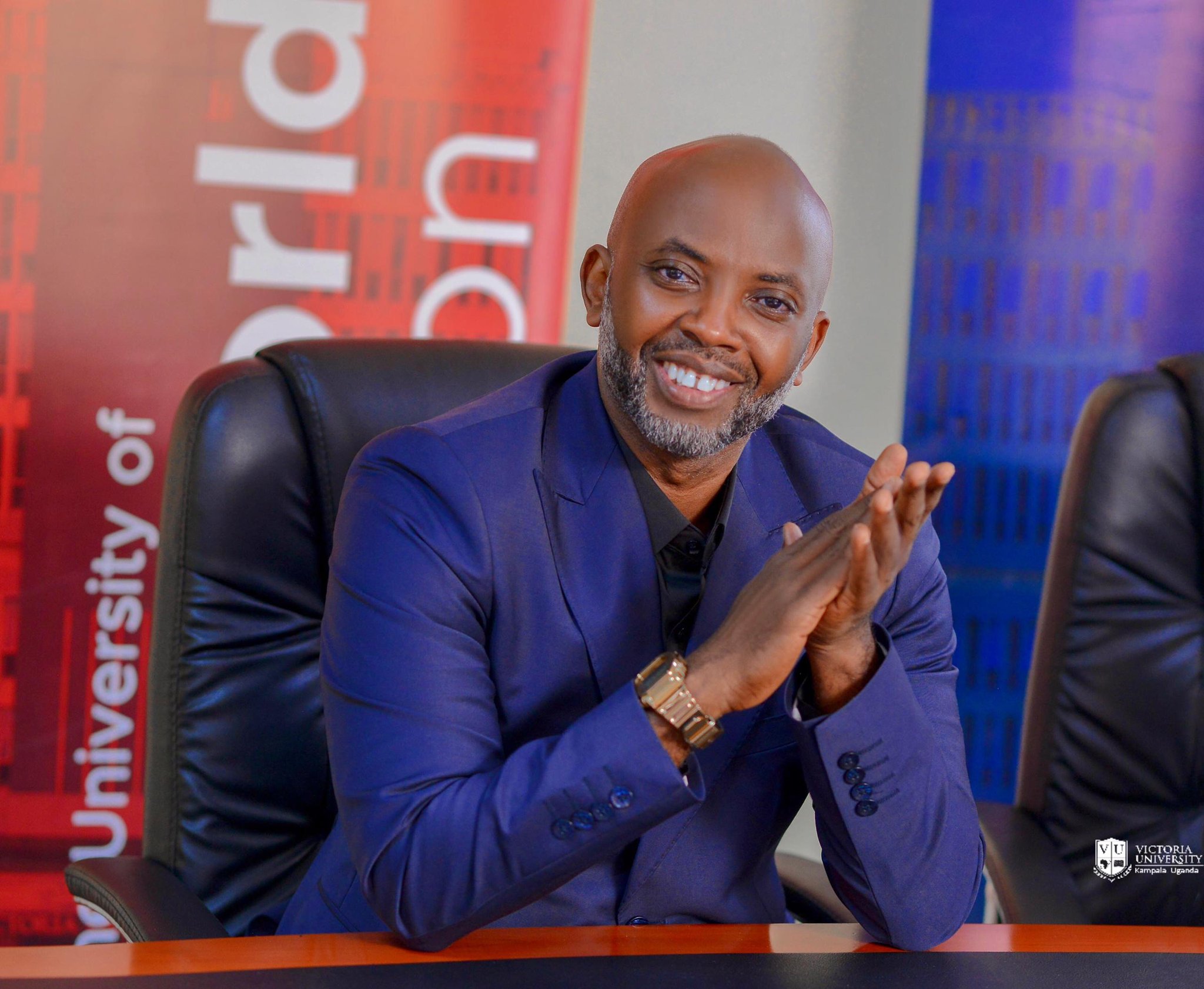
A Kampala-based lawyer has defended the appointment of Dr. Lawrence Muganga as Minister of State for Internal Affairs, arguing that claims that his dual Ugandan Canadian citizenship disqualifies him from holding ministerial office are not supported by the Constitution.
The debate emerged following concerns over Section 19D of the Uganda Citizenship and Immigration Control (Amendment) Act, 2009, which lists Cabinet Ministers and other ministers among public offices that dual citizens are prohibited from holding.
However, in a five-page legal opinion dated May 29, 2026, Advocate Rashid Ssemambo, Managing Partner at Ssemambo & Ssemambo Advocates, argues that the provision is unconstitutional and therefore unenforceable.
Ssemambo contends that Article 80 of the Constitution only requires a person to be a citizen of Uganda in order to qualify for election as a Member of Parliament. Since ministers are appointed from among Members of Parliament or individuals qualified to be Members of Parliament, he argues that no additional citizenship requirements can legally be imposed through ordinary legislation.
According to the legal opinion, the Constitution remains the supreme law of Uganda, and any law that contradicts it becomes void to the extent of the inconsistency. Ssemambo maintains that Parliament cannot remove rights or qualifications expressly granted by the Constitution by introducing restrictions through an Act of Parliament.
The lawyer further relies on the doctrine of harmonious interpretation, a constitutional principle requiring all provisions of the Constitution to be read together as a coherent whole. He argues that this principle prevents subordinate legislation from selectively limiting rights already guaranteed to Ugandan citizens under the Constitution.
Based on this interpretation, Ssemambo concludes that dual citizens remain eligible for ministerial appointment and that any statutory provision seeking to exclude them from such offices is unconstitutional.
He also argues that state institutions and Parliament are under no obligation to enforce provisions that conflict with the Constitution, insisting that constitutional supremacy must prevail whenever there is a contradiction between constitutional provisions and ordinary legislation.
In a broader commentary contained in the same opinion, Ssemambo expresses concern over the rapid expansion of social media across Africa. He compares the unchecked flow of online content to the British opium trade in China, warning that societies risk moral and social decline if governments fail to regulate the quality and quantity of information reaching citizens.
The legal opinion is expected to add a fresh dimension to the ongoing debate over dual citizenship and eligibility for public office, while raising broader constitutional questions about the relationship between statutory restrictions and rights guaranteed under Uganda’s Constitution.