


























Ugandans seeking family planning services are set to have more options for accessing contraceptives as the Government expands services through private pharmacies and drug shops, community health workers and a WhatsApp-based artificial intelligence (AI) chatbot.
The measures are part of efforts to address contraceptive stockouts and improve access to sexual and reproductive health services across the country.
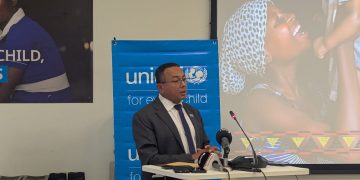
They were discussed during the inaugural Sexual and Reproductive Health and Rights (SRHR) Media Community of Practice Science Cafe organised by the Health Journalists Network in Uganda (HEJNU) in Kamwokya, Kampala.
The forum brought together health journalists and experts to examine persistent contraceptive stockouts in public health facilities, the financing and procurement of family planning commodities, distribution and stock management, as well as practical measures to improve access to services.
The journalist-led initiative is supported by the WISH Policy and Systems Programme, BBC Media Action, HEJNU and the Media Challenge Initiative (MCI), with the goal of promoting evidence-based and solutions-oriented reporting on SRHR.
Dr Chris Ebong, Principal Medical Officer and Head of the Family Planning Section in the Reproductive and Child Health Department at the Ministry of Health, said family planning should be treated as a development priority because it enables families to determine the number of children they can adequately support while allowing women to remain economically productive.
He said the Government is increasing investment in family planning commodities while working with partners to address stockouts and broaden access beyond public health facilities.
Under the expanded approach, selected contraceptive methods will be made available through private pharmacies and drug shops to people who can afford to pay, while public facilities will continue offering free family planning services to those unable to pay.
Community Health Extension Workers and Village Health Teams are also being trained to provide selected family planning methods closer to communities, reducing the distance people have to travel to access services.
Dr Ebong said the Ministry is also strengthening the quality of family planning services through competency-based assessments of health workers, focusing on counselling, management of side effects and correct provision of contraceptive methods.
Health facilities and private providers are being accredited and subjected to routine supervision to ensure they meet the required standards.
On concerns about contraceptive side effects, Dr Ebong urged women experiencing complications to seek medical attention rather than abandoning their chosen method without professional advice.
He said many side effects can be managed while allowing women to continue using their preferred contraceptive method.
The Ministry is also introducing additional contraceptive options, including newer long-acting methods, to give women a wider range of choices suited to their individual reproductive needs.
Dr Ebong further revealed that the Government has approved a Male Involvement Strategy aimed at encouraging men to participate more actively in family planning decisions and seek reproductive health services themselves.
Tackling Stock Management Gaps
Dr Daniel Aguma, a Senior Pharmacist at the Ministry of Health, said the country currently has adequate national stocks of family planning commodities, with many of the remaining stockouts linked to ordering and stock-management challenges at individual health facilities.
He said some facilities fail to submit commodity orders on time because of limited access to internet data, power interruptions, inadequate training and transfers of staff responsible for managing supplies.
The Government is addressing the problem through additional training in commodity management and redistribution of supplies between facilities whenever shortages arise.
Dr Aguma also highlighted the use of technology to make family planning information more accessible, introducing Nurse Lina, a WhatsApp-based AI chatbot designed to provide information on family planning and contraceptive options.
The chatbot uses Ministry of Health guidelines to answer questions, provide information about possible side effects and direct users to nearby service providers.
Dr Aguma said the platform is intended to help people access reliable information without necessarily having to travel to a health facility, particularly when they need basic guidance before seeking services.
The Ministry also operates a toll-free information line through which members of the public can obtain free information and guidance on family planning.
The Science Cafe, the first in the SRHR Media Community of Practice series, focused on contraceptive stockouts, examining the factors affecting commodity availability as well as interventions already being implemented to improve supply, service delivery and access to family planning information.