

























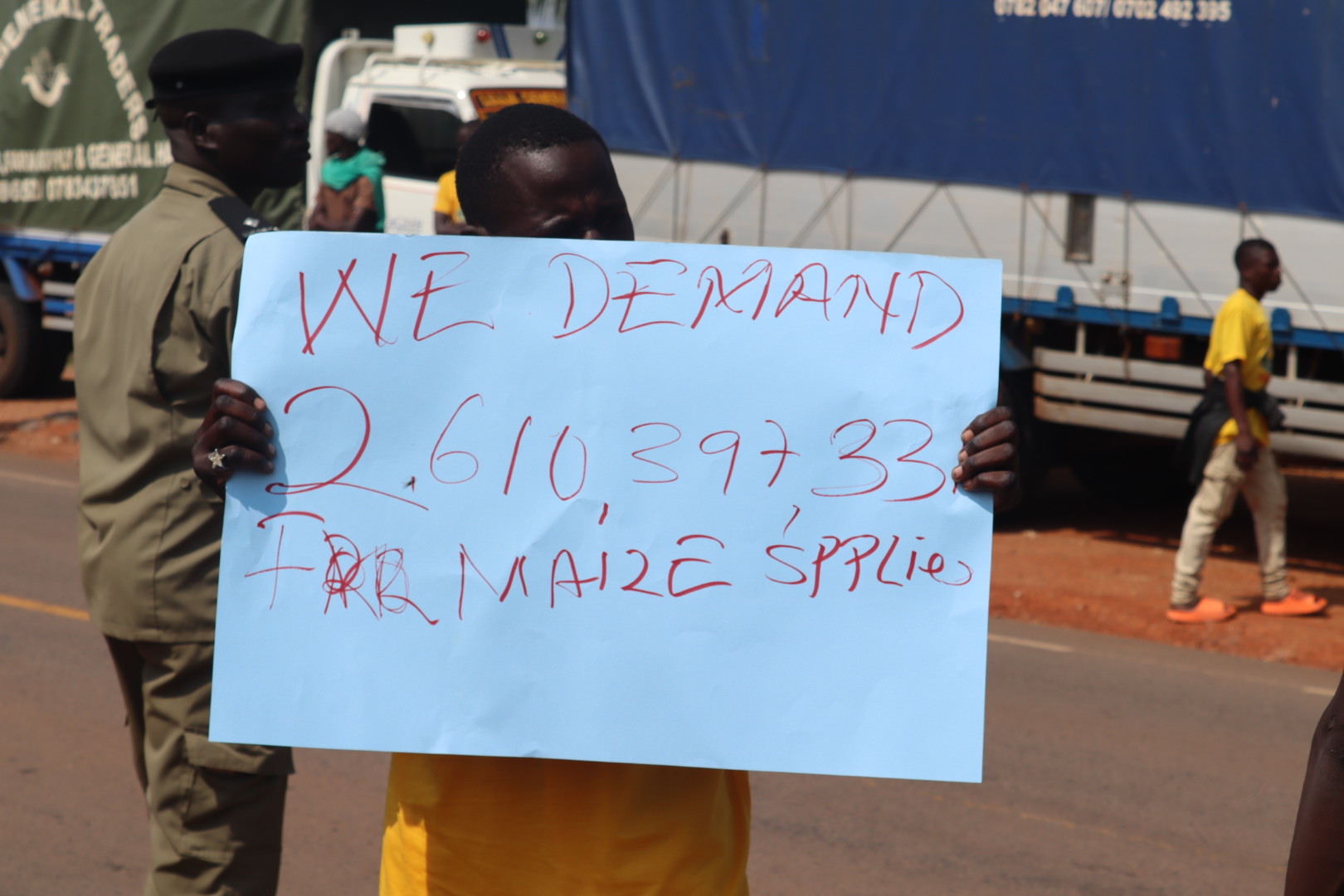
More than 70 traders have camped at the premises of PRO Industries Limited in Ndibulungi Village, Luwero District, demanding payment for maize supplied to the company, despite an interim court order barring them from trespassing on the premises or interfering with its operations.
PRO Industries secured the interim order on Monday from Luwero High Court Judge Godfrey Himbaza amid a dispute over delayed payments for maize worth more than Shs2.6 billion supplied by Lim Welo General Stores.
The order, issued in the presence of Eric Mamanzi, counsel for PRO Industries, restrains Lim Welo General Stores, its director Isma Mubiru, their agents and employees, as well as any other persons acting on their instructions, from trespassing on the company’s premises.
The High Court has set September 3, 2026, for the hearing of main application filed by PRO Industries against Lim Welo General Stores. The company accuses the respondents of, among other offences, trespass, defamation , breach of contract, nuisance and defamation.
The application was filled after traders staged protests on Thursday last week demanding payments .
However, on Tuesday morning, the traders returned to the company’s premises, insisting that the court order was being used to deny them their right to demand payment.
Brian Ssemanda, one of the traders, said they supplied maize to PRO Industries through Lim Welo General Stores but had not received payment for three months, forcing them to resort to protests.
Ssemanda accused the company of using the court process to delay payment.
“We supplied our maize to the company and we are here for payment. We never sought a court order for delivery,” Ssemanda said.
Other traders decried the mounting interest on bank loans they obtained to finance maize supplies to the company, as well as other operational costs that remain unpaid.
Anticipating the protests, PRO Industries parked vehicles at the entrance to prevent the traders from parking theirs.
The traders, however, brought in additional vehicles and blocked the entire access road, leaving the company premises inaccessible.
Police deployed personnel to prevent the traders from blocking the Kampala-Gulu Highway or resorting to violence.
Police later asked the traders to select representatives to meet with the Regional Police Commander in an effort to resolve the dispute amicably.
PRO Industries, however, circulated the interim court order to the traders and journalists, reminding them that they were barred from trespassing on the company’s premises.
In a statement issued on Monday, the company condemned the protests and rejected the traders’ demands, saying some of the amounts claimed had been inflated.
The company denied owing the full amount claimed by the traders, alleging that some figures in the suppliers’ statements had been inflated. It also alleged that its weigh bridge staff had been threatened in an attempt to manipulate maize delivery records.
Vasundhara Oswal, Founder and Executive Director of PRO Industries Limited, said the company had identified inflated figures in some suppliers’ statements and would not allow anyone to intimidate its employees or pressure it into making payments based on false or manipulated information.
The company said it had offered to pay 50 percent of the claimed amount to suppliers pending reconciliation of the disputed accounts, but the offer was declined.
On Monday, Luwero District Deputy Resident District Commissioner Abel Bekunda attempted to mediate between the traders and PRO Industries following protests on Thursday. However, the talks broke down after lawyers presented the court order.
Bekunda suspended the mediation but urged the company to pay the undisputed amount while the parties await the court’s decision on the disputed figures.
“The traders supplied the maize, and the only matter is whether to pay Shs1.7 billion or Shs2.6 billion. Let the company pay the undisputed amount as the court decides on what they allege was inflated,” Bekunda said.
The interim order remains in force pending the court’s determination of the application. Despite the order, the traders have returned to the company’s premises and staged fresh protests demanding payment.