

















Parliament’s Committee on Physical Infrastructure has raised fresh concerns over the ownership, management and utilisation of the concrete railway sleeper factory at Kawolo in Lugazi, as legislators investigate possible financial losses and accountability gaps in Uganda’s metre-gauge railway rehabilitation programme.
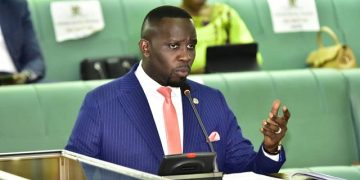
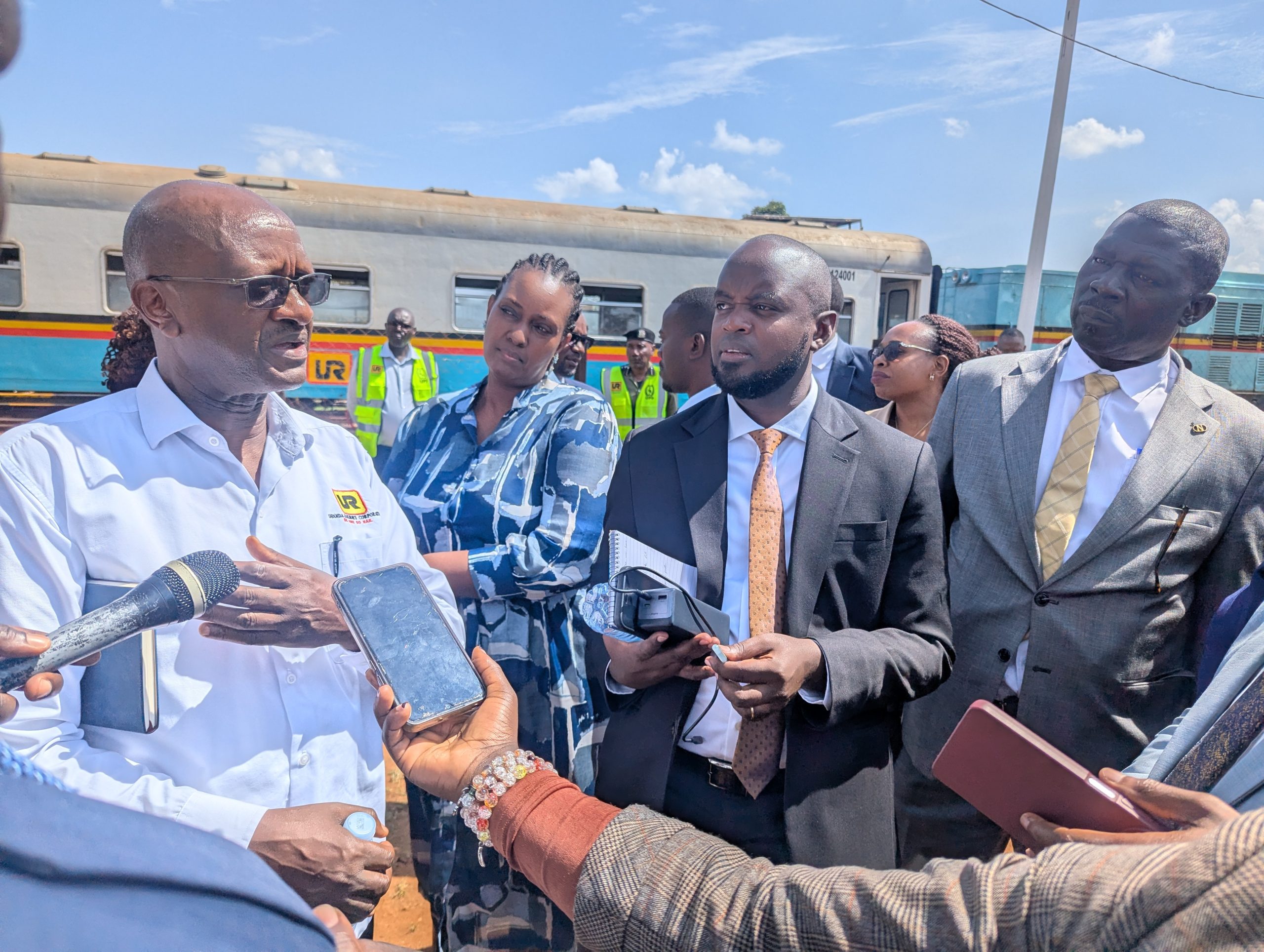
The committee, chaired by Hon. Mwine Mpaka, visited the facility during an oversight mission as it finalises its inquiry into the Spanish-funded rehabilitation of Uganda’s metre-gauge railway network.
At the centre of the committee’s concerns is the status of the factory, which was established by Imathia Construction Limited to support railway rehabilitation works but remains under the contractor’s control despite being situated on land owned by the Uganda Railways Corporation (URC).
URC officials told MPs that while the factory belongs to Imathia Construction Limited, the 1.89-acre piece of land on which it was constructed is owned by the corporation.
The officials said URC entered into a five-year tenancy agreement with the contractor in April 2024, under which Imathia pays approximately Shs1.416 million per month, inclusive of Value Added Tax.
However, Mpaka questioned why the facility had not reverted to government ownership after completion of the railway rehabilitation works.
“We believe this factory should have reverted to the Government of Uganda after the contract was completed, but we have been informed otherwise. This is one of the issues that is still under investigation,” Mpaka said.
MPs Question Shs600 Million Land Levelling Cost
The committee also demanded explanations over approximately €169,000, equivalent to more than Shs600 million, reportedly spent on levelling the land before the sleeper factory was established.
Legislators questioned whether the expenditure represented value for money, particularly given that the land was later leased to the contractor operating the facility.
Mpaka said the committee would investigate the circumstances surrounding the expenditure and establish whether the land preparation works were necessary.
“We are going to look into these circumstances and determine whether there was value for money and whether we actually needed to level land for someone to whom we eventually leased the land,” he said.
The committee has also raised concerns over discrepancies in the number of concrete sleepers supplied under the railway rehabilitation contract.
Officials told MPs that changes were made through an addendum to the original contract and that a total of 47,180 sleepers were eventually supplied.
However, committee members said preliminary findings pointed to a shortfall of about 2,500 sleepers, despite indications that the overall contract price remained unchanged.
The MPs have now demanded minutes from the contract and addendum negotiations to establish how the revised quantities were approved and whether the reduction in the number of sleepers was compensated for through additional works or other contractual adjustments.
Mpaka said the committee would carefully examine the documents before reaching its final conclusions.
URC Defends Plans To Expand Passenger Rail Services
The committee’s visit also turned attention to Uganda Railways Corporation’s plans to expand passenger transport services ahead of the 2027 Africa Cup of Nations, AFCON.
MPs questioned proposals to lease locomotives and passenger coaches, arguing that government could obtain better value by purchasing equipment or rehabilitating some of the country’s existing railway assets.
URC Managing Director Benon M. Kajuna told the committee that the corporation plans to acquire 30 passenger coaches and two locomotives from Japan at an estimated cost of $24 million, or about Shs90 billion.
Kajuna said Cabinet had approved the proposed funding, although URC was still waiting for the Ministry of Finance to release the money.
He explained that leasing had been considered as an alternative should the planned acquisition delay, but warned that the option would be costly.
According to Kajuna, leasing would require an initial payment of about $1.5 million, followed by monthly payments estimated at approximately $500,000.
He said URC’s long-term strategy goes beyond AFCON, with plans to strengthen passenger transport along the Kampala, Jinja, Tororo, Soroti and Gulu corridors.
Kajuna said the revival and expansion of the railway would require sustained investment, beginning with approximately Shs250 billion annually to stabilise operations before increasing to about Shs1 trillion annually for major expansion and modernisation.
MPs Demand Accountability Before More Funding
Mpaka acknowledged that the railway has the potential to transform Uganda’s transport system and ease pressure on the country’s roads, but insisted that accountability issues must first be addressed.
“URC needs money, and this is a game changer in decongesting our roads. But we must first clean up even before we look for more money,” he said.
Former Chairperson of the Physical Infrastructure Committee and Bukanga North MP Nathan Byanyima also criticised what he described as piecemeal investment in the railway sector.
Byanyima questioned why government was moving to establish another concrete sleeper factory for the Standard Gauge Railway in Iganga when an existing facility is already operating at Kawolo.
He argued that better coordination and long-term planning were needed to ensure that existing infrastructure is fully utilised before government commits more resources to similar projects.
Byanyima said an efficient railway system was critical to reducing pressure on Uganda’s roads by shifting the transportation of cargo, fuel and passengers to rail.
The committee has said it will benchmark Uganda’s railway development against systems in Kenya and Tanzania as part of efforts to identify reforms that could improve both the metre-gauge network and the planned Standard Gauge Railway.
Mpaka said the committee had largely completed its report and would submit it to the Speaker of Parliament after the final oversight visit.
The findings are expected to inform Parliament’s recommendations on the management of railway assets, accountability for funds spent on the Kawolo sleeper factory and the broader financing, rehabilitation and modernisation of the Uganda Railways Corporation.