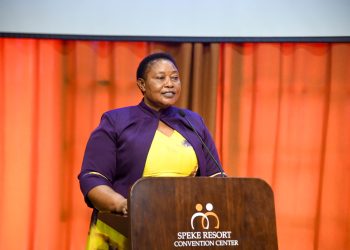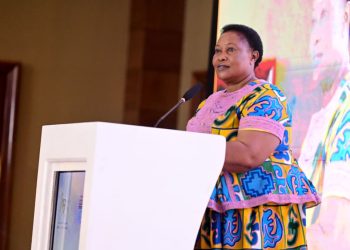


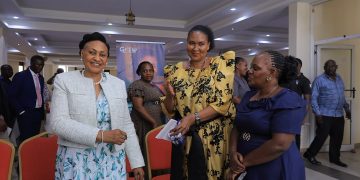



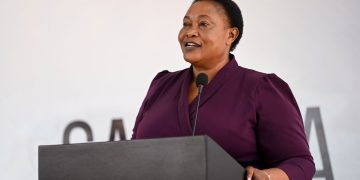












NALI-KYANKWANZI: The Minister for the Presidency and Member of Parliament for Budiope West, Hon. Babirye Milly Babalanda, has underscored the strategic role of the Governance and Security Programme (GSP) in supporting Uganda’s socio-economic transformation, wealth creation and the Tenfold Growth Strategy.
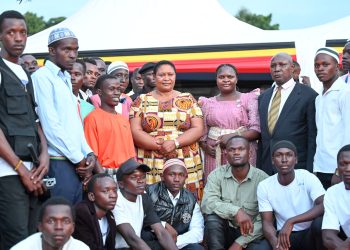
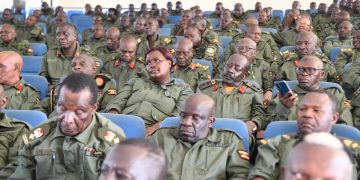
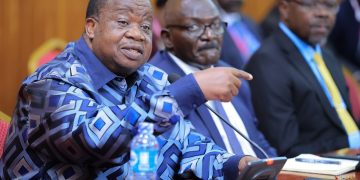
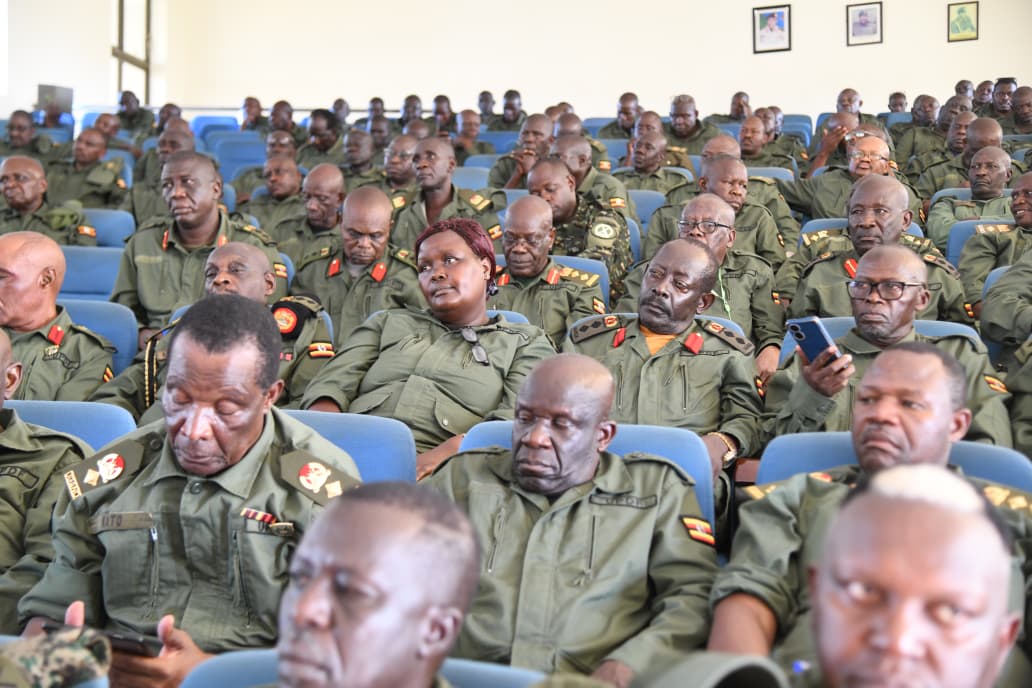
She made the remarks on October 14, 2026, at the National Leadership Institute (NALI) in Kyankwanzi, where she addressed 250 senior military and civilian officers of Operation Wealth Creation (OWC) during a week-long capacity-building retreat.
Babalanda commended the leadership of NALI-Kyankwanzi and the OWC Secretariat for organising the retreat, noting that it comes at a critical time when Uganda is implementing the Fourth National Development Plan (NDP IV) and pursuing the Tenfold Growth Strategy, which aims to grow the economy to USD 500 billion by 2040.
The strategy focuses on strategic investments in agro-industrialisation, tourism, mineral development, including oil and gas, and science, technology and innovation.
“Achieving these ambitions requires more than economic policies and financial resources. It requires peace, security, accountability, efficient institutions and effective coordination across Government,” she said.
Babalanda said the GSP aims to ensure a peaceful and secure Uganda that upholds the rule of law. She explained that security, good governance, justice and accountability are not ends in themselves but essential foundations for investment, production, wealth creation and national prosperity.
The programme is anchored in the Constitution, Vision 2040, NDP IV and other government development priorities. Its nine strategic objectives include strengthening security agencies; improving the efficiency of justice, law and order services; promoting transparency and anti-money laundering systems; strengthening citizen participation in democratic processes; enhancing the implementation of the Bill of Rights; promoting Uganda’s regional and international interests; improving public policy analysis; strengthening refugee protection and migration coordination; and enhancing institutional capacity.
“Insecurity discourages investment, corruption diverts resources, and inefficient institutions delay service delivery. Conversely, a secure environment and accountable leadership enable citizens and businesses to prosper,” she said.
Babalanda noted that the programme brings together the Office of the President, the Ministries of Defence and Veteran Affairs, Internal Affairs, Justice and Constitutional Affairs, and Foreign Affairs, as well as the Judiciary, Uganda Police Force, Uganda Prisons Service, intelligence and security agencies, and other relevant institutions.
She said that although each institution has its own mandate, addressing national challenges requires collective action. She stressed that coordination between the GSP and OWC must translate into practical solutions.
“Coordination must produce solutions, not merely meetings. It must lead to clear responsibilities, timely action, proper follow-up and measurable improvements in the lives of Ugandans,” she said.
She urged OWC officers to familiarise themselves with approved GSP planning, budgeting and implementation frameworks to identify areas of complementarity and jointly address service delivery challenges.
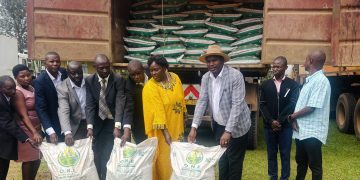
On wealth creation, Babalanda reminded the officers that OWC was established in July 2013 as a presidential initiative to transform Ugandans from subsistence farming to commercial agriculture. She emphasised that distributing agricultural inputs alone cannot guarantee sustainable wealth creation.
“Farmers also require technical guidance, access to markets, reliable information, infrastructure and effective linkages with Government institutions. Your responsibility is to look beyond distribution and focus on viable enterprises, productivity, value addition and sustainable household incomes,” she said.
She called for fair identification of beneficiaries, proper accountability for public resources and measures to ensure that government interventions reach their intended recipients, thereby contributing directly to the objectives of NDP IV and the Tenfold Growth Strategy.
The minister challenged the senior officers to demonstrate professionalism, discipline, patriotism and responsible leadership through five key responsibilities: strengthening coordination with district and technical leaders, upholding accountability, promoting evidence-based implementation, engaging communities and maintaining integrity.
She said performance reporting should go beyond the number of inputs distributed to capture results in agricultural productivity, household incomes and enterprise sustainability.
“Public office is a responsibility, not a personal entitlement,” she said, reaffirming the government’s commitment to the principle of “Kisanja No Corruption, No Sleeping,” which requires public officers to recognise that resources entrusted to them must benefit the people.
Babalanda added that institutions such as NALI play a critical role in nurturing national values, ethical leadership and a shared understanding of Uganda’s development aspirations.
She assured the officers of her commitment to working with OWC leadership and relevant institutions to strengthen coordination and improve service delivery. She also encouraged the use of digital systems and reliable reporting mechanisms to track interventions and support evidence-based decision-making.
“Monitoring must establish not only what Government has spent, but what expenditure has achieved,” she said.
She urged officers returning to their areas of operation to reflect on three questions: What can I do differently to improve service delivery? Which coordination gaps can I help resolve? And what measurable results should citizens expect?
“Governance, security and wealth creation are mutually reinforcing. Wealth creation is not merely a slogan; it is a national mission requiring integrity, coordination, innovation, resilience and people-centred leadership,” she said.
“NRM is here to stay. We should serve Ugandans with purpose,” she added.
Due to other pressing official commitments, Babalanda formally closed the retreat ahead of schedule and wished the officers fruitful deliberations during the remaining sessions.