














Rt Rev Severus Jjumba the Masaka Diocesan Bishop has commended the growing use of technology in healthcare, saying it has significantly improved access to medical services, enhanced diagnostic accuracy and strengthened the management of health facilities.
However, he cautioned that technological advancements must complement, rather than replace, the human touch that remains central to patient care.
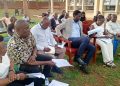
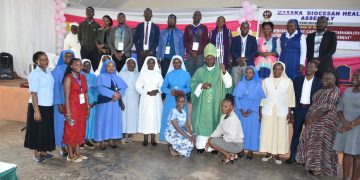
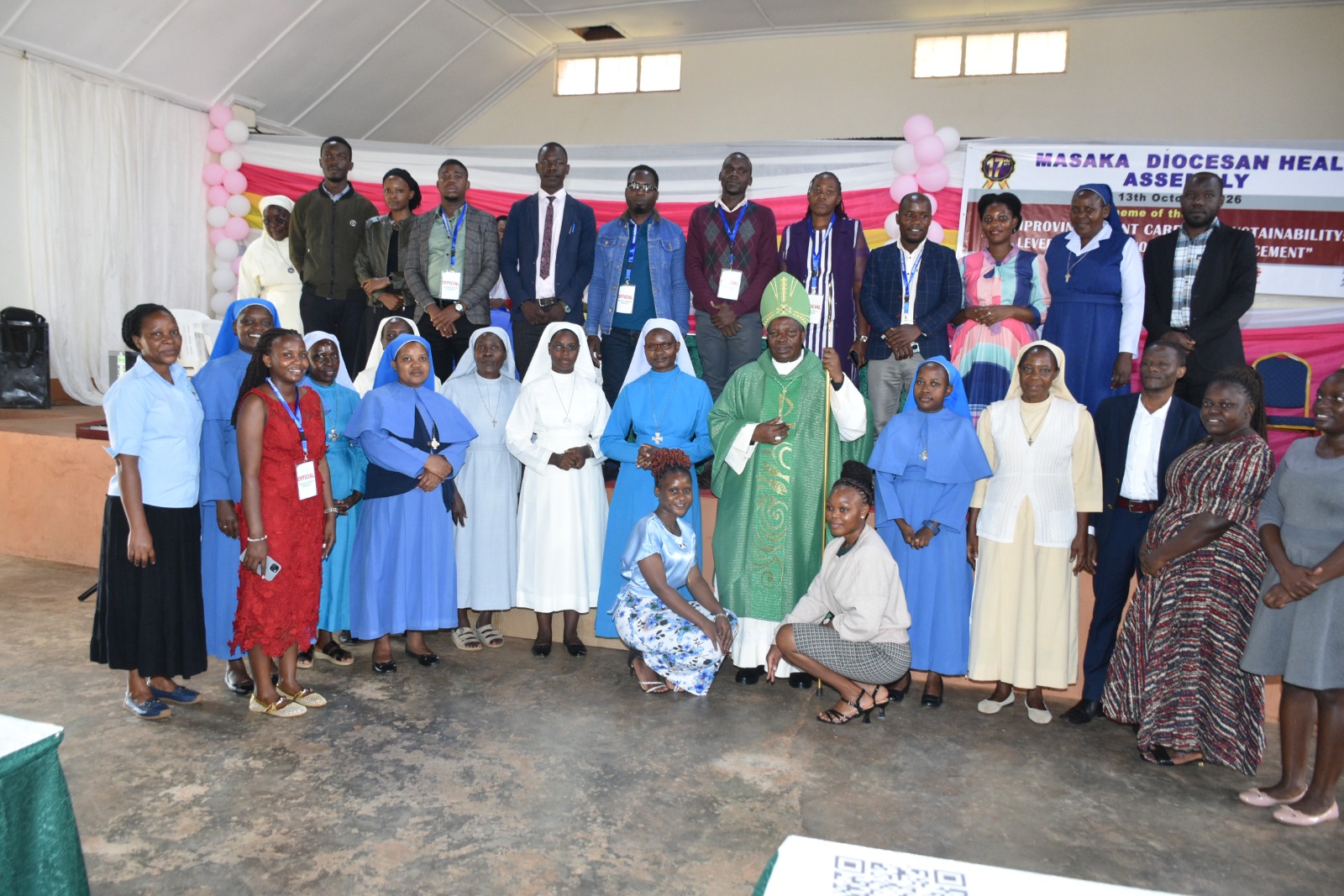
Bishop Jjumba made the remarks during the 17th Masaka Diocesan Health Assembly, an annual gathering organised by Masaka Diocesan Medical Services to review performance and assess progress in delivering quality healthcare. This year’s assembly was held under the theme, “Improving Client Care for Sustainability: Leveraging Advanced Technology.”
The Bishop highlighted telemedicine as one of the innovations transforming healthcare delivery by enabling patients to consult medical professionals and receive appropriate guidance from the comfort of their homes, reducing the need for unnecessary travel to health facilities.
He also pointed to the growing availability of modern diagnostic equipment in Ugandan hospitals, citing facilities such as Mulago, Kisubi and Nsambya hospitals, which offer magnetic resonance imaging (MRI) services, while Kitovu Hospital has computed tomography (CT) scanning services.
He added that ultrasound machines are increasingly available even in smaller health centres, helping healthcare workers make more accurate diagnoses and improve patient outcomes.
Beyond medical equipment, Bishop Jjumba observed that digital technology has improved hospital administration through electronic record-keeping, easier tracking of patient information, better management of institutional records and stronger financial accountability.
Despite these benefits, he stressed that technology must never undermine the personal attention and compassion patients deserve.
“Machines can support healthcare workers, but they cannot replace human beings,” he emphasised, calling on medical professionals to maintain face-to-face interaction with patients and uphold the values of empathy, dignity and personal care.
The Bishop also cautioned health administrators against blindly adopting imported artificial intelligence (AI) systems without assessing their suitability for Uganda’s healthcare environment. He noted that such tools are often developed using standards and assumptions from other countries, which may not fully address local realities unless they are carefully adapted and guided by human judgment.
Drawing a comparison with imported vehicles, Bishop Jjumba explained that cars brought into Uganda are often adjusted to suit the country’s weather conditions and road networks. In the same way, he said, healthcare technologies must be adapted to local circumstances to ensure they are effective, reliable and sustainable.
He further urged health facilities to train their staff to use technology responsibly, ethically and in accordance with high moral standards.
Bishop Jjumba called on hospital administrators to prioritise appropriate and dependable technologies that can function effectively even in remote rural communities, while ensuring that their implementation is closely monitored.
He also challenged hospital leaders, governing boards and managers to strengthen financial controls, procurement procedures and performance-monitoring systems to promote transparency, efficiency and accountability.
Emphasising the importance of communication during technological transitions, the Bishop urged administrators to engage all categories of staff, including cooks and security personnel, when introducing changes such as cashless payment systems.
He noted that clear communication and staff involvement are essential to ensuring that new systems are understood, accepted and implemented without disadvantaging workers.
Bishop Jjumba also expressed gratitude to the Government of Uganda for its continued support of Church-founded health facilities, noting that such support remains vital in sustaining essential medical services and improving healthcare delivery to communities.
Presenting an update on the performance of the diocesan health network, Rev. Fr. Emmanuel Katabaazi, the Health Coordinator of Masaka Diocese, informed the Bishop that the two hospitals and 36 health facilities under Masaka Diocesan Medical Services had made significant progress since the previous assembly, held on 3 October 2025.
He said the facilities had continued working to strengthen the delivery of quality, accessible, affordable and sustainable healthcare services to the communities they serve.
Among the key milestones achieved was the continued operation of the Masaka Diocesan Medical Services Pharmacy, which has served clients across Greater Masaka for 13 years.
At Kitovu Hospital, the children’s ward was renovated and reopened, improving the facility’s capacity to provide care for young patients.
At Villa Maria, renovation and expansion works were undertaken at the nursing school, while construction of an administration block at Villa Maria Hospital was also carried out to strengthen institutional operations.
Other notable developments included the construction and opening of new blocks at Sanje Health Centre III, as well as the opening of an operating theatre at Kijjukizo Health Centre III. The theatre was accompanied by the deployment of a resident doctor, strengthening the facility’s capacity to provide surgical services.
At Kyangowa, a health facility block was completed and equipped with the necessary medical equipment, while a maternity ward at Kayayumbe was completed and equipped to improve maternal and newborn healthcare services.
Fr. Katabaazi noted that these investments in infrastructure, equipment and staffing were aimed at expanding access to essential services, improving the quality of care and strengthening the sustainability of diocesan health facilities.
The achievements, he added, reflect the continued commitment of Masaka Diocesan Medical Services to improving healthcare delivery while responding to the needs of the communities it serves.
The 17th Masaka Diocesan Health Assembly provided an opportunity for health leaders and stakeholders to reflect on progress, address operational challenges and identify practical ways of improving service delivery.
As the health sector continues to embrace technological innovation, Bishop Jjumba’s message underscored the need to balance modern solutions with compassionate, ethical and patient-centred care, ensuring that technology remains a tool for improving human well-being rather than a substitute for human connection.