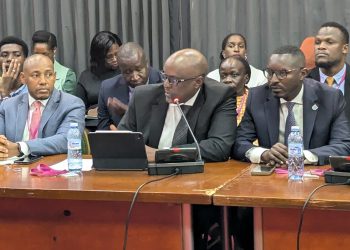



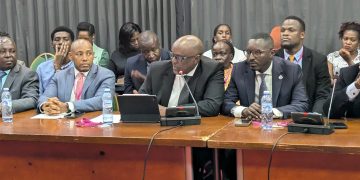
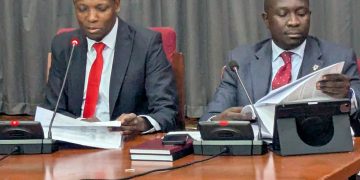










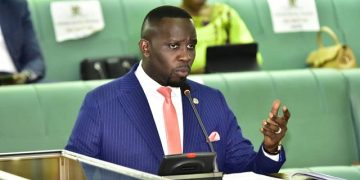








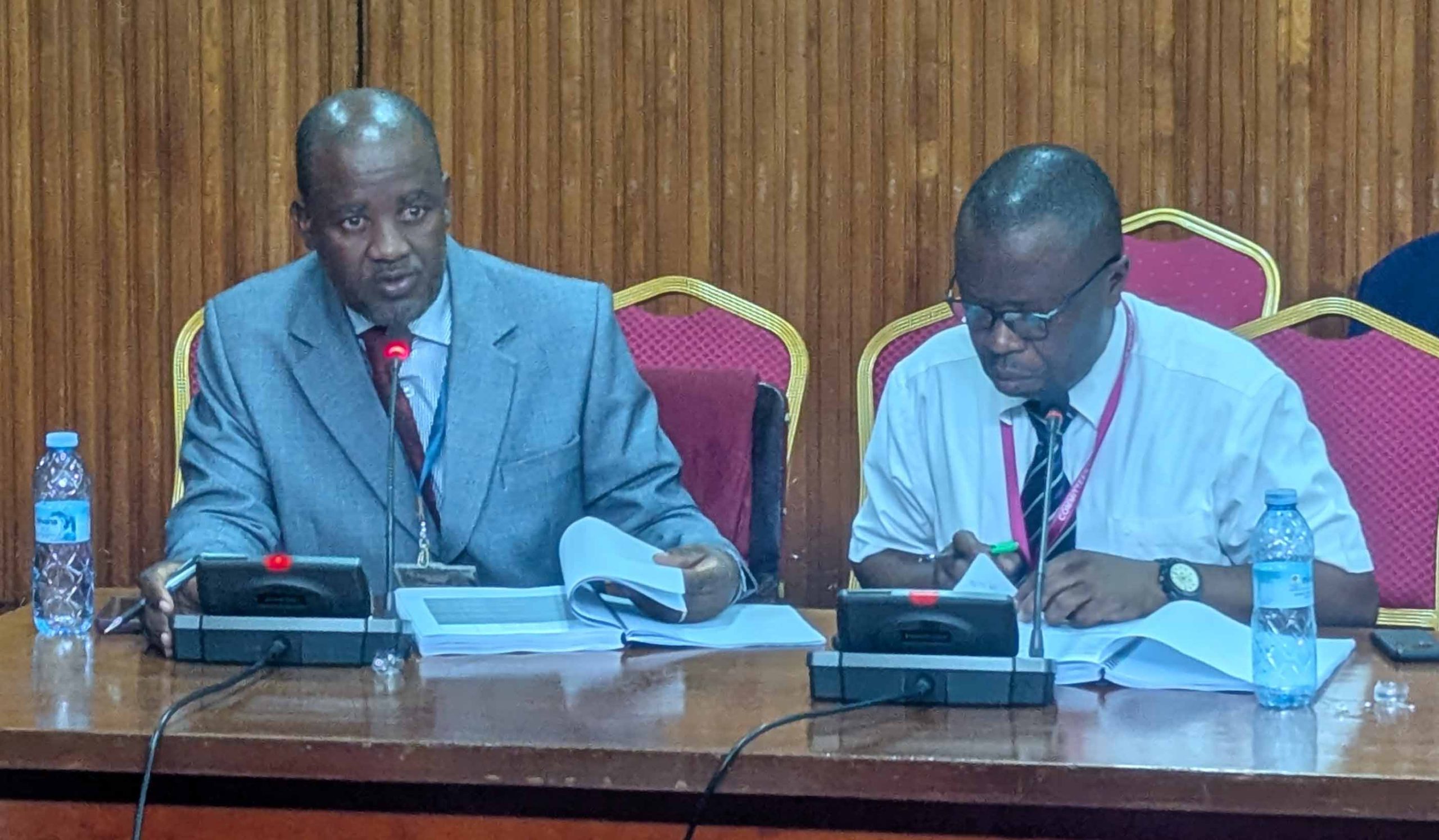
The Parliamentary Committee on Public Accounts (Central Government) has questioned Fort Portal Regional Referral Hospital over undelivered medicines, unspent wage funds, staff shortages and failure to dispose of obsolete assets.
The committee chaired by Sarah Lwansasula, Woman Representative for Jinja City,was scrutinizing the operations of Fort Portal and Arua Regional Referral Hospitals as part of its mandate to ensure that public resources are properly accounted for and translate into services for Ugandans.
Fort Portal Senior Executive Consultant and head of the hospital, Dr. Archbald Bahiizi Newton Sebahire, told the committee that the facility had faced challenges in accessing some medicines and supplies from the National Medical Stores (NMS), as well as delays in recruiting health workers.
The committee, however, questioned the explanations given by the hospital, particularly on medicine supplies and the utilisation of available funds.
The committee asked the hospital to explain what had happened to medicines and other supplies worth about Shs5.4 million that were not delivered by NMS.
Dr Bahiizi said the hospital writes to NMS whenever requested commodities are unavailable and at the end of each financial year compares the budget with the supplies received.
He said the hospital sometimes requests NMS to allow funds for commodities that are unavailable to be redirected to other supplies that can be utilised, instead of leaving the money unused.
However, Hope Grania Nakazibwe, Woman MP for Mubende District, questioned the hospital’s management of medicines, particularly the expiry of drugs.
Nakazibwe challenged the explanation that some medicines expired because of the NMS “push system”, arguing that regional referral hospitals should be able to plan for the medicines they require.
She said under-ordering can create artificial shortages, while over-ordering can lead to excess medicines and eventual expiry.
Nakazibwe also questioned why NMS had not replaced the undelivered supplies and pointed out that only about Shs76,000 worth of the Shs5.4 million had subsequently been supplied.
Dr Bahiizi said the latest NMS supply cycle had delivered about 84 per cent of the hospital’s orders, leaving 16 per cent undelivered.
He said the hospital sends official reminders to NMS and receives the commodities either when they become available or through subsequent scheduled deliveries.
Dr Bahiizi attributed some shortages to changes in programme requirements and emergencies, saying the hospital at times requires additional laboratory and examination supplies during emergencies such as Ebola.
He said the hospital had strengthened its Medicines and Therapeutics Committee and procurement processes.
Dr Bahiizi said the procurement committee had at one point worked until about 10:30pm reviewing an antibiogram to determine medicines that were no longer necessary because of changes in disease patterns and drug resistance.
He also acknowledged that late ordering had been identified by the Auditor General as a concern.
He said previous staffing challenges, including pressure on pharmacists, had affected procurement, but the current team had committed itself to timely procurement plans, requisitions and reporting on supplies that are not delivered by NMS.
The committee also questioned the hospital over unspent wage funds.
Dr Bahiizi said the hospital had sought clearance from the Ministry of Public Service to recruit health professionals, but the recruitment process was not completed before the end of the financial year.
He explained that the recruitment process is lengthy, beginning with budget and wage allocations followed by wage analysis and approvals before advertisements, shortlisting and interviews are conducted.
He proposed that the process be brought forward so that clearance is obtained around April, advertisements and shortlisting take place in May, interviews are held in June and July and new staff are in place by August.
Dr Bahiizi said returning unspent wage funds was particularly painful because the hospital had sought clearance but did not receive approval in time.
The hospital also reported delays in processing gratuity and pension for some former employees after the auditor handling the process was transferred.
A committee member proposed a digitized government-wide asset register showing the condition, depreciation and value of every public asset to improve accountability and make it easier for institutions to plan for disposal.
Benjamin Cadet, the MP for Bunyaruguru County, meanwhile raised wider concerns about staffing levels at regional referral hospitals.
Cadet said Arua Regional Referral Hospital requires more than 1,900 staff but has only about 200, leaving the facility with a major staffing deficit.
He said nursing positions were particularly affected, with the shortage putting considerable pressure on the available health workers.
Cadet warned that when a small number of health workers are forced to handle a large patient load, they become overstretched and fatigued, which can affect the quality of services provided to patients.
He said government needs to strengthen health institutions by providing adequate staffing rather than allowing facilities to depend excessively on individual workers.
Cadet also highlighted the financial consequences of illness on households, saying some Ugandans are forced to sell their property or use up their savings when they require costly medical treatment.
He backed the introduction of a national health insurance scheme, arguing that Ugandans could contribute a minimum amount to ensure access to healthcare without having to lose their wealth whenever they fall seriously ill.
He said an insurance system would enable people to seek treatment without first worrying about whether they can afford the immediate cost of medical care.
MP Lwansasula said Fort Portal’s staffing level was about 24 per cent, while Arua was around 27 per cent, with both hospitals expected to increase staffing to about 60 per cent in the next financial year.
She said regional referral hospitals face increasing pressure because patients often assume that all required services are available at the facilities, despite shortages of health workers, medicines and equipment.
Lwansasula said the committee had encountered several cross-cutting challenges in the hospitals, including medicine stockouts, expired drugs, inadequate storage facilities, accounting issues and missing or inadequate equipment.