


























Ugandans with practical skills acquired through years of work experience could soon have a clearer pathway to recognised qualifications and higher education following the launch of a national framework aimed at transforming technical and vocational training.
The Uganda Technical and Vocational Education and Training (TVET) Qualifications Framework is expected to bridge the gap between practical skills, formal education and employment, allowing learners to progress from basic technical qualifications to higher academic levels, including PhD level.
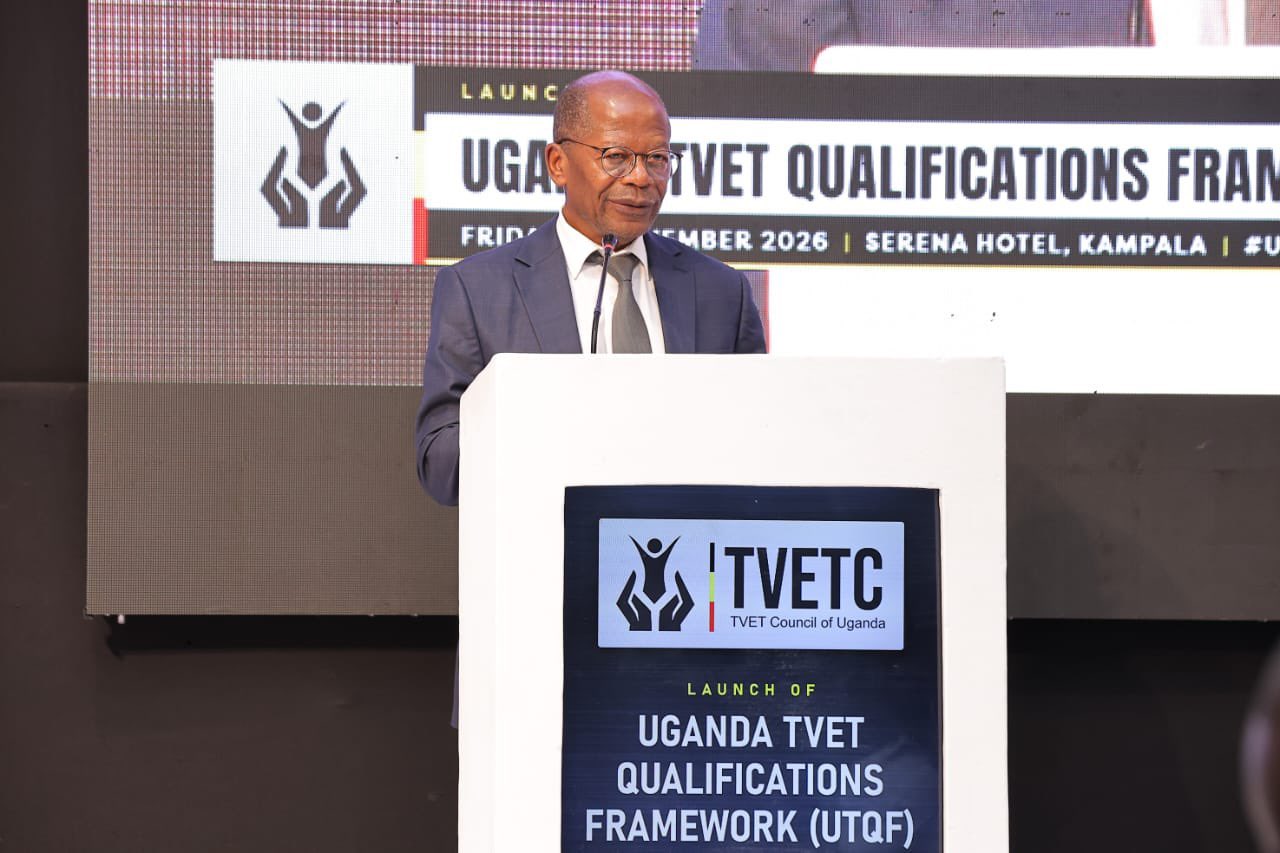
The framework was officially launched on Friday by the Minister of State for Higher Education, John Chrysostom Muyingo, at Serena Hotel in Kampala, after approximately ten years of development.
Representing government, Muyingo reaffirmed its commitment to implementing the framework, saying Uganda’s ambition to grow its economy towards USD 500 billion would require a skilled, productive and competitive workforce.
He pointed to agro-industrialisation, tourism, mineral development, oil and gas, and science and technology as priority sectors that depend on specialised technical and practical skills.
“Factories need skilled technicians, oil fields need competent welders, fitters and instrument mechanics, while hotels need trained chefs and hospitality professionals,” Muyingo said.
He added that transforming agriculture into a productive agro-industrial sector would require workers capable of operating machinery, processing agricultural products and managing preservation and packaging.
On behalf of government, Muyingo pledged continued support through appropriate financing, strengthening technical institutions, safeguarding the integrity of qualifications and promoting their recognition beyond Uganda’s borders.
He also emphasised the need to enforce the TVET Act 2025, noting that qualifications must be registered under the approved framework to receive official recognition.
However, the minister warned that the framework’s success would depend on effective implementation. He directed the TVET Council to expedite operational guidelines, including the Recognition of Prior Learning Framework and guidelines on qualification equivalencies and credit transfers.
He also called for an accessible online qualifications register to enable employers, training institutions and the public to verify certificates.
Muyingo challenged the negative perception surrounding vocational education, saying TVET should not be regarded as an option for learners who fail in conventional academic education.
He urged young people to embrace technical careers, describing practical skills as an important pathway to professional and academic advancement.
TVET Council Executive Director Moses Kasakya said the framework would help produce a competent workforce by ensuring that training responds to actual industry needs.
Kasakya stressed that competence goes beyond the ability to perform a task, arguing that workers must also demonstrate the right professional character.
He urged employers to participate in developing occupational standards and provide workplaces for apprenticeships and industrial training.
He also encouraged workers who acquired skills outside formal classrooms to seek recognition of prior learning so their experience can count towards recognised qualifications.
Commissioner for Business, Technical, Vocational Education and Training Safinah Museene described the launch as a major milestone, noting that developing the framework had taken about a decade.
She said it would connect TVET qualifications with other national qualifications systems, making it easier for learners to transfer credits, move between education pathways and advance professionally.
Meanwhile, Parliament’s Committee on Education and Sports Chairperson Cuthbert Abigaba also the mp for kibale county kamwenge district said the framework would address longstanding challenges surrounding qualification recognition and progression between institutions.
He cited cases of graduates facing difficulties pursuing careers because of questions about the qualifications they used to enter particular programmes.
Abigaba, however, challenged the Ministry of Education and Sports and the TVET Council to fast-track implementation guidelines, warning that delays were already affecting the operations of some technical institutions.
The council says it has established employer-led Sector Skills Expert Committees to ensure training reflects labour market demands. Ten committees are operational, with five more expected to be established.
The framework is expected to strengthen the credibility of technical qualifications and make skills acquired both in classrooms and workplaces more valuable.