























MUKONO | A father mourning the death of his 12-year-old daughter was knocked down by a police patrol vehicle during a protest against the resumption of operations at a stone quarry in Nakisunga Sub-county, Mukono District, raising fresh questions about public safety, police conduct and the enforcement of environmental regulations.
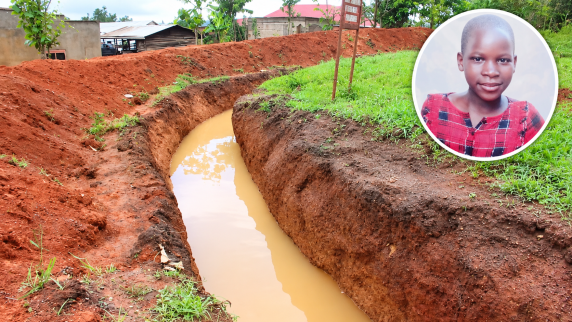
John Kabegere, a resident of Nangwa in Nakisunga, was among residents on Monday who protested against the reopening of the GLA Stone Quarry in Kiwugo Village, where his daughter, Jesca Nalujja, a Primary Five pupil, reportedly died after falling into an uncovered pit.
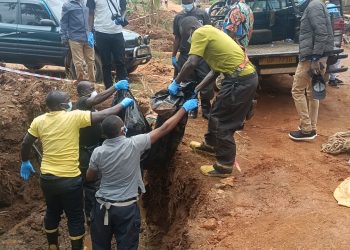
Nalujja reportedly died on Saturday after falling into a deep excavation left open at the quarry site. Residents say she had gone to look after goats in the area when the incident occurred.
Her death has intensified long-standing grievances against the quarry operators, with residents accusing the management of failing to secure dangerous excavations and address concerns about damage to homes and other risks associated with the site’s operations.
But the community’s demand for accountability took a disturbing turn on Monday when police intervened to disperse the demonstrators.
According to accounts from the scene, three police patrol vehicles responded to the protest. Officers reportedly held discussions with some local leaders, but after the talks failed to resolve the standoff, they ordered the residents to leave.
A video circulating on social media appears to show a police vehicle driving towards demonstrators, narrowly missing a woman before striking or knocking down Kabegere, who is seen rolling on the ground.
The footage has triggered criticism of the police response, with members of the public calling for an independent investigation into the incident and accountability for any officers found to have acted unlawfully.
For Kabegere, the incident compounds the grief of losing a child under circumstances that residents believe should have been prevented. His case has also brought renewed attention to the question of whether communities can safely raise concerns about potentially hazardous industrial activities without being exposed to further harm.
The police have acknowledged the circulating footage and announced an investigation.
In a statement posted on its official X account, the police said: “We have taken note of a video circulating on social media showing a police vehicle allegedly knocking down an unidentified person in Mukono. Investigations into the incident have commenced, and further details will be provided in due course.”
The police statement did not identify Kabegere or explain the circumstances surrounding the incident. The findings of the investigation, including whether the vehicle struck him deliberately or accidentally, remain to be established.
However, the incident presents the police with an obligation to establish what happened, identify the officers involved and determine whether their actions complied with the law and operational procedures governing the use of force and the management of public demonstrations.
Any investigation should examine the conduct of the officers at the scene, the circumstances in which the patrol vehicle moved towards the demonstrators and whether less dangerous measures could have been used to manage the protest. The findings should be made public, and any officer found responsible for misconduct should face the appropriate disciplinary or legal process.
Unresolved concerns at the quarry
The confrontation came against the backdrop of years of complaints by residents over the quarry’s operations.
The GLA Stone Quarry is owned by local investor Guster Ntake and operated by his son, Guster Lutaaya. Residents say they have repeatedly raised concerns about damage to houses, uncovered pits and other safety and environmental hazards linked to the quarry.
They argue that the problems have persisted for more than five years without a satisfactory resolution, leaving families exposed to risks while their concerns remain unresolved.
Residents also say they want compensation for the alleged damage to their properties and other losses, which they hope would enable them to acquire alternative land and relocate to safer areas.
Following Nalujja’s death, the quarry management reportedly agreed to meet residents of Kiwugo to discuss compensation for the losses they have suffered.
Lutaaya also reportedly agreed to begin the process of compensating affected residents after years of complaints about the quarry’s operations.
However, the reported agreement had yet to translate into a concrete resolution when residents learnt that quarry activities had resumed, prompting Monday’s demonstration.
The resumption of work, before the outstanding concerns had been resolved to the residents’ satisfaction, became the immediate trigger for the protest.
The central question is whether the quarry can continue operating while allegations of unsafe excavations, property damage and other environmental risks remain unresolved.
The death of a child in an excavation reportedly left open at the site makes that question particularly urgent. An investigation should establish the circumstances of Nalujja’s death, who was responsible for securing the pit and whether the relevant safety and environmental requirements were observed.
It should also establish whether the quarry had the necessary approvals, whether its operations were subject to inspections and whether any corrective measures had been ordered or implemented.
Questions over environmental oversight
Residents have also accused officials in Mukono District’s Environment and Natural Resources Department of neglecting their complaints.
They claim to have submitted several formal complaints without receiving meaningful intervention. The alleged failure to resolve their concerns has fuelled suspicions among some residents that officials may have been compromised by the quarry management.
These allegations have not been independently established and should be investigated rather than treated as proven.
Mukono District Environment Officer John Damba has denied that his office received bribes from the quarry owner to suppress complaints, saying the accusations had tarnished the department’s reputation.
Damba also maintained that he had never received formal complaints from the affected residents.
The conflicting accounts raise questions that can be resolved through documentary evidence. District authorities should establish whether complaints were submitted, when they were received, which offices handled them and what action, if any, followed.
Inspection reports, correspondence with the quarry management, environmental compliance records and any directives issued to the operator could help establish whether the authorities fulfilled their responsibilities.
If the complaints were formally submitted, the district should explain why the alleged hazards remained unresolved. If no complaints were received, the relevant authorities should clarify how residents can formally report such risks and obtain a timely response.
The inquiry should also establish whether the quarry’s operations complied with applicable environmental requirements and whether the authorities responsible for monitoring the site took appropriate action after concerns were raised.
Justice beyond compensation
For the affected community, compensation is only one part of the dispute. Residents also want assurances that the hazards they have complained about for years will be addressed and that another family will not suffer a similar loss.
While the reported agreement between the quarry management and residents could provide a starting point for resolving the dispute, it does not remove the need to establish responsibility for Nalujja’s death or investigate the police incident.
The two matters require separate but equally serious attention. The circumstances surrounding the child’s death must be investigated, while the conduct of the officers involved in Monday’s confrontation must be examined independently.
Any compensation arrangement should also be transparent, with affected residents informed about the process, the basis for assessing losses and the timeline for resolving claims.
Authorities should not allow negotiations over compensation to replace enforcement of safety requirements or an investigation into the circumstances of the child’s death.
Similarly, the police investigation should not end with an internal announcement that inquiries have commenced. The public deserves a clear account of what happened, the findings of the investigation and the action taken where wrongdoing is established.
For a community that says it has spent years seeking answers about the dangers surrounding the quarry, the events in Kiwugo have deepened the demand for accountability.
A child has died, residents say their homes and livelihoods have been threatened, and a grieving father was caught up in a police operation intended to end their protest.
The outstanding questions are straightforward but consequential: Was the excavation that claimed Nalujja’s life adequately secured? Did the quarry comply with the applicable safety and environmental requirements? Were residents’ complaints properly handled? And was the police response on Monday lawful and proportionate?
Answering these questions through credible, impartial investigations would be an important step towards justice for Nalujja, her family and the wider community.
Until the facts are established and appropriate action taken, the concerns surrounding the quarry will remain unresolved, alongside the community’s demand for safety, accountability and justice.
ENDS.