





After years of strained relations with Mengo, Uganda’s Ambassador to Algeria, Alintuma Nsambu, has formally apologised to Kabaka Ronald Muwenda Mutebi II and the Buganda Kingdom, marking a significant attempt to repair a relationship that became a major political liability during his time in government.
For nearly 17 years, Alintuma Nsambu’s relationship with the Buganda Kingdom was defined by controversy, public protests and accusations of disrespect towards the Kabaka.
The fallout, which began during his tenure as State Minister for Information and Communications Technology (ICT), followed him beyond government and into his political ambitions in Bukoto East.
However, in a development that could mark the end of a long-standing dispute, Nsambu has finally taken his apology directly to Mengo, the administrative and cultural seat of the Buganda Kingdom.
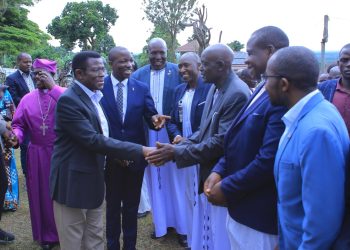
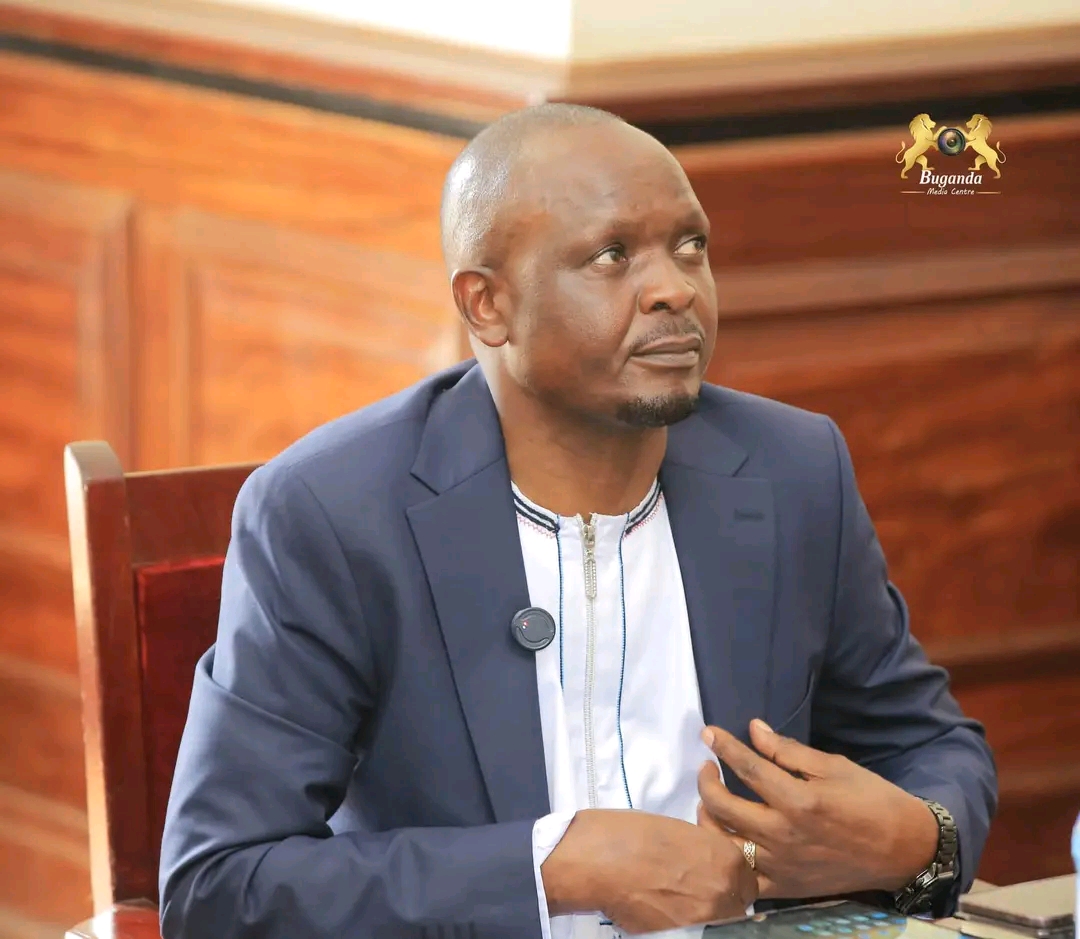
The development was announced by Katikkiro Charles Peter Mayiga, who said the ambassador had visited to convey his apologies to the Kabaka and the entire Kingdom.
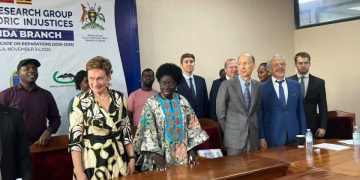
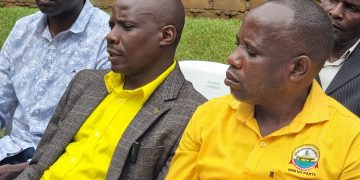
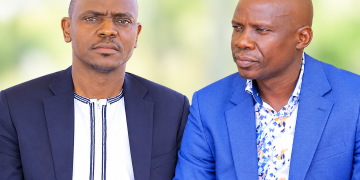
“The Uganda Representative to Algeria, Alintuma Nsambu, has come to convey his apologies to the Kabaka and the entire Kingdom,” Mayiga announced in a social media post accompanied by photographs of the visit.
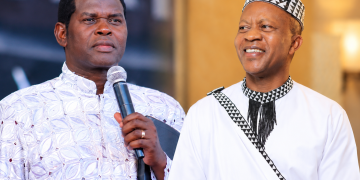
The visit, attended by several leaders who accompanied Nsambu, represents an important public gesture towards reconciliation after years of estrangement.
The dispute dates back to the period when Nsambu served as State Minister for ICT under President Yoweri Museveni. His troubles with Mengo were largely linked to the 2009 closure of CBS FM, a radio station owned by the Buganda Kingdom, and remarks attributed to him about the Kabaka.
The tensions between the central government and Buganda Kingdom had escalated in September 2009 after government blocked Kabaka Mutebi from visiting Bugerere County in Kayunga District.
The decision triggered riots in several parts of the country, particularly in Buganda, while the government shut down four radio stations, including CBS FM, accusing them of broadcasting content that incited violence.
Although the closure was an action of the Broadcasting Council, Nsambu became one of the public figures associated with the decision because of earlier threats to close CBS FM and Buddu FM over broadcasts critical of the government.
In August 2007, Nsambu had reportedly told a fundraising gathering in Mbirizi, Masaka, that he had authority to close radio stations critical of government.
He specifically mentioned CBS FM and Buddu FM. The remarks attracted criticism from then Vice-President Gilbert Bukenya, who said Nsambu had no authority to shut down radio stations and should apologise for the threats.
The controversy deepened after reports emerged that Nsambu had made remarks suggesting he would not kneel before the Kabaka because they were both human beings with the same blood.
These remarks, together with his perceived association with the closure of CBS FM, created a public relations crisis that would follow him for years.
One of the most telling demonstrations of the anger came on September 20, 2009, during celebrations marking 100 years of Kitovu Cathedral in Masaka.
Nsambu, who was then serving as State Minister for ICT, had been invited by the then Bishop of Masaka Diocese, John Baptist Kaggwa, to address the congregation. However, when he stood up to speak, sections of the congregation, including priests and nuns, began booing him.
The protesters demanded that he first apologise for his alleged role in the closure of CBS FM. They also reminded him of his earlier threats against the Buganda Kingdom’s radio stations.
Unable to continue amid the hostility, Nsambu handed the microphone back to Bishop Kaggwa and returned to his seat.
The incident was particularly significant because it demonstrated that the dispute had moved beyond political disagreements between Mengo and the central government. It had become an issue that could provoke strong reactions from ordinary people and religious leaders.
The consequences were not confined to his ministerial career. Nsambu also found himself having to defend his political ambitions against the backdrop of the controversy.
In the 2011 parliamentary elections, he faced opposition from voters and political actors who accused him of disrespecting the Kabaka and failing to defend the Kingdom’s interests during the confrontation with the government.
His political opponents capitalised on the controversy, presenting him as a leader whose relationship with the cultural institution was at odds with the sentiments of many voters in Buganda.
Even President Museveni’s public intervention did little to extinguish the controversy.
In July 2012, Museveni defended Nsambu against accusations that he had insulted the Kabaka and influenced the closure of CBS FM. The President dismissed the allegations as falsehoods allegedly spread by people seeking to create conflict between the government and the Kingdom.
Museveni questioned why Mengo had not formally reported Nsambu to him if the minister had indeed insulted the Kabaka. He also argued that Nsambu had been criticising individuals who allegedly wanted to portray the government as hostile to Buganda.
However, the defence did not immediately restore Nsambu’s standing among sections of the Buganda public.
The electoral record illustrates the political difficulties he encountered. In the 2011 Bukoto East parliamentary race, Florence Namayanja defeated him, polling 15,196 votes against his 12,927. Reports at the time indicated that opposition politicians had used his strained relationship with Mengo as a campaign issue.
Despite the hostility that followed him, Nsambu appears to have spent the past few years attempting to rebuild bridges with the Kingdom.
His efforts reportedly included cultivating a working relationship with Buddu County’s leadership, particularly the current Pokino, Jude Muleke, and participating in some of the Kingdom’s activities.
This gradual engagement appears to have provided an opportunity for him to reconsider his relationship with Mengo and seek a way out of the political and cultural isolation associated with the controversy.
Information surrounding his reconciliation efforts also points to the possible involvement of Catholic Church leaders in Masaka, who are said to have encouraged him to mend relations with the Kingdom. However, the extent of their involvement has not been independently established.
His latest visit to Mengo therefore appears to be the culmination of efforts to move beyond informal engagements and address the dispute directly with the institution at the centre of the controversy.
What the apology could mean
For Nsambu, the visit carries significance beyond the personal act of seeking forgiveness. It also addresses a political problem that has lingered throughout much of his public life.
His experience demonstrates how cultural institutions, particularly the Buganda Kingdom, can influence public perceptions of political leaders in a region where the Kabaka commands considerable cultural loyalty.
Although Uganda’s Constitution recognises traditional and cultural institutions as non-political entities, their influence within their communities remains significant. For politicians operating in Buganda, relations with Mengo can become an important consideration in their public engagements and political careers.
Nsambu’s experience provides an illustration of how statements made while holding public office can have consequences long after an individual leaves that position.
His earlier remarks about CBS FM and the Kabaka became part of his political identity, making it difficult for him to separate his personal political ambitions from the controversy.
His subsequent attempts to return to elective politics reportedly revived questions about whether the community had moved on from the dispute. He eventually concentrated on his diplomatic assignment in Algeria rather than pursuing another parliamentary contest.
The latest visit could therefore be an attempt to remove a long-standing obstacle to his relationship with the Kingdom and its subjects.
However, the announcement of an apology should not automatically be interpreted as the complete resolution of the dispute. Whether the Kabaka and the Kingdom consider the matter settled, and whether the gesture will translate into lasting reconciliation, remains to be seen.
For an individual whose political career was repeatedly affected by his relationship with Mengo, the visit represents a significant turning point.
Nearly 17 years after the events that placed him at odds with the Kingdom, Nsambu has chosen to return to the institution he was accused of disrespecting, this time not as a government minister defending his position, but as a representative of Uganda seeking to convey an apology.
The significance of the visit may ultimately lie not simply in the apology itself, but in whether it opens the door to a lasting reconciliation between Nsambu and the Buganda Kingdom.
ENDS.