





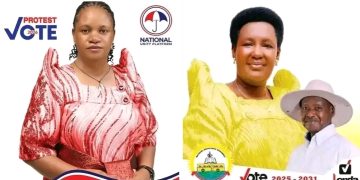









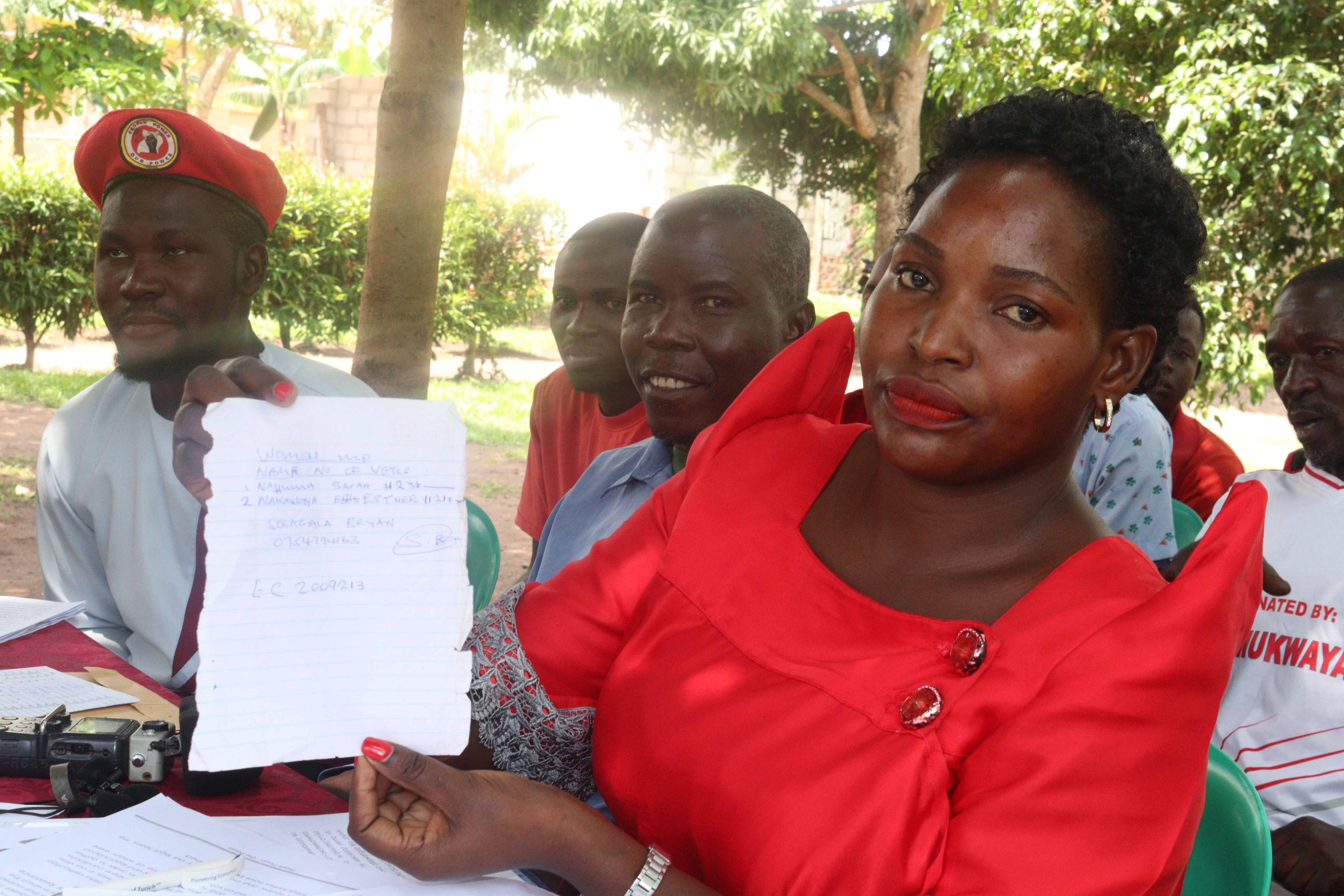
The High Court in Luwero has dismissed an election petition filed by National Unity Platform (NUP) candidate Esther Nakawooya challenging the election of Sarah Najjuma as the duly elected Nakaseke District Woman Member of Parliament.
In his judgment delivered today through the Electronic Court Case Management Information System, Justice Emmy Vincent Mugabo ruled that Nakawooya had failed to adduce sufficient evidence to warrant the nullification of Najjuma’s election.
The judge emphasised that under Section 80(3) of the Parliamentary Elections Act, Cap. 177, an election petitioner bears the legal burden of proving the grounds relied upon on a balance of probabilities.
Mugabo noted that Section 80(1)(a) of the Act requires the court to establish two key issues: whether there was non-compliance with the provisions of the law or the principles governing elections, and whether such non-compliance substantially affected the election results.
Applying this legal test, the judge said he was not satisfied, on a balance of probabilities, that the non-compliance established during the proceedings had substantially affected the outcome of the Nakaseke District Woman MP election.
Justice Mugabo also declined to issue what he described as a blanket declaration that Najjuma and the Electoral Commission had committed electoral offences.
He observed that the existence of an erroneous return or inconsistent entry in electoral records does not, on its own, establish an electoral offence, emphasising that specific findings must be made regarding the person responsible, the conduct involved and the essential elements of the alleged offence.
The judge further rejected Nakawooya’s request for a referral for criminal prosecution based on the discrepancies identified during the proceedings. He held that the findings made in the case did not establish the individualised circumstances necessary to warrant a statutory report to the Director of Public Prosecutions (DPP).
Consequently, the court upheld the declaration of Sarah Najjuma as the duly elected District Woman Representative to Parliament for Nakaseke District in the January 15, 2026 elections, affirming the validity of her election.
The court also ordered Nakawooya to pay the costs of the petition to both Najjuma and the Electoral Commission.
In her petition before the Luwero High Court, Nakawooya challenged the credibility of the electoral process, alleging several irregularities which she argued compromised the outcome of the election.
Among the grounds raised were the alleged omission and alteration of election results, ballot stuffing, pre-ticking of ballot papers, multiple and unauthorised voting, discrepancies in electoral records, and interference with polling agents and election materials.
She asked the court to declare that Najjuma was not validly elected, find that electoral offences had been committed, nullify the election and award her costs.
However, both Najjuma and the Electoral Commission contested the allegations and maintained that the election was valid.
In her defence, Najjuma told court that she had been validly elected and denied allegations of unlawful voting, voter intimidation, falsification of results and participation in electoral offences.
The Electoral Commission also disputed the general allegations of an unlawful election, although it made specific admissions concerning the results from Lukese polling station and four returns that were not tallied.
Both respondents maintained that Nakawooya had failed to establish the legal grounds required to set aside the election and asked the court to dismiss the petition with costs.
Nakawooya was represented by lawyers Caleb Alaka, Kenneth Paul Kakande, Fred Kato and Lillian Nakyejwe of M/s Alaka & Co. Advocates.
Najjuma was represented by Asuman Basalirwa and Patrick Kasirye of M/s Asuman Basalirwa & Co. Advocates, while the Electoral Commission was represented by Armstrong Basiime and Barbara Mutebemberwa of M/s Basiime & Co. Advocates.
All parties filed written submissions, which Justice Mugabo considered before delivering his judgment.
The ruling leaves Najjuma’s election intact, with the court finding that although certain electoral and documentary shortcomings were established, Nakawooya had not proved that they substantially affected the final result.