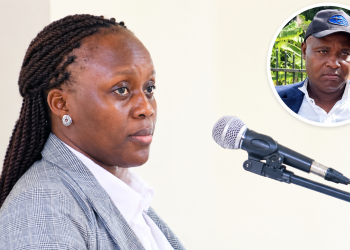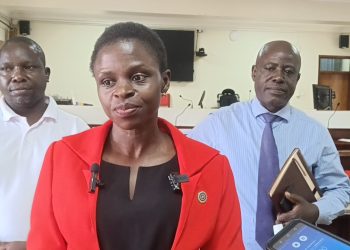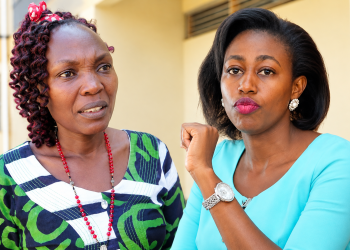







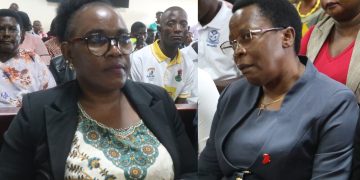












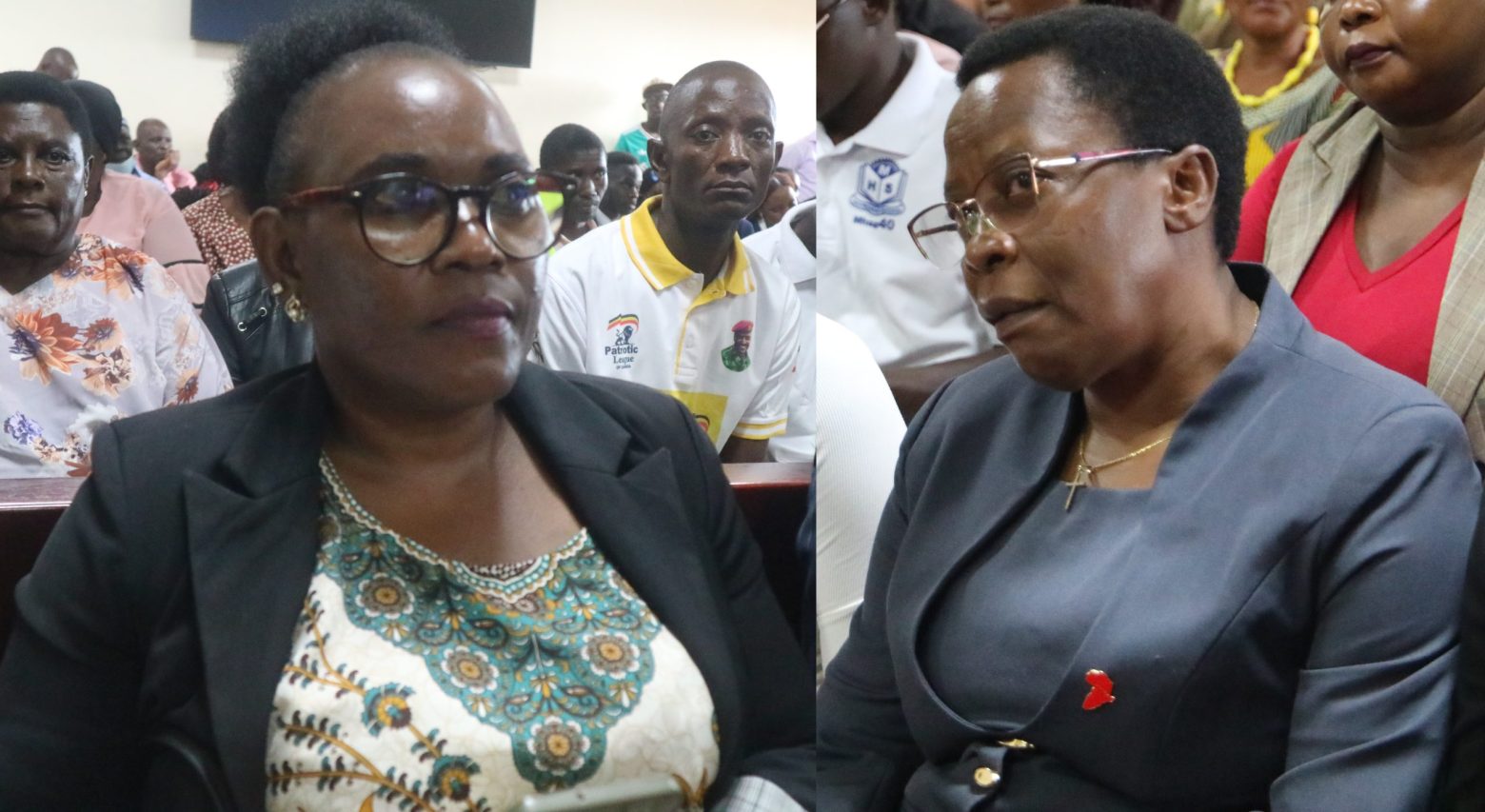
The election petition challenging the victory of Betty Nambooze as the duly elected Member of Parliament for Mukono Municipality came before the High Court in Mukono for mention and scheduling, with the respondent’s lawyers asking the court to first determine several preliminary issues.
The petition was heard before Justice Godfrey Himbaza, with Medard Ssegona, the lead lawyer representing Nambooze, raising objections to a number of affidavits and annexures filed by petitioner Sarah Daisy Ssonko.
Ssegona asked the court to strike out several affidavits on grounds that they were filed outside the prescribed timelines, introduced new evidence and contained electronic material whose authenticity, source and manner of production had not been properly established.
One of the main objections concerned affidavits that Ssonko’s lawyers filed in support of the petition on September 17.
Ssegona told court that although the petitioner’s lawyers had previously sought permission to file additional affidavits, the respondents had not consented to the subsequent material being filed.
He said the affidavits were filed about five months after the respondents had filed their responses and were not clearly presented as supplementary affidavits in support of the original petition.
According to Ssegona, while the law allows a petitioner to file a rejoinder, such a filing is subject to a prescribed period.
He particularly challenged an affidavit sworn by Nabatanzi, saying it largely repeated matters contained in the original affidavit but also introduced what he described as new evidence, including YouTube links, screenshots, videos and English translations.
Ssegona questioned whether the affidavit should properly be treated as an affidavit in support of the petition, a supplementary affidavit or a rejoinder.
He asked Justice Himbaza to strike it out.
The lawyer also challenged the manner in which some of the annexures had been presented, arguing that documents attached to affidavits are required to be properly commissioned and securely attached under the relevant rules.
He cited the case of Sukula Mukesh versus Electoral Commission, Election Petition No. 340 of 2021, in support of his arguments.
Ssegona further questioned the authenticity of material allegedly obtained from BBS Television and YouTube.
He said some of the documents appeared to contain photographs or screenshots bearing indications that they were true copies of originals, but did not identify their source or explain how they had been obtained.
He argued that the affidavits did not establish who recorded the videos, the devices used to record them, how the material was stored or how it had been obtained.
Ssegona said the Electronic Transactions Act required the authenticity of electronic evidence to be established before it could be relied upon.
He also challenged a purported transcription and translation attached to one of the affidavits, saying the competence and identity of the persons responsible for the material had not been properly established.
The lawyer also attacked an affidavit sworn by Patrick Musoke, who described himself as operating an online platform known as MP Media, including TikTok and YouTube.
According to Ssegona, Musoke referred to footage concerning incidents in Sonde and Goma in which supporters of Hanipher Nabukeera allegedly complained of assault by Nambooze’s agents.
Ssegona argued that the affidavit did not identify the alleged supporters or the persons accused of assault and therefore introduced hearsay evidence from unidentified sources.
He also questioned why Musoke had not produced the original recordings or explained whether they had been lost, reported missing or recorded using particular devices.
Ssegona further challenged an affidavit by Faridah Nalubowa, who identified herself as an employee of Crane Advocates and said she was fluent in Luganda and English.
He argued that the affidavit did not sufficiently establish her professional competence or role at the law firm.
He also questioned the source of links to two video recordings that Nalubowa allegedly received, saying the person who supplied the links had not been identified, which he said was important in establishing the chain of authenticity.
Ssegona went on to challenge several other affidavits filed on June 29, arguing that they introduced new evidence and were therefore offensive to the proceedings.
Among those named were Balikyewunya Mukasa, Nkumbitebbawelimye Mwebaza, Kiwanuka Simon Peter, Katongole Muhammad, Nabagereka Halima, Wyclif Mulambo, Joseph Yiga, Ssebudde Kashim, Ssentongo Hamidu Kyeyune and Okia David.
He said the affidavits had allegedly been translated and commissioned by the same person, Tomusange Abdul, whose address and role, he argued, were not sufficiently established.
Ssegona also questioned the procedure used in translating affidavits, arguing that the person translating an oath should not be the same person commissioning it.
He asked court to strike out the challenged affidavits and the corresponding attachments, as well as portions of Ssonko’s main affidavit that relied on them.
In response, Kalule Ahmed Mukasa, representing Ssonko, disputed the preliminary objections and argued that the Civil Procedure Rules relied upon by the respondent did not apply to election petition pleadings at the stage being considered.
He cited the Supreme Court decision in Kyagulanyi versus Yoweri Museveni and the case of Lydia Wanyoto versus Electoral Commission and another in support of his position.
On objections concerning affidavits by persons described as illiterate, Kalule argued that such issues concern the weight of evidence rather than preliminary objections.
He cited Nabadda versus Nantaba Erios and Kabondo Jacob versus Kirya Grace Wanzala, among other authorities.
Kalule also argued that parties could continue filing affidavits before the scheduling conference, particularly because election petitions concern matters of public interest.
He cited Solomon Alemu versus Joseph Andrew and another and Tamale Julius Kkonde versus Ssenkubuge and another.
On the issue of annexures that were allegedly not properly sealed, Kalule argued that the documents had been sealed and that what mattered was the language used by the commissioner.
He cited Egypt Air Corporation versus Shifish International, where, according to him, failure to seal affidavits was treated as a curable defect.
Kalule also defended the procedure used in translating and commissioning the affidavits, citing Tumuhirwe Fred versus Muhwezi Jim, Election Petition No. 71 of 2021.
He argued that translation and commissioning did not necessarily have to be performed separately.
The petitioner’s lawyer further said the court had issued timelines for filing affidavits and that the order did not require the petitioner to obtain the respondents’ consent before filing them.
He maintained that once an issue had been pleaded among the grounds of the petition, evidence relating to that ground could be introduced at different stages before the hearing.
Kalule also argued that questions regarding the qualifications of witnesses who signed the affidavits were matters for evidence and not preliminary objections.
He maintained that admissibility and the weight to be attached to evidence were separate issues.
Kalule further argued that even if some of the challenged affidavits were removed from the record, the petition itself would remain standing.
The lawyers also differed over the interpretation of previous proceedings held on September 14, with Ssegona arguing that the court had made a distinction between evidence and affidavits in the Kyagulanyi case.
He further argued that some provisions of the law relating to affidavits had been overtaken by subsequent Supreme Court decisions.
After hearing the arguments, Justice Himbaza reserved his ruling on the preliminary objections for Monday at 2pm.
The court also set the matter for scheduling and hearing of the election petition.
ENDS.