















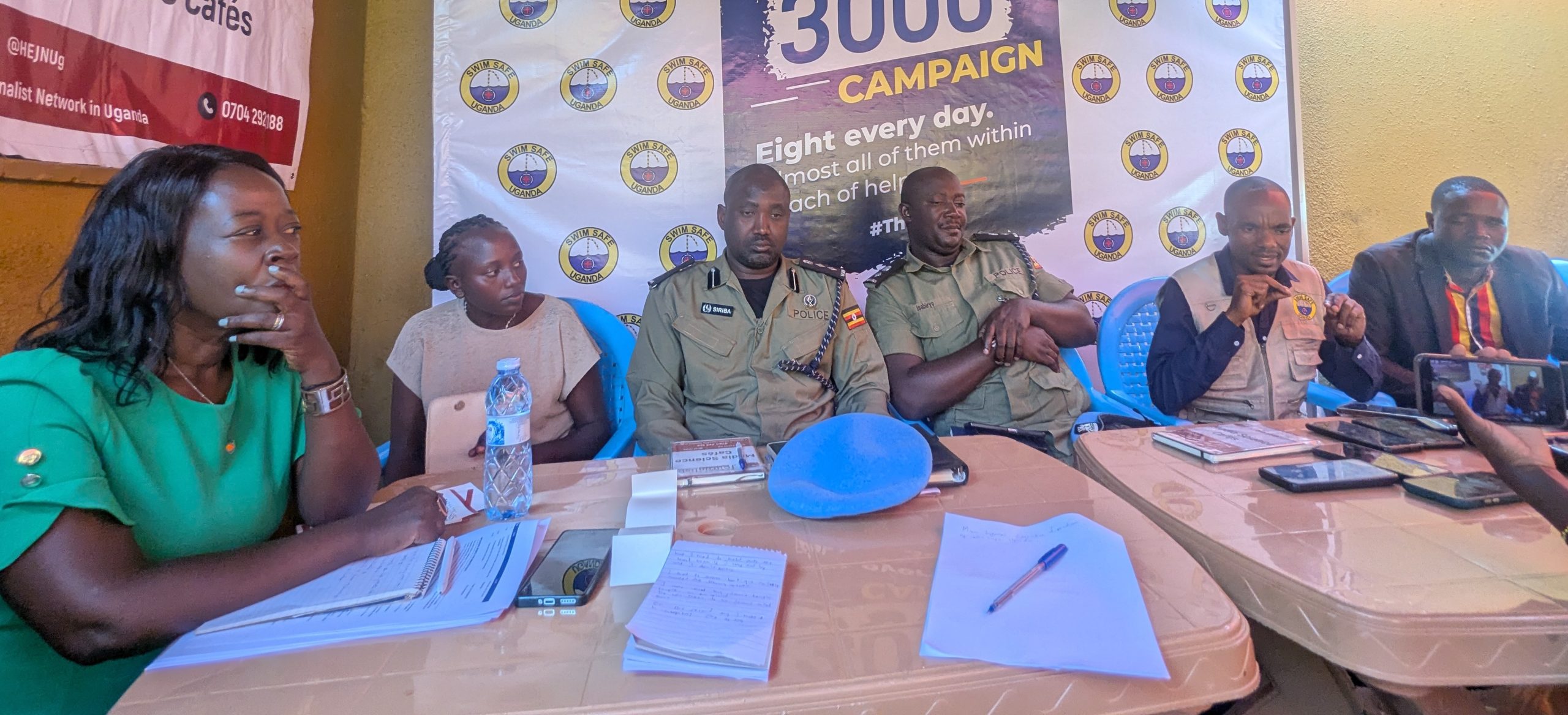
Swim Safe Uganda has launched a nationwide campaign aimed at reducing drowning deaths, following estimates that about 3,000 Ugandans die in drowning incidents every year.
Dubbed the 3K Campaign, the initiative seeks to raise awareness about water safety, promote prevention measures, equip communities with survival and rescue skills, and mobilise different stakeholders to address the causes of drowning.
According to the National Drowning Prevention Programme, Uganda loses an estimated eight people to drowning every day, with young adults, particularly those aged between 20 and 29, among the most affected.
Senior Superintendent of Police Bashir Siriba, the coordinator of the National Drowning Prevention Programme, said drowning remains a major public safety concern that requires a coordinated response from government, communities, civil society organisations and other stakeholders.
“We have come together in a multisectoral approach to make sure that we put together our efforts from different ministries,” Siriba said.
He said the programme brings together about 12 government ministries and agencies, including those responsible for works, water and labour, as well as civil society organisations and development partners.
Siriba said Marine Police conducts patrols, surveillance, community sensitisation and search-and-rescue operations on Uganda’s water bodies.
He urged water users to take personal responsibility for their safety because emergency responders cannot always arrive before a drowning victim loses their life.
“Before you depart from a landing site, you must make sure you have a life jacket,” he said, adding that water users should also acquire basic survival swimming skills.
Marine Police Safety Officer Superintendent of Police Manisul Isabirye identified negligence, unseaworthy boats, overloading and lack of basic survival swimming skills as some of the major contributors to drowning in Uganda.
He said some passengers carry life jackets but fail to wear them, while others use boats that do not meet safety requirements.
Isabirye also warned boat operators against drinking alcohol while on duty, saying navigators and coxswains are responsible for the lives of everyone on boat.
Meanwhile, Swim Safe Uganda Executive Director Moses Kalanzi said the organisation has worked in drowning prevention since 2011, focusing on education, prevention and rescue.
Kalanzi said the organisation has trained nearly 2,000 people in swimming, rescue and pre-hospital care, particularly in communities living around Uganda’s major water bodies.
He said the 3K Campaign is intended to make drowning a community concern rather than a problem left solely to the police or government.
“We are saying, how can we mobilise ourselves and recognise that this is a burden within us?” Kalanzi said.
He said communities must be empowered to become part of the solution by learning basic rescue and survival skills and demanding safe equipment.
Researchers from Makerere University School of Public Health said the estimated 3,000 deaths could be only part of the actual burden because many drowning incidents are never reported.
Research Associate Otto Businge said a study conducted in 60 districts examined police, hospital and mortuary records alongside information collected from communities.
He said drowning particularly affects people whose livelihoods depend on water, including fishermen, boat operators and traders, while children are also at risk in wells, flooded pits and other water-filled areas.
Businge said drowning should not only be viewed in terms of deaths because some survivors suffer lasting physical and psychological effects.
He also cited overcrowded and unseaworthy boats, inadequate access to life jackets and poor enforcement of safety standards as major challenges.
The Uganda National Resuscitation Council is also promoting the training of community members as first responders who can provide immediate assistance before professional rescuers arrive.
The council’s Public Relations Officer, Alinga Cliff Asher, said more than 5,000 people have been trained in basic resuscitation skills across the country.
He said communities living near water bodies, including fishermen, boat operators, students and other water users, should be equipped with basic emergency skills because the first few minutes after an accident can determine whether a victim survives.
The campaign also raised concerns about the quality of life jackets on the Ugandan market.
Stakeholders warned that some life jackets lack the required buoyancy, secure straps, visibility and approval markings, putting users at risk despite appearing to provide protection.
Moses Nsubuga, a drowning survivor, shared his experience of a 2007 boat accident while transporting wood from Galamu Landing Site to Kenya.
Nsubuga said the boat was overwhelmed by strong waves after the navigator lost control, causing it to sink.
He survived but sustained lifelong injuries, while two of his colleagues drowned. One body was recovered, but the other has never been found.
Nsubuga said the victims might have survived if they had been wearing quality, standard-compliant life jackets.
He called on the government to strengthen regulation of life jackets on the market and help communities distinguish genuine safety equipment from substandard products.
The campaign organisers urged Ugandans to adopt safer behaviour around water, including wearing properly fitting and approved life jackets, avoiding overloading boats, ensuring boats are seaworthy, learning basic survival swimming and resuscitation skills, and checking weather conditions before travelling on water.
The National Drowning Prevention Programme said efforts are also underway to strengthen enforcement, improve coordination among government agencies and develop a strategic national work plan for drowning prevention.