























Uganda Baati Limited, through the Safal Uganda Baati Foundation, has launched the 2026 edition of the Safal Eye in the Wild Photography Competition, a regional initiative aimed at advancing environmental conservation while raising funds to support education programmes across East and Southern Africa.
The competition, unveiled in Kampala on Tuesday, seeks to use the power of photography to spotlight environmental challenges and inspire communities to take action against climate change, pollution, habitat destruction and biodiversity loss.
Organisers say the initiative provides a platform for photographers, storytellers and conservation advocates to document the realities facing the environment while encouraging sustainable practices across the region.
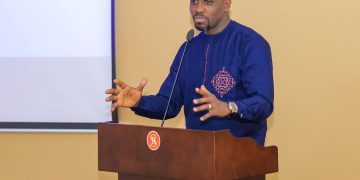
Speaking during the launch, Uganda Baati Head of External and Corporate Affairs Jackie Tahakanizibwa said photography has the unique ability to influence public opinion, shape conversations and inspire action on critical environmental issues.
“At Uganda Baati, we believe that great photography does more than capture images. It captures stories, inspires action and deepens our connection to the world around us. Through this competition, every image has the power to spark awareness and motivate communities to protect our natural heritage,” Tahakanizibwa said.
She noted that scientists have warned that nearly one million species globally are at risk of extinction due to human activities such as deforestation, habitat destruction and climate change, making conservation efforts increasingly urgent.
The competition is open to professional photographers, amateur photographers and young people from across the region. Participants are required to submit original photographs that highlight themes of conservation, nature and community impact, accompanied by a 200-word statement explaining how the image relates to environmental conservation and education.
Entries will be assessed based on creativity, originality, technical quality and alignment with this year’s theme, “Frame Your Future.”
George Mubiru, Head of the Safal Uganda Baati Foundation, said the initiative goes beyond photography by creating environmental awareness, supporting advocacy efforts and mobilising resources for vulnerable young people who lack access to education opportunities.
According to Mubiru, proceeds raised through the auction of selected photographs during the competition’s gala event will support youth skilling and education programmes under the foundation.
“We are looking beyond the picture itself. Through these images, we are creating awareness about environmental challenges while raising resources to support young people who may not have access to education opportunities,” Mubiru said.
He added that environmental conservation remains one of the foundation’s core priorities, emphasizing the need for communities to protect ecosystems that sustain livelihoods and future generations.
The Assistant Commissioner for Environmental Education and Advocacy at the National Environment Management Authority (NEMA), Wilbert Ikilai, welcomed the initiative, describing photography as an increasingly important tool in environmental monitoring and reporting.
Ikilai revealed that several environmental enforcement actions have been triggered by photographs submitted by members of the public, demonstrating the growing role of visual evidence in environmental protection.
“The Safal Eye in the Wild initiative is a powerful reminder that environmental conservation begins with awareness. It promotes responsible stewardship and helps inform decisions that support sustainability,” Ikilai said.
He also challenged journalists and media houses to increase coverage of environmental issues, noting that environmental journalism remains underdeveloped despite growing threats from climate change, pollution and environmental degradation.
Private Sector Foundation Uganda (PSFU) Executive Director Steven Asiimwe called on the private sector to take a more active role in addressing environmental challenges, arguing that industries must become part of the solution to the environmental problems they contribute to.
Asiimwe praised Uganda Baati for championing conservation through innovative approaches that engage communities and raise public awareness.
“The private sector has a responsibility to be part of the solution. Sustainable development can only be achieved through strong partnerships and shared responsibility,” he said.
The competition will recognise winners in five categories. The Gold Award winner will receive USD 3,000, while Silver and Bronze winners will take home USD 2,000 and USD 1,000 respectively. Winners of the Public Choice Award and the Amateur/Minor category will each receive USD 500.
Winning photographs will be showcased during a red-carpet gala event scheduled for July in Nairobi, Kenya, where selected images will also be auctioned to raise funds for education initiatives.
Photographers from across East and Southern Africa have until June 20, 2026, to submit their entries through the official Safal Eye in the Wild competition platform.
Launched in 2017, Safal Eye in the Wild has since evolved into a regional platform that uses photography to promote environmental conservation, education and community development, reinforcing Safal Group’s commitment to sustainability and social impact.