
















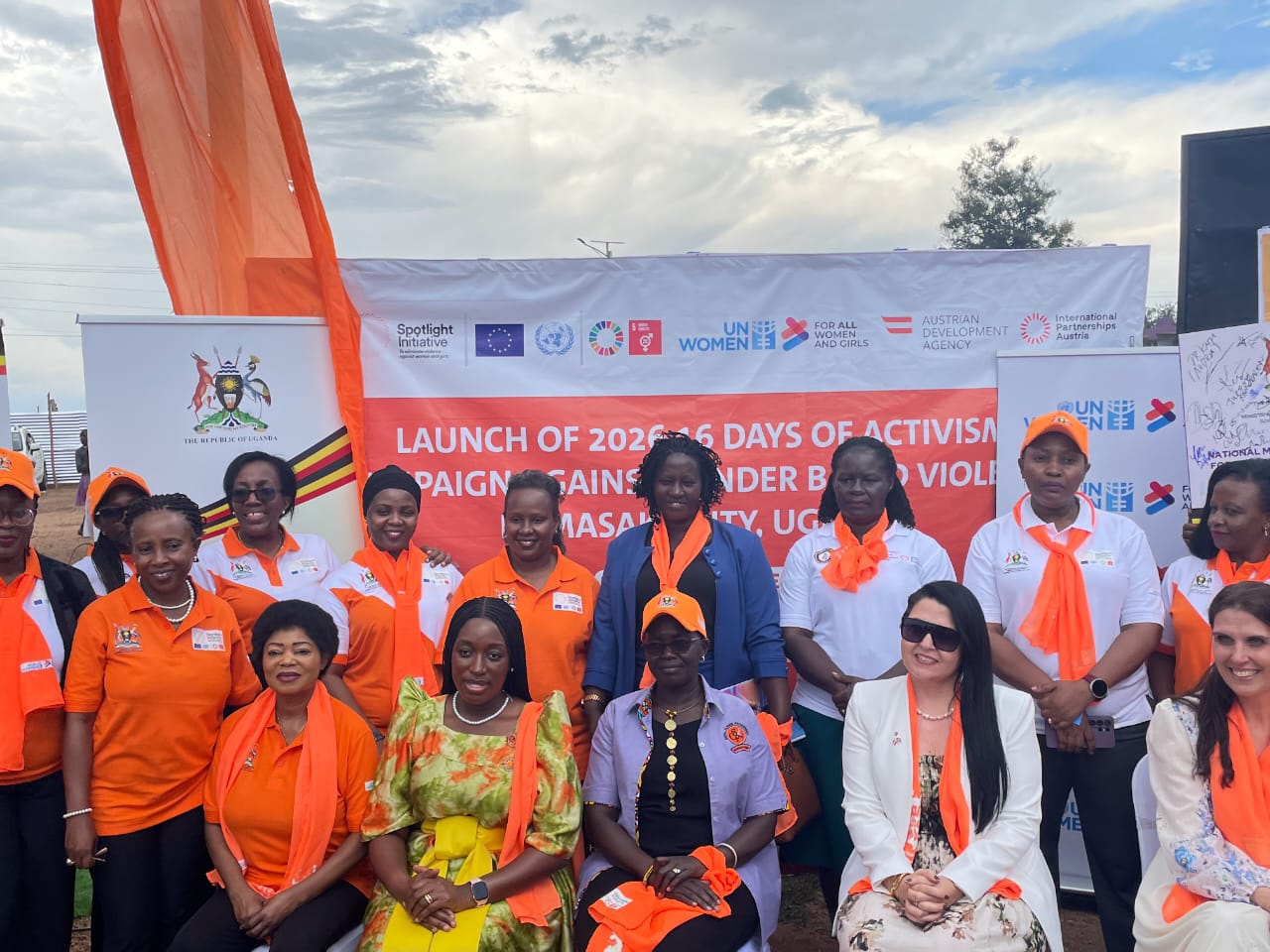
The Government of Uganda, and partner organizations have launched the national campaign against violence targeting women, girls, orphans and widows, calling for stronger protection of survivors and accountability for perpetrators.
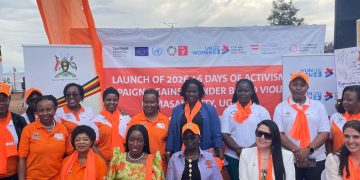
The launch, held at Kijjabwemi Playground in Masaka City, marked Uganda’s participation in the 35th edition of the global 16 Days of Activism Against Gender-Based Violence campaign.
The 35-year-old global initiative seeks to raise public awareness about gender-based violence (GBV), its impact on individuals and communities, and the collective actions needed to prevent and eliminate it.
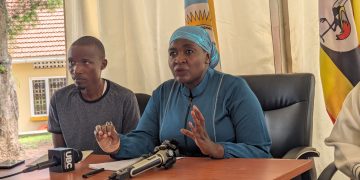
Dr. Angella Nakafeero, Commissioner for Gender and Women Affairs at the Ministry of Gender, Labour and Social Development (MGLSD), expressed concern over the conduct of some institutions mandated to protect victims and deliver justice. She accused some officials of colluding with perpetrators, compromising investigations and concealing evidence.
Dr. Nakafeero revealed that some survivors report cases to the police, only to encounter officers who allegedly negotiate bribes or encourage informal settlements, undermining the pursuit of justice.
She questioned how officers entrusted with protecting citizens could negotiate over serious offences, including murder and aggravated assault. She emphasised that every case reported by women must be formally recorded, investigated and, where sufficient evidence exists, taken through the judicial process.
She further noted that the problem extends beyond the police to the Office of the Director of Public Prosecutions (ODPP), where some State Attorneys reportedly remain passive while waiting for victims to submit withdrawal letters. Such withdrawals, she observed, often follow harassment, intimidation and pressure from perpetrators or other individuals seeking to derail justice.
Dr. Nakafeero called upon all institutions responsible for administering justice to fulfil their mandates and ensure that survivors are not denied justice through corruption, negligence or intimidation.
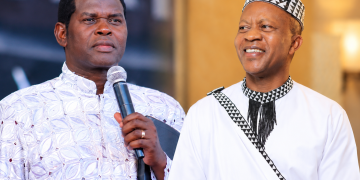
The chief guest, Dr. Flavian Zeija, who was represented by Principal Judge Jane Frances Abodo, emphasised that gender-based violence should not be treated as merely a private, family or cultural matter. Rather, it is a collective community responsibility that requires action from families and local leaders through to law enforcement agencies and the courts.
She urged communities to speak out against violence and ensure that survivors are supported rather than intimidated or silenced.
Using an example of child sexual abuse, she condemned situations where mothers and local leaders pressure children to remain silent when the alleged perpetrator is their father, arguing that imprisonment could deprive the family of its breadwinner.
She noted that such responses prioritise the family’s financial interests over the safety and well-being of the child, leaving victims traumatised and denying them an opportunity to obtain justice.
Principal Judge Abodo also challenged judges and magistrates at all levels to adopt child-friendly approaches when handling cases involving young survivors. She cautioned against asking intimidating or insensitive questions that may cause child victims to freeze, withdraw or struggle to narrate their experiences in court, potentially affecting the presentation of crucial evidence.
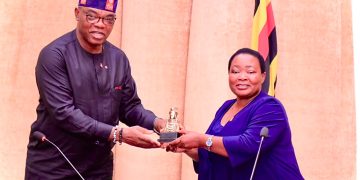
The Minister of State for Local Government, Justine Nameere Nsubuga, said stronger community-level justice systems are critical in tackling violence against women and girls, particularly by bringing justice closer to victims.
She called for collective responsibility among communities and government institutions to address the vice, stressing the need to ensure survivors receive justice and protection.
The Minister also urged women and other community members to embrace government wealth creation initiatives, including the Parish Development Model (PDM) and Emyooga, saying improved household incomes could strengthen economic independence
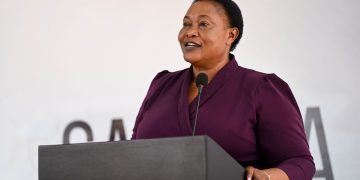
UN Women Country Representative in Uganda, Paulina Chiwangu, described gender-based violence as more than a women’s issue, emphasising that it is a major national development concern with far-reaching social and economic consequences.
She observed that when women experience physical violence, harassment or online abuse, the country loses valuable contributors to national development, including teachers, doctors, leaders, mothers and business owners.
According to Chiwangu, the consequences extend across productivity, healthcare, education and the wider economy.
She further highlighted that gender-based violence costs Uganda approximately 2.3 per cent of its annual Gross Domestic Product (GDP).
She stressed that Uganda cannot achieve its ambition of becoming a middle-income economy or realise Vision 2040 while a significant proportion of its population continues to live in fear of violence and abuse.
The celebrations were held under the theme: “Unite to End Digital Violence Against All Women and Girls.” The campaign calls on individuals, communities and institutions to move beyond awareness-raising and take practical action to protect survivors, strengthen access to justice and end impunity both online and offline.