

























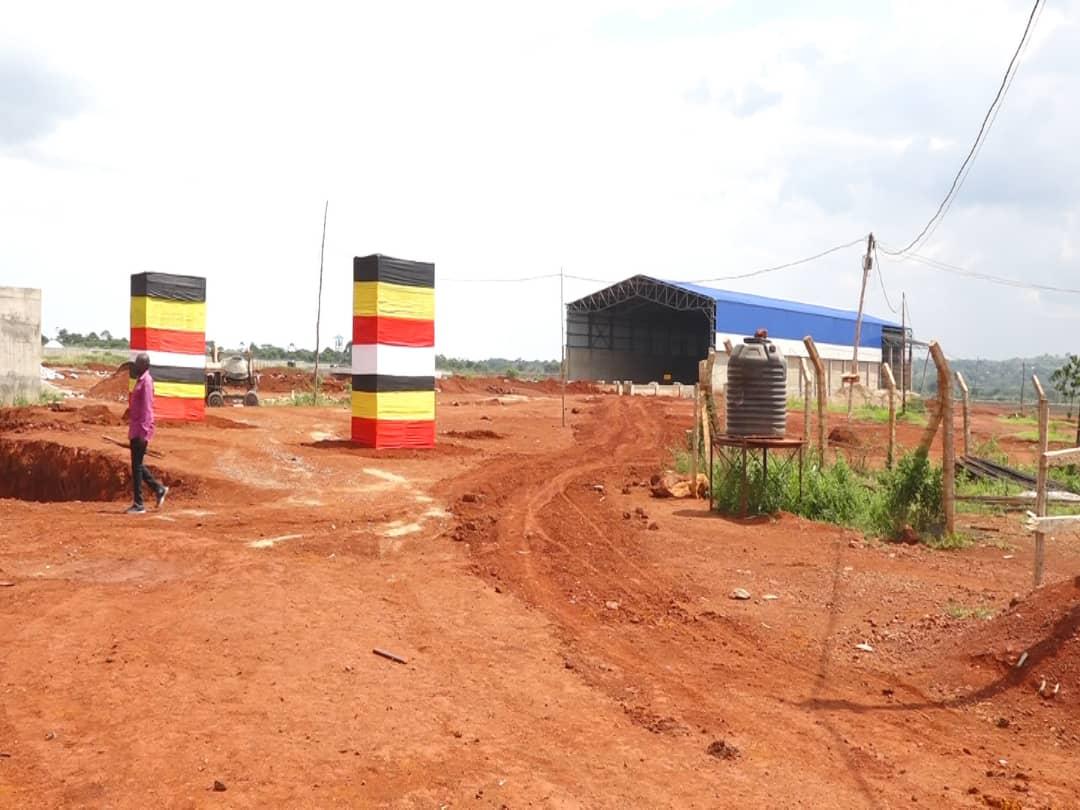
The dispute over the planned commissioning of CN Sugar Limited’s factory in Namayingo District has exposed a growing tension within Uganda’s sugar industry: how to accelerate industrial investment and job creation without weakening the regulatory system established to govern the sector.
Prime Minister Robinah Nabbanja has directed the Ministry of Trade, Industry and Cooperatives to ensure that all requirements are completed ahead of her planned commissioning of the CN Sugar factory on September 4, 2026, citing a directive from President Yoweri Museveni.
But the Ministry says the factory’s licensing process was still ongoing when the Prime Minister announced the commissioning date, setting the stage for a clash between the Government’s industrialisation message and concerns from established sugar millers over regulation, cane supply and competition.
In a letter dated August 13, Nabbanja told the Minister of Trade, Industry and Cooperatives, Sanjay Tanna, that she would travel to Namayingo on September 4 to commission the factory in line with the President’s directive.
She instructed the ministry to ensure that all required processes were complied with before that date.
The Prime Minister’s message is significant for investors and the wider business community because it signals Government’s continued determination to promote industrial development, investment and employment, particularly in areas where new factories are expected to stimulate economic activity.
However, Tanna’s response six days later shows that the regulatory process had not yet reached its conclusion.
In his August 19 response, the minister said that when he assumed office on June 12, he was briefed about the CN Sugar matter and found that the Court of Appeal had issued a ruling concerning the company.
He also confirmed that CN Sugar had applied for a licence from the Sugar Industry Stakeholders Council under the Sugar Act, as amended in 2025.
According to Tanna, the application was still undergoing the required process, including verification of CN Sugar’s sugarcane nucleus farm.
The Sugar Industry Stakeholders Council had scheduled a meeting for August 21 to consider, among other matters, the company’s application.
Tanna said he had already met CN Sugar’s directors and the chairman of the Sugar Industry Stakeholders Council to facilitate the conclusion of the matter.
The minister said he remained conscious of the President’s directive and would provide an update after the Council meeting.
The documents reviewed, however, show that the dispute is broader than the question of one factory.
Cane Supply At The Centre Of The Dispute
USMA, representing sugar millers, has warned that the rapid expansion of milling capacity could create pressure on the limited sugarcane available in some parts of Busoga.
In a letter to President Museveni dated August 20, the association said sugar milling depends heavily on the availability of cane in surrounding areas rather than simply on the existence of a factory.
USMA said the Sugar Industry Stakeholders Council had previously considered CN Sugar’s application and raised concerns about the company’s limited number of out-growers and the availability of sufficient land to sustain the proposed factory without interfering with neighbouring mills.
The association said one neighbouring mill is approximately 12 kilometres from CN Sugar, a distance it considers relatively short in the context of sugarcane production and milling.
USMA has therefore asked that CN Sugar not be opened until it obtains the required licence.
The association argues that allowing an unlicensed factory to commence operations would undermine the Sugar Council, which was established to regulate the industry and oversee licensing.
USMA also warned that there are already nine sugar factories operating in Busoga, raising concerns about competition for cane and the possible impact on food security.
Lawyers Raise Legal Concerns
The same concerns have been echoed in a petition by lawyers representing several sugar millers.
The lawyers told the Prime Minister that CN Sugar’s application had not yet been approved or rejected by the Sugar Council and that commissioning the factory before completion of the statutory process could pre-empt the Council’s mandate.
They also argued that CN Sugar must satisfy the licensing requirements, including demonstrating sufficient sugarcane to sustain the proposed mill.
More seriously, the lawyers contend that a previous High Court decision concerning the establishment of sugar mills within a 25-kilometre radius raises a court-compliance issue.
They asked Nabbanja to recall her August 13 letter and defer the commissioning until the licensing process and what they describe as subsisting court orders have been fully addressed.
Attorney General’s Opinion Adds Another Layer
Yet the legal position contained in the documents is not as straightforward as the millers’ interpretation suggests.
An opinion from the Attorney General dated May 13, 2026, which was attached to the USMA submission, says the earlier court ruling does not prevent CN Sugar from submitting an application and having it considered under the Sugar Act and the Sugar Regulations.
The Attorney General distinguishes the previous court case from the current licensing application, noting that the earlier dispute involved Certificates of No Objection issued by the Ministry, whereas the current application is being handled through the Sugar Industry Stakeholders Council.
The legal opinion also addresses the contentious 25-kilometre zoning question.
It notes that although the Sugar Policy provides for a 25-kilometre radius between sugar mills, the proposed zoning provision was rejected by Parliament and is not contained in the current Sugar Act.
The Attorney General’s position is that Government policy cannot override an Act of Parliament where the two are inconsistent.
Instead, the Council is required to examine the application against the licensing requirements contained in the law and regulations, including issues such as the availability of sugarcane, water, environmental and social considerations and the ability of existing mills to handle available cane.
A Test For Uganda’s Investment Climate
The CN Sugar controversy therefore presents Government with a delicate balancing act.
On one side is the political and economic imperative to attract investment, expand manufacturing, create employment and increase economic activity in regions such as Busoga.
On the other is the need to demonstrate that investors, whether new entrants or established businesses, operate under predictable rules administered by institutions with clearly defined mandates.
For the Government, the credibility of the Sugar Industry Stakeholders Council is now particularly important.
If the Council approves CN Sugar after examining the application against the law, the factory’s commissioning would provide a fresh example of how Uganda can combine industrial expansion with regulation.
If the Council does not approve the application, the September 4 commissioning plan would face a fundamentally different question.
For investors, the bigger issue is not CN Sugar alone. It is whether Uganda can simultaneously send a strong message that it wants factories, jobs and private capital while assuring existing businesses that regulatory requirements will be applied consistently.
The Prime Minister’s directive has put September 4 on the calendar. The Trade Ministry’s response shows that the regulatory clock was still running.
The outcome of the Sugar Industry Stakeholders Council’s consideration of CN Sugar’s application will therefore be closely watched by sugar millers, investors, farmers and policymakers alike.
For now, the documents show no final licensing decision. What remains clear is that CN Sugar has become a test of how Uganda reconciles its industrialisation ambitions with the rule-based regulation of a strategically important agricultural industry.