
















The Catholic Diocese of Masaka has published a new guidebook to regulate and provide clear guidance on traditional heir installation ceremonies, commonly known as okusika or okwabya enyimbe, in an effort to dispel misconceptions that the practices are associated with satanism.
The publication, commonly known as the “Pink Book” and titled Church Rites in Praying for the Deceased as Christians, is intended to help Christian families conduct heir installation ceremonies in a manner that respects both Catholic faith and traditional cultural values. The book will be available to the faithful at Shs20,000.
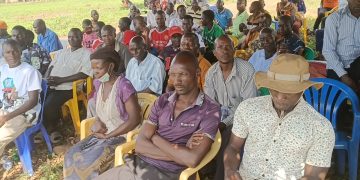
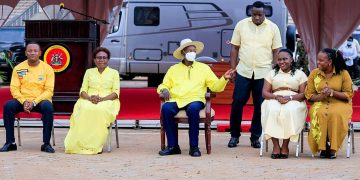
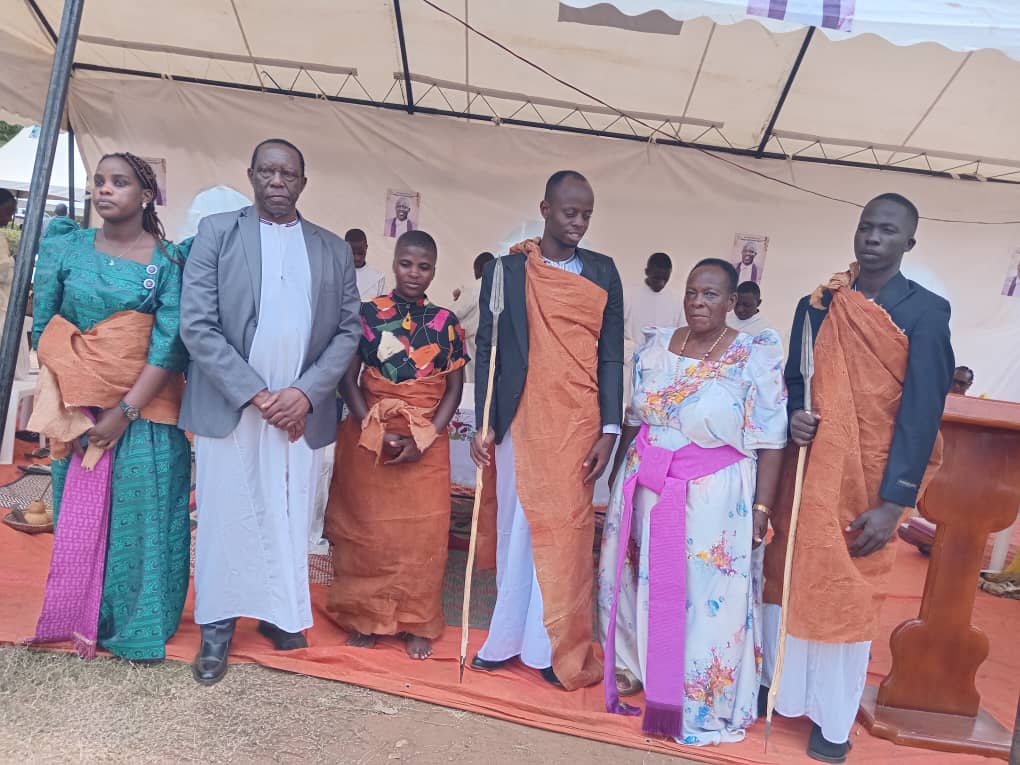
The guide was officially introduced to Christians during a Holy Mass at the home of Mr. and Mrs. Joseph and Imelda Muwonge in Kitanga, Bukoto Parish, Masaka City, where heirs to several deceased family members were formally presented.
Among those installed was Lubega Edgar Kabito, who succeeded the late Lubega Joseph Mary, a son of Mrs. Imelda Muwonge, who died in an accident on the Masaka–Kampala highway two years ago. Other heirs presented during the ceremony were Lubega Deogratias and Nalubyayi Olivia.
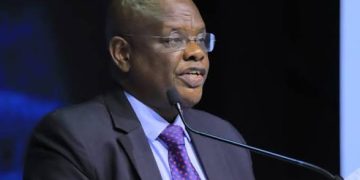
The Mass was presided over by Rev. Fr. James Ssendege Ssekito, the Diocesan Pastoral Coordinator, who represented the Bishop of Masaka Diocese, Rt. Rev. Severus Jjumba.
Fr. Ssendege explained that heir installation ceremonies have traditionally been conducted indoors and behind closed doors, often without clear guidelines or public understanding of what takes place. This secrecy, he said, contributed to widespread misconceptions that the ceremonies involved satanic or occult practices.
He said the Church decided to develop the guidebook after discovering that many Christian families were continuing to conduct traditional heir installation rites secretly. The new guidelines are intended to bring the ceremonies into the open while ensuring that they remain consistent with Christian teaching.
Under the new arrangement, the formal installation of heirs will be conducted publicly during Holy Mass, allowing members of the community to witness and understand the proceedings. The initiative seeks to preserve cultural heritage while promoting family stability, responsible stewardship of property and Christian values.
Fr. Ssendege also clarified misconceptions surrounding traditional objects used during heir installation ceremonies. He said items such as gourds, spears, traditional knives, baskets and barkcloth are cultural symbols and should not automatically be interpreted as ritual sacrifices or ebyawongo.
During the Mass, the newly installed heirs were presented with religious items, including the Holy Bible, a crucifix, a medal of the Blessed Virgin Mary and a rosary. The items were intended to encourage them to remain committed to their faith and seek God’s guidance as they assume responsibility for their families.
The heirs were also urged to work hard, maintain unity among family members, safeguard the property and inheritance left by the deceased, and develop the family’s wealth for the benefit of future generations.
Pokino Jude Muleke, the Chief of Buddu County, welcomed the Church’s decision to incorporate traditional succession practices into its ceremonies. He described succession as a long-standing cultural practice established by ancestors to preserve social order, family continuity and heritage.
Muleke observed that important social traditions—including marriage, heirship and introduction ceremonies—are sometimes viewed with suspicion, yet systems of succession exist across different cultures and religions. He cited the Christian tradition of succession after Jesus and the continuation of religious leadership within Islam as examples of how communities preserve continuity through established systems.
He commended the Catholic Church for documenting and guiding the practice, saying this would help preserve culture while ensuring that it is handled constructively and in harmony with Christian values.
Mrs. Imelda Muwonge, whose family hosted the ceremony, urged the newly installed heirs to remain diligent, maintain unity within their families and live according to their faith. She encouraged them to uphold the positive values of those they succeeded and use their responsibilities to strengthen their families.
She also thanked everyone who contributed to the success of the memorial and succession ceremonies.
The Diocese hopes that the new guidebook will help bridge the gap between traditional cultural practices and Christian faith, while eliminating misconceptions surrounding heir installation rites and ensuring that the ceremonies are conducted openly, respectfully and in accordance with Church guidance.