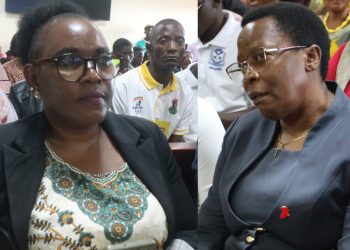



























The High Court in Masaka has dismissed an election petition filed by Nalubowa Rose challenging the victory of Nameere Justine in the January 2026 Masaka City Woman Member of Parliament election, ruling that although the court-supervised recount violated electoral law, the irregularities did not substantially affect the final result.
In a judgment delivered electronically on October 21, 2026, Justice Bernard Namanya rejected Nalubowa’s request to overturn the recount, cancel Nameere’s declaration and gazettement, and reinstate her as the duly elected representative.
The court also ordered Nalubowa to pay the costs of the petition.
Justice Namanya found that the recount proceeded despite evidence that the security and integrity of several ballot boxes and other electoral materials had been compromised. He held that the Electoral Commission had failed in its statutory duty to safeguard election materials, contrary to Section 71 of the Parliamentary Elections Act.
However, the judge ruled that Nalubowa had not provided sufficient evidence to establish that the certified recount figures were erroneous or that the irregularities changed the outcome of the election.
“The petitioner has not established that the non-compliance affected the election result in a substantial manner,” the judge held.
The dispute arose from the January 15, 2026 election, in which Nalubowa, the National Unity Platform candidate, was initially declared the winner on January 16 with 25,443 votes against Nameere’s 20,324.
Other candidates were Nakabuye Juliet Kakande, who received 6,343 votes, and Nanyonga Sauya, who obtained 6,196 votes, according to the initial declaration cited in the judgment.
Nameere subsequently applied for a recount, arguing that results from polling stations had been omitted from the final tally and that the results required verification.
Following the application, the Chief Magistrate ordered a recount of the ballot boxes. The exercise reversed the initial outcome, with Nameere, an independent candidate, receiving 25,502 votes against Nalubowa’s 23,176.
Nakabuye received 6,136 votes, while Nanyonga obtained 5,921. The recount certificate, issued on February 1, declared Nameere the winner with a margin of 2,326 votes.
Nameere was subsequently gazetted on February 6, prompting Nalubowa to challenge the outcome before the High Court.
Nalubowa argued that the recount was unlawful and procedurally defective, citing missing ballot papers, unsealed or damaged ballot boxes, photocopied Declaration of Results Forms and the exclusion of nine polling stations whose results could not be verified.
She also questioned the conduct of the recount, alleging that it continued at night and over the weekend, at multiple counting points, without the Chief Magistrate maintaining continuous personal supervision.
Her lawyers further argued that the recount lacked a sufficient station-by-station audit trail to explain the final figures and that the increase in the number of valid votes between the original tally and the recount had not been adequately reconciled.
They contended that the Electoral Commission had failed to fulfil its legal obligation to safeguard election materials, undermining the credibility of the recount.
The respondents opposed the petition, maintaining that the recount had been lawfully ordered and conducted under the Chief Magistrate’s supervision. They argued that Nalubowa had failed to prove that any irregularities substantially affected the result.
The Electoral Commission also disputed allegations that it had failed to secure the electoral materials, while Nameere maintained that the recount had properly established her victory.
Court finds electoral law violations
In determining the petition, Justice Namanya first rejected a preliminary objection by Nameere, who had argued that Nalubowa’s case was essentially an appeal against the Chief Magistrate’s recount decision and should not have been brought as an election petition.
The judge held that the petition challenged the validity of Nameere’s declaration and gazettement, which were founded on the recount certificate. He ruled that the High Court had jurisdiction to examine the electoral consequences of that declaration.
The court also rejected Nalubowa’s argument that the recount application had been heard and determined outside the statutory period.
The application was filed on January 23, while the Chief Magistrate determined it on January 30. The judge ruled that the intervening weekend and January 26 public holiday were excluded when calculating the four-day statutory period.
He further held that the law required the Chief Magistrate to appoint the time for the recount within the prescribed period but did not require the entire exercise to be completed within those four days.
On the allegation that the recount proceeded without proper judicial supervision, Justice Namanya found that Nalubowa had not provided credible evidence to establish that the Chief Magistrate had relinquished control of the exercise or that unauthorised counting had taken place.
However, the court reached a different conclusion regarding the handling of electoral materials.
After examining the certified recount proceedings, the judge found that results from nine polling stations had been excluded because their ballot boxes, ballot papers or related electoral materials had been compromised or could not be reliably verified.
The affected stations included Market Triangle-Open Space, Kimwanyi P7 School, Sserinya Primary School, Bwala Primary School, Mukudde, Kasijjagirwa, Gayaza Nabbowa and Kayirikiti.
The court found that proceeding with the recount despite the compromised materials amounted to non-compliance with electoral law. It also held that the Electoral Commission had breached its duty to ensure the safe custody of election documents.
Justice Namanya further found that the Chief Magistrate acted contrary to electoral law by declaring Nameere the winner, holding that Section 77 of the Parliamentary Elections Act placed the responsibility for making the formal return on the Returning Officer upon receipt of the recount certificate.
Despite these findings, the judge ruled that establishing irregularities alone was insufficient to overturn an election.
Why the court upheld Nameere’s victory
The central question was whether the proven irregularities substantially affected the election result.
The court applied the substantiality test, which requires a petitioner challenging an election on grounds of non-compliance with electoral law to demonstrate that the violations affected the outcome in a substantial manner.
Justice Namanya found that Nalubowa had failed to provide a polling-station-by-polling-station analysis showing discrepancies between the original declaration and the recount figures.
The judge also noted that Nalubowa had not produced the complete record of the recount proceedings or demonstrated that she had made diligent efforts to obtain the relevant documents from the responsible offices.
The court further found that she had not provided evidence showing that she had requested the recount certificate and accompanying documents transmitted to the Electoral Commission by the Chief Magistrate.
According to the judgment, these evidential gaps prevented the court from adequately testing the accuracy of the certified recount figures.
The judge consequently treated the recount certificate, which gave Nameere 25,502 votes against Nalubowa’s 23,176, as the operative record of the election result.
The court then examined the nine excluded polling stations and established that they had 3,886 registered voters. However, the actual votes cast at those stations that were excluded from the recount totalled 1,353, according to the certified tally sheets and Declaration of Results Forms.
The judge held that the actual votes cast, rather than the total number of registered voters, were the appropriate figures for determining whether the exclusion substantially affected the result.
Nameere’s winning margin was 2,326 votes, exceeding the 1,353 excluded votes by 973.
Justice Namanya reasoned that even if all the excluded votes were added to Nalubowa’s tally, her total would rise from 23,176 to 24,529, still leaving her behind Nameere, who had 25,502 votes.
The judge therefore concluded that the exclusion of the nine polling stations did not substantially affect the election result.
The court cited previous election decisions, including Chebrot Stephen Chemoiko v Soyekwo Kenneth and Electoral Commission, in which irregularities involving missing ballot papers were found not to have substantially affected the outcome because the winning margin remained greater than the number of unaccounted-for ballots.
In the Masaka case, Justice Namanya concluded that although the recount had been conducted in non-compliance with electoral law, Nalubowa had failed to prove that the certified figures were erroneous or that the exclusion of the votes changed the result.
The court consequently rejected her prayers to overturn the election and declare her the duly elected winner, dismissed the petition and ordered her to pay the costs.
The ruling leaves Nameere’s victory as Masaka City Woman Member of Parliament intact, despite the court’s findings that electoral materials had not been adequately safeguarded and that aspects of the recount process violated the law.