
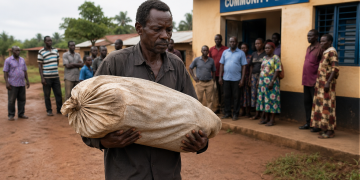


























Uganda is facing a potential supply challenge in its rollout of lenacapavir, a new HIV prevention injection administered twice a year, as growing demand puts pressure on available stocks.
Lenacapavir offers an alternative to daily oral pre-exposure prophylaxis (PrEP), giving HIV-negative people at risk of infection an option that requires only two injections a year.
Uganda received its first consignment of 19,200 doses in February 2026, out of a planned 36,000 doses for the first phase of the rollout supported by the Global Fund.
The medicine was initially introduced at 103 public health facilities, with the Ministry of Health planning to expand access to approximately 300 facilities by December 2026.
However, researchers involved in the rollout say demand for the injection is growing, raising concerns about whether available stocks will be sufficient to meet both new clients and those returning for their subsequent doses.
Speaking during a media engagement on lenacapavir, Dr Flavia Matovu Kiweewa, Director of Research at the Makerere University-Johns Hopkins University (MU-JHU) Research Collaboration and Uganda’s national principal investigator, said one of the major benefits of lenacapavir is that it removes the burden of taking an HIV prevention pill every day.
Unlike daily oral PrEP, lenacapavir is administered once every six months.
This makes it particularly useful for people who find it difficult to maintain daily medication because of forgetfulness, stigma, busy schedules or other challenges.
But the six-month dosing schedule also means that maintaining a reliable supply is critical.
People who have already received their first injection must return after six months for another dose to maintain protection, meaning health facilities will have to accommodate both new users and returning clients.
Interest in lenacapavir has been boosted by findings from the PURPOSE 1 clinical trial, conducted among young women in Uganda and South Africa.
According to Dr Matovu, the trial recorded no new HIV infections among participants who received lenacapavir, while infections occurred among participants assigned to oral PrEP groups.
The findings have strengthened the case for long-acting HIV prevention, particularly in situations where adherence to daily oral medication can be difficult.
Dr Matovu, however, emphasised that PrEP is not a vaccine and does not treat HIV.
Lenacapavir for HIV prevention is intended for people who are HIV-negative and at risk of acquiring the virus.
People must therefore undergo HIV testing to establish their status before starting the prevention injection.
Joyce Namale-Matovu, a researcher at MU-JHU, said the development and introduction of lenacapavir should be understood against the background of years of HIV research aimed at developing prevention methods that people can realistically use.
She highlighted MU-JHU’s long history of research involving women, children, young people and families, noting that HIV research has increasingly moved beyond establishing whether a medicine works to understanding whether people can use it effectively in their everyday lives.
For people who struggle with taking medication every day, Namale-Matovu said a prevention option requiring only two injections a year could help address some of the barriers associated with daily PrEP.
The development of long-acting prevention methods could therefore give people greater choice in deciding how they protect themselves from HIV.
The Ministry of Health is progressively expanding access to lenacapavir following the initial rollout in 103 facilities.
The programme aims to reach approximately 300 public health facilities by December 2026, with the medicine currently being provided free of charge through the public health system.
But reports of pressure on stocks at some facilities have raised questions about whether supply can keep pace with increasing demand.
The concern becomes more significant as the programme expands because lenacapavir is not a one-time intervention.
A person who starts the injection needs to return every six months for another dose, alongside regular follow-up and HIV testing.
Cheaper generic versions expected
The supply challenge could eventually be eased by the availability of lower-cost generic versions of lenacapavir.
Gilead Sciences, which developed the medicine, has entered licensing arrangements with six generic manufacturers to produce lenacapavir for lower-income countries.
Under the access initiative, generic lenacapavir is expected to be available at approximately US$40 per person per year in eligible low- and middle-income countries, with initial availability expected from 2027.
The lower price could enable countries to reach significantly more people with the prevention medicine and reduce some of the financial pressure associated with scaling up access.
For Uganda, however, researchers say adequate supply will remain crucial if the country is to benefit fully from the new HIV prevention technology.
More choices for HIV prevention
Lenacapavir now joins other HIV prevention options available in Uganda, including condoms, daily oral PrEP and long-acting cabotegravir, which is administered every two months.
Dr Matovu said having several prevention options is important because people have different needs and preferences.
While some people may prefer a daily tablet, others may find it easier to receive an injection twice a year.
Health workers, however, must ensure that clients return for follow-up HIV testing and subsequent injections on schedule because continued protection depends on maintaining effective levels of the medicine in the body.
Researchers are also exploring whether lenacapavir could eventually provide protection for longer periods, potentially reducing the number of visits people need to make to health facilities.
For now, Uganda’s immediate challenge is to ensure that supply keeps pace with demand.
As the country moves from an initial 19,200 doses across 103 facilities towards a planned 300-site rollout, the success of the programme will depend not only on the effectiveness of lenacapavir, but also on the health system’s ability to keep the medicine consistently available to those who need it.